

US anti-money laundering regulation not materially easing despite wider relief: Fitch
Recent actions against Bank of America and American Express show AML enforcement remains a significant credit risk for large banks despite broader regulatory easing

Business Desk
The Business Desk tracks economic trends, market movements, and business developments, offering analysis of both local and global financial news.
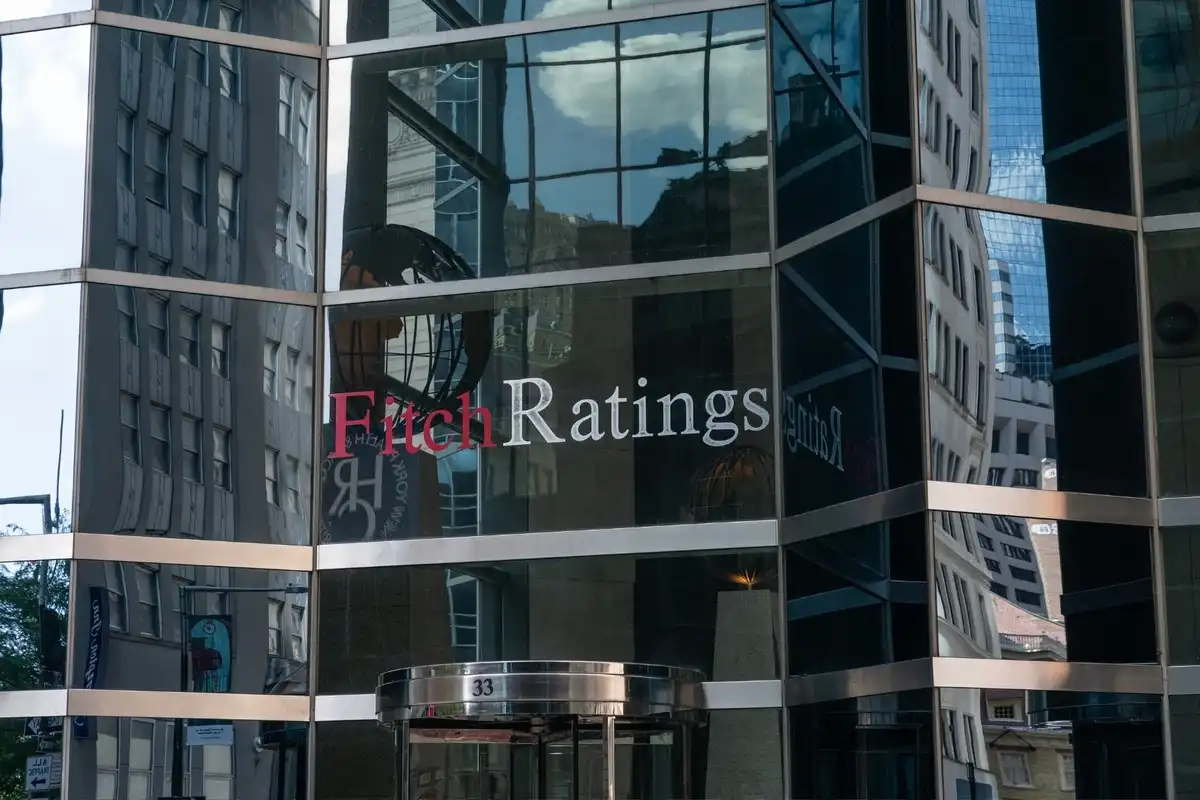
A view of the Fitch Ratings headquarters in New York.
Recent regulatory actions against Bank of America and American Express, together with the 2024 enforcement case against Toronto-Dominion Bank, show that anti-money laundering regulation is not materially easing despite a broader shift toward regulatory relief in the US, Fitch Ratings said.
Fitch said AML penalties are generally a near-term earnings event for large banks because their size, diversification and profitability give them capacity to absorb the financial costs.
Longer remediation programs and operating restrictions, however, can pressure medium-term profitability and ratings.
Fitch’s “Regulatory Pendulum” research found that recent changes in US AML regulation represent a shift in supervisory emphasis and efficiency rather than weaker enforcement. Regulators are expected to remain focused on weak controls, national-security risks and cross-border activity.
What makes AML enforcement a ratings risk?
Fitch said execution risk, continued supervisory scrutiny, remediation costs and possible reputational damage are the main credit considerations. Penalties alone are unlikely to immediately weaken large banks’ capital or underlying earnings, but prolonged remediation or operating restrictions can constrain franchises, growth and profitability, particularly where rating headroom is limited.
TD provides the clearest recent example.
The bank faced approximately USD 3.1 billion in penalties, a US asset cap and additional regulatory restrictions following its AML failures.
Fitch revised TD’s Outlook to Negative in May 2024 because of uncertainty over the potential effects on its franchise, earnings and risk profile, including whether regulatory restrictions would constrain growth and profitability.
The agency returned TD’s Outlook to Stable in June 2026 after concluding that the AML regulatory actions had a more limited effect on its franchise, earnings and risk profile than initially expected.
American Express faced a less severe financial and operational impact. Its October 2026 consent orders included a USD 350 million penalty imposed by the Office of the Comptroller of the Currency but no asset cap.
Fitch said it did not expect American Express’s remediation costs to affect its 2027 guidance.
Bank of America settlement highlights operational-risk weaknesses
Bank of America’s USD 1.2 billion regulatory settlement addressing deficiencies in its AML and sanctions-compliance framework highlighted weaknesses in operational-risk management, according to Fitch.
The penalty was the third-largest in US Treasury history and followed a December 2024 cease-and-desist order over deficiencies in the bank’s Bank Secrecy Act and AML compliance program.
Bank of America recorded a USD 1.2 billion non-tax-deductible charge in the third quarter of 2026 related to the regulatory settlement.
Fitch did not take rating action following the 2024 order because Bank of America agreed to extensive remediation requirements and the deficiencies had not materially affected its franchise or ability to grow.
The bank had already begun substantial remediation before the latest settlement. Fitch said the work completed so far appeared sufficient to preserve its franchise strength, reputation and market position, although the agency continues to assess the effectiveness of the remediation and any implications for its business profile.
Unlike TD, Bank of America does not face an asset cap. Based on the bank’s third-quarter earnings call, Fitch said remediation costs were already incorporated into its ongoing expense base and did not represent a new recurring cost burden.
Fitch said Bank of America, like TD, is among the relatively few large North American banks whose Viability Rating sits above its implied Viability Rating.
For Bank of America, that reflects the strong influence of its business profile on the rating. As a result, persistent control deficiencies that point to governance or operational-risk weaknesses could have greater ratings significance than the direct financial cost of the settlement itself.




Comments
See what people are discussing