

US, Iran exchange proposals as tensions persist in Strait of Hormuz
Trump’s Hormuz rescue plan and Iran’s counterwarnings escalate tensions while Pakistan mediates exchanges.

News Desk
The News Desk provides timely and factual coverage of national and international events, with an emphasis on accuracy and clarity.
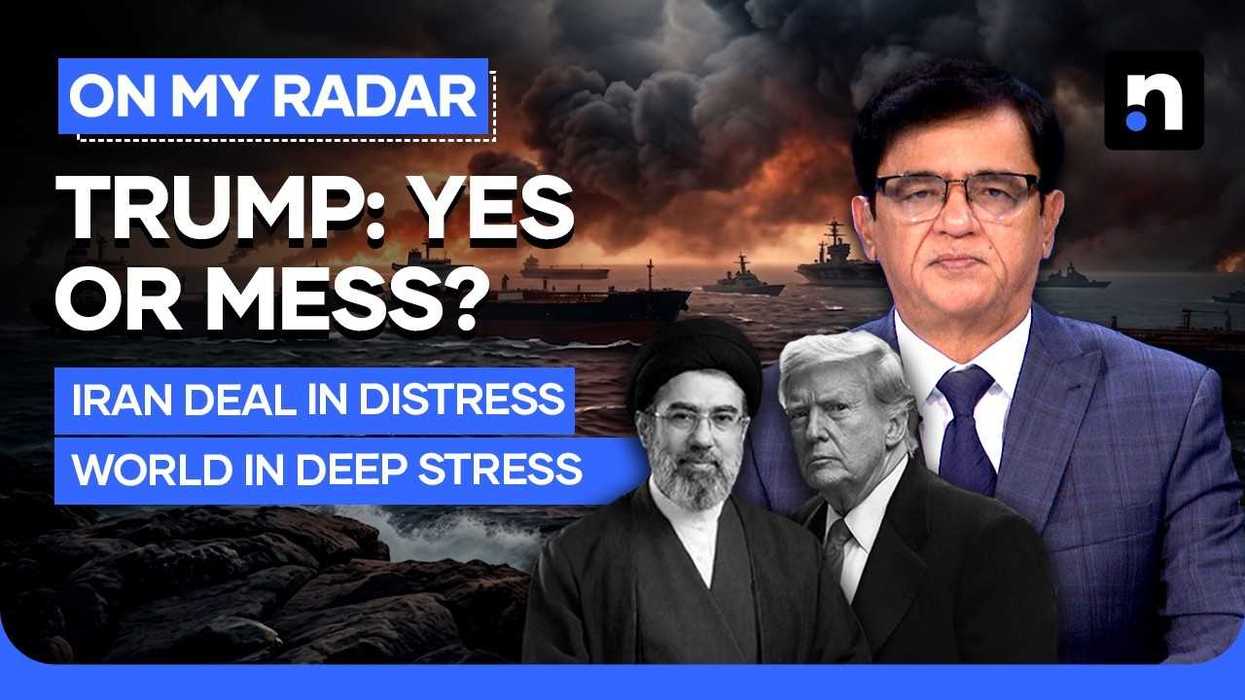
The United States and Iran have exchanged new proposals through Pakistan as diplomatic efforts to ease tensions accelerate, even as military posturing continues in the Strait of Hormuz, according to statements cited in by Kamran Khan on his program “On My Radar.”
The latest developments reflect parallel tracks of engagement and escalation.
On one hand, Khan said that both sides are advancing messages and proposals via Pakistan, which has remained actively involved in maintaining communication between Washington and Tehran.
On the other, tensions remain high in the strategic waterway, a critical global shipping route. The standoff has included warnings and competing claims over security and control in the Strait of Hormuz.
U.S. President Donald Trump announced a sudden initiative, “Project Freedom,” aimed at rescuing commercial vessels stranded in the strait. He warned that any interference would be met with force.
Iran responded by calling the move a violation of a ceasefire understanding and warned that any U.S. vessels entering the strait could be targeted.
Iran’s military also claimed it fired two missiles at a U.S. vessel passing through the strait. The United States rejected the claim.
Despite the tensions, diplomatic engagement has continued. Iran sent a new peace plan to the United States on Friday, followed by U.S. proposals delivered on Sunday. Iranian officials have confirmed the exchange.
Pakistan has played a central role in relaying these proposals, positioning itself as a mediator seeking to de-escalate the situation and maintain dialogue between the two sides.
Trump said talks with Iran were “extremely positive” and could lead to a favorable outcome.
In a separate development, the United States handed over an Iranian cargo vessel, previously seized in the Hormuz region, to Pakistan along with its 22 crew members. Pakistan’s Deputy Prime Minister and Foreign Minister Ishaq Dar described the move as a confidence-building measure.
Dar also held a telephone conversation with Iranian Foreign Minister Abbas Araghchi, who appreciated Pakistan’s constructive role and mediation efforts.
According to Al Jazeera, Iran has also proposed a 14-point plan aimed at ending the conflict within 30 days. The proposal reportedly includes a phased reopening of the Strait of Hormuz and the lifting of U.S. restrictions on Iranian ports.
It also outlines limits on Iran’s uranium enrichment, allowing enrichment up to 3.6% without stockpiling.
However, Iran’s Foreign Ministry spokesperson Esmail Baghaei described reports about the proposal as speculation, adding that U.S. proposals conveyed via Pakistan remain under review.
The overall situation suggests the immediate risk of conflict may have eased, but any lasting breakthrough will depend on the success of the next phase of negotiations.




Comments
See what people are discussing