

US, Japan launch first joint yen intervention since 2011
Japan and the US carried out a joint yen intervention, their first since 2011, after the currency hit a four-decade low against the dollar

News Desk
The News Desk provides timely and factual coverage of national and international events, with an emphasis on accuracy and clarity.
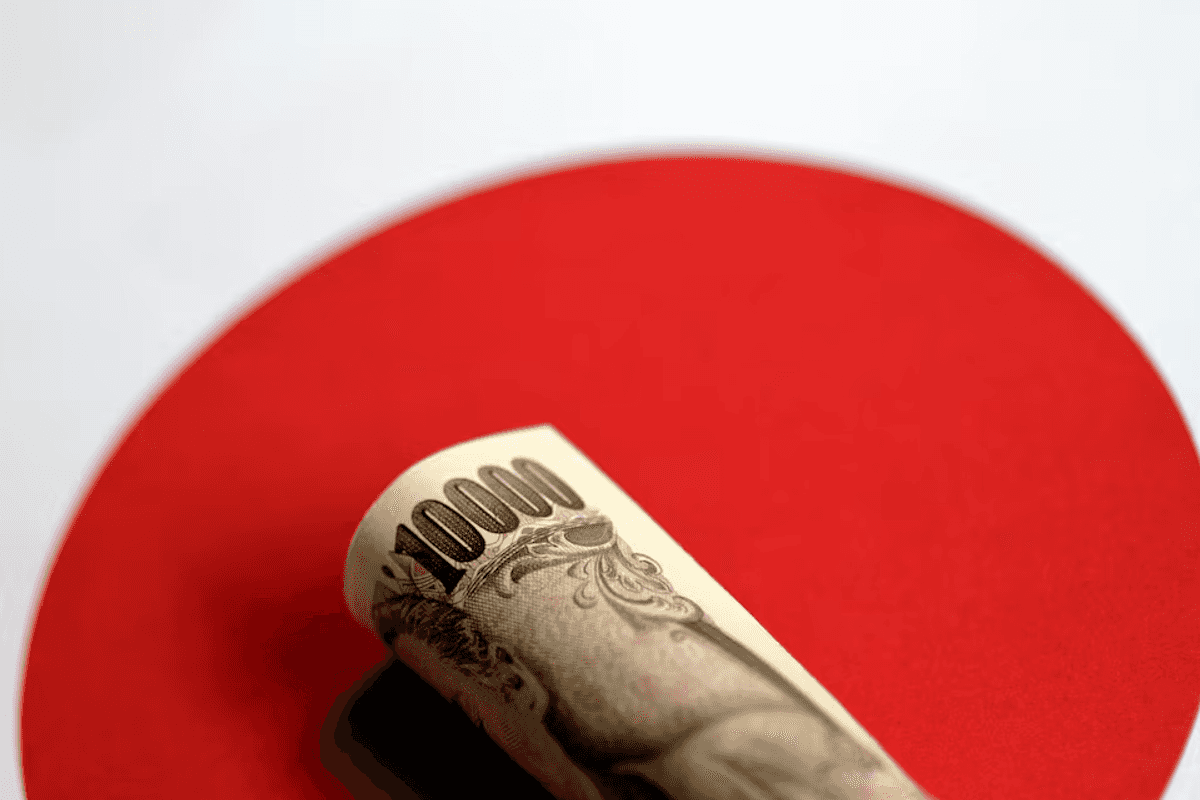
A Japanese yen note is seen in this illustration photo taken June 1, 2017.
Reuters
Japan and the United States said Monday they are ready to act again after carrying out a joint yen intervention on Friday, their first since 2011, to arrest the currency's slide to a four-decade low. US President Donald Trump called the move a "signal of friendship" with Tokyo.
What was the US-Japan joint yen intervention?
The joint yen intervention was a coordinated operation in which Japan and the United States bought yen to stop the currency's slide. It was their first joint action since 2011, when G7 members sold yen after a major earthquake, and the first time since 1998 that the two countries bought yen together.
Why is the yen so weak right now?
The yen has weakened because of a wide gap between Japanese and US interest rates. That gap has fueled the "carry trade," in which investors borrow yen cheaply to invest in higher-yielding assets elsewhere. Concerns about Japan's large public debt under new Prime Minister Sanae Takaichi have added further pressure on the currency.
The Bank of Japan raised rates to a 31-year high of 1.0 percent in June and held them there last week. That remains far below the US Federal Reserve's 3.50 to 3.75 percent range, keeping the incentive for capital outflows from Japan in place.
What did Trump and Bessent say about the intervention?
Trump confirmed the coordinated action aboard Air Force One on Sunday, calling it good for the world economy and a gesture of friendship toward Japan. He added a reference to Pearl Harbor while praising the relationship between the two countries.
US Treasury Secretary Scott Bessent said Washington would not hesitate to join further joint intervention. He said US officials strongly support Japan's efforts to correct what he called the substantial undervaluation of the yen, and linked the move to the continuation of Abenomics under Takaichi.
How has the yen moved since the intervention?
The yen hit 163.99 per dollar last month, its weakest level since 1986. It then surged to 157.40 on Friday, its strongest since early May, before briefly touching 155.23 on Monday, a move that stirred talk of another intervention.
Japan's Finance Minister Satsuki Katayama said the action countered excessive volatility and disorderly moves in the yen in recent months. She said the coordinated buying was necessary because both countries independently reached the same conclusion about the currency's trajectory.
Who benefits and who loses from a weak yen?
A weak yen helps major Japanese exporters such as Sony and Toyota by making their goods cheaper abroad. It also raises import costs for Japan, a resource-poor country that depends heavily on oil, at a time when the war has strained supplies from the Gulf.
What happens next for the yen?
Economist Michael Wan at MUFG said past joint interventions have typically come near turning points in the exchange rate. He cautioned this is not guaranteed, and said the underlying economic fundamentals still need to shift for a more lasting change in the yen's direction.
The Bank of Japan is expected to raise rates further in the coming months. The Federal Reserve could also raise rates to fight inflation driven partly by the fallout from Trump's prolonged conflict with Iran.





Comments
See what people are discussing