

US launches forced labor trade investigations into Pakistan, India and 58 other economies
Section 301 probe will examine whether governments failed to ban imports of goods produced with forced labor

Business Desk
The Business Desk tracks economic trends, market movements, and business developments, offering analysis of both local and global financial news.
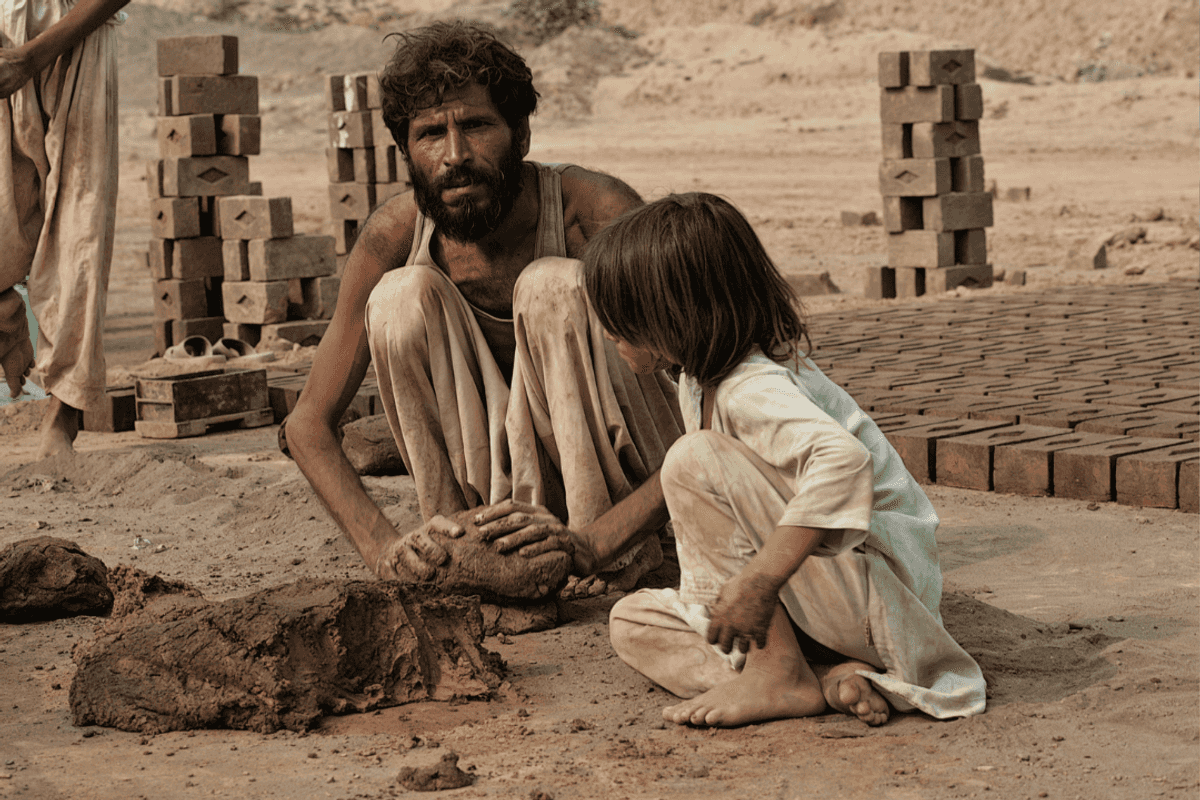
A man works on making cement bricks in Peshawar, Pakistan
Shutterstock
The United States has launched trade investigations into Pakistan, India and 58 other economies to determine whether their policies related to forced labor imports are unfairly harming U.S. commerce.
The Office of the United States Trade Representative (USTR) said the investigations were initiated under Section 301(b) of the Trade Act of 1974 and will examine whether governments have failed to impose or enforce bans on the import of goods produced with forced labor.
The probe will assess whether such policies or practices are “unreasonable or discriminatory and burden or restrict U.S. commerce”, according to the USTR.
“Despite the international consensus against forced labor, governments have failed to impose and effectively enforce measures banning goods produced with forced labor from entering their markets,” U.S. Trade Representative Ambassador Katherine Tai Greer said in a statement.
“For too long, American workers and firms have been forced to compete against foreign producers who may have an artificial cost advantage gained from the scourge of forced labor,” Greer said. “These investigations will determine whether foreign governments have taken sufficient steps to prohibit the importation of goods produced with forced labor and how the failure to eradicate these abhorrent practices impacts U.S. workers and businesses.”
Section 301 investigation process
Section 301 of the Trade Act of 1974 is designed to address unfair foreign practices affecting U.S. commerce.
Under Section 302(b) of the law, the U.S. Trade Representative can initiate an investigation if a foreign government’s actions are considered unjustifiable, unreasonable or discriminatory and restrict U.S. commerce.
Such investigations examine whether the acts, policies or practices of a foreign country meet those criteria.
After consulting the interagency Section 301 Committee and other advisory groups, the USTR formally initiated the investigations into 60 economies.
Consultations and public hearings planned
Following the launch of the probe, the USTR said it will seek consultations with the governments whose policies are under investigation.
The agency has requested consultations with the affected economies and will hold public hearings on April 28 as part of the process.
Interested parties have until April 15, 2026 to submit written comments, requests to appear at the hearing and summaries of their testimony.
Economies under investigation
The 60 economies subject to the investigation include Pakistan, India, China, the European Union, Japan, the United Kingdom, Canada, Australia, Saudi Arabia, the United Arab Emirates, South Korea, Brazil and Mexico, among others.
Other economies listed include Algeria, Angola, Argentina, The Bahamas, Bahrain, Bangladesh, Cambodia, Chile, Colombia, Costa Rica, the Dominican Republic, Ecuador, Egypt, El Salvador, Guatemala, Guyana, Honduras, Hong Kong, Indonesia, Iraq, Israel, Jordan, Kazakhstan, Kuwait, Libya, Malaysia, Morocco, New Zealand, Nicaragua, Nigeria, Norway, Oman, Peru, the Philippines, Qatar, Russia, Singapore, South Africa, Sri Lanka, Switzerland, Taiwan, Thailand, Trinidad and Tobago, Türkiye, Uruguay, Venezuela and Vietnam.


Comments
See what people are discussing