

US military judge throws out FBI confessions of alleged 9/11 mastermind
A US military judge at Guantanamo Bay ruled that 2007 confessions made by alleged 9/11 mastermind Khalid Sheikh Mohammed to FBI interrogators are inadmissible at trial, finding them tainted by prior CIA torture

News Desk
The News Desk provides timely and factual coverage of national and international events, with an emphasis on accuracy and clarity.
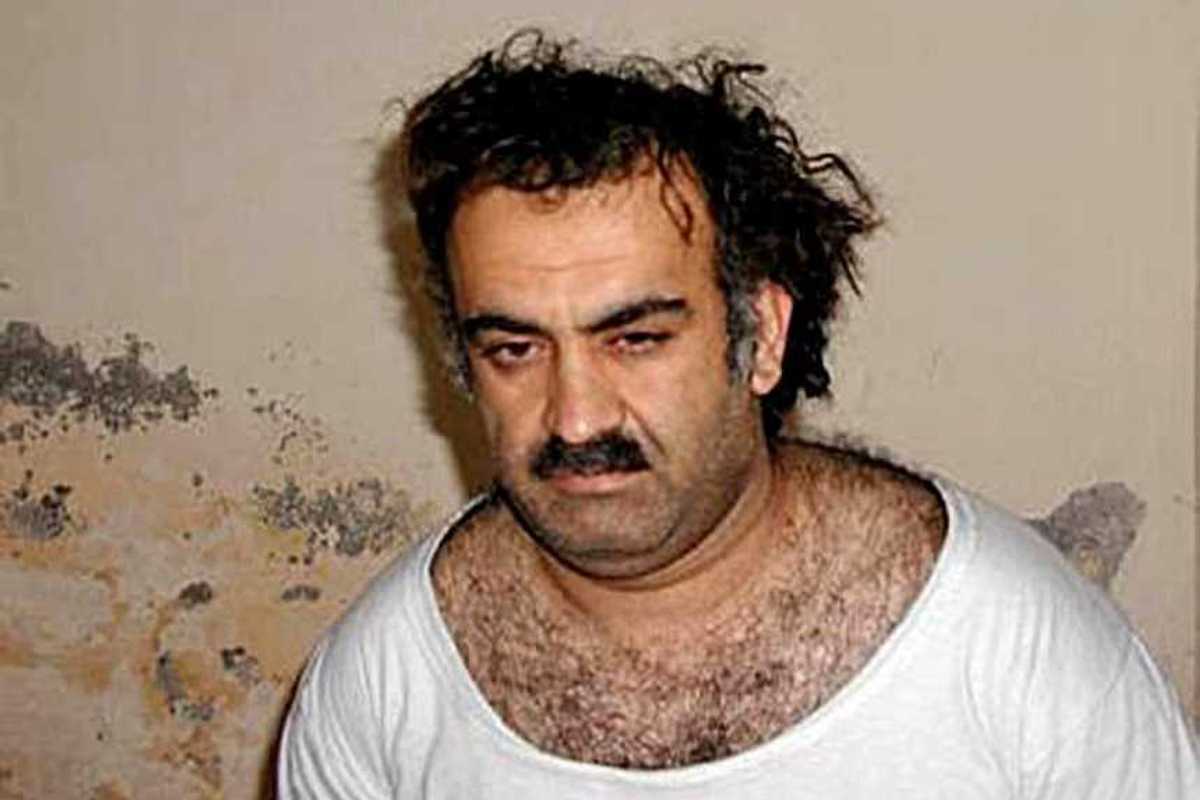
This photo obtained on March 1, 2003, shows the alleged plotter of the September 11, 2001 attack, Khalid Sheikh Mohammed.
AFP
A U.S. military judge ruled that confessions made to FBI agents by alleged September 11 attacks mastermind Khalid Sheikh Mohammed are inadmissible and cannot be presented as evidence during his capital trial on Friday.
The ruling deals a significant evidentiary blow to military prosecutors just weeks before the 25th anniversary of the 2001 terrorist attacks.
Why did the military judge exclude Khalid Sheikh Mohammed's FBI confessions?
Air Force Lt. Col. Michael Schrama, the military commission judge presiding over the Guantanamo Bay prosecution, concluded in a 45-page ruling that federal prosecutors failed to prove Mohammed's statements were voluntarily given. While prosecutors had previously excluded statements Mohammed made during his secret detention at CIA "black sites"—where he was waterboarded 183 times—Schrama ruled that subsequent interrogations conducted by the FBI at Guantanamo Bay in 2007 remained tainted.
Judge Schrama cited an "unbroken continuation of the CIA's psychological conditioning and severe coercion," finding that the psychological impacts of earlier torture carried over into the FBI sessions. Furthermore, the ruling determined that FBI agents intentionally failed to inform Mohammed of his right to remain silent or consult defense counsel before conducting the 2007 interviews.
According to reporting by The New York Times and The Washington Examiner, chief prosecutor Rear Adm. Aaron C. Rugh stated that military lawyers will review the decision to determine whether to file an appeal. Judge Schrama granted the prosecution five days to decide whether to appeal the exclusion to the U.S. Court of Military Commission Review.
How does the evidentiary ruling impact the upcoming 9/11 military trial?
The exclusion of Mohammed's confessions arrives days after Judge Schrama formally set June 5, 2028, as the start date for the capital trial of Mohammed and three co-defendants—Walid bin Attash, Mustafa al-Hawsawi, and Ali Abdul Aziz Ali. Proceedings have been delayed for over two decades due to ongoing legal disputes surrounding CIA interrogation techniques, classified evidence access, and prolonged attempts to negotiate plea agreements.
Coverage from Reuters and CBS News notes that while the ruling removes a central pillar of the prosecution's case against Mohammed, it does not throw out the underlying charges. However, defense attorneys maintain that the ruling demonstrates how torture techniques used by U.S. authorities in the early years of the "War on Terror" fundamentally compromised the legal integrity of the prosecution.




Comments
See what people are discussing