

US launches wave of strikes on Iran as war resumes
The US launched a wave of strikes on Iran after reimposing a naval blockade, reigniting war weeks after a ceasefire deal.

News Desk
The News Desk provides timely and factual coverage of national and international events, with an emphasis on accuracy and clarity.
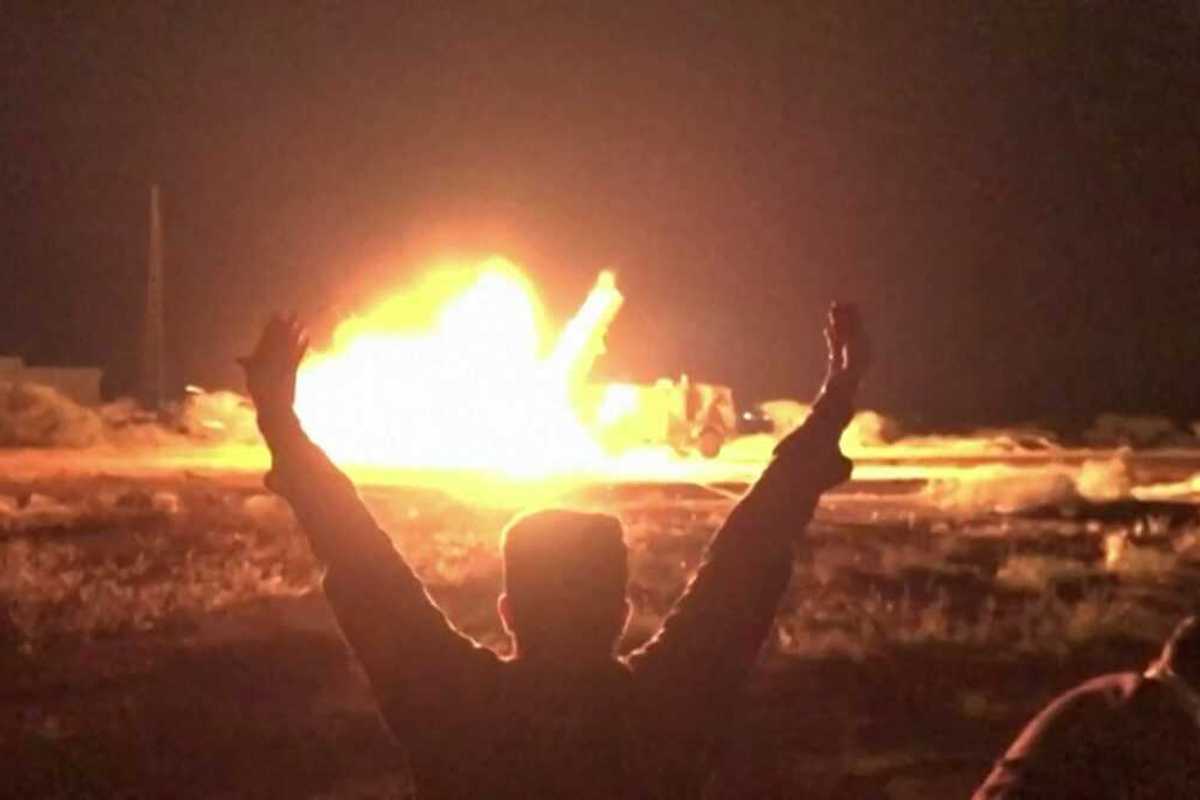
This screen grab taken on July 15, 2026, from video footage released by Iran’s Revolutionary Guards (IRGC)’s Sepah News website on July 14, 2026, allegedly shows a missile being launched from an undisclosed location towards US targets in Bahrain and Kuwait.
AFP
The United States launched a wave of strikes against Iran on Wednesday after reimposing a naval blockade, marking a return to war between the two countries. The fighting resumed nearly a month after both sides signed a memorandum of understanding aimed at ending the conflict.
Why did the U.S. and Iran resume fighting?
The renewed war centers on control of the Strait of Hormuz, a waterway critical to global oil and gas shipments. Iran had blockaded the strait since the war began in February, using it as leverage before briefly reopening it under last month's deal. Tehran then vowed to close it again until the U.S. ends its aggression, prompting Washington to reimpose its own blockade on Iranian ports.
What did the U.S. strikes target?
U.S. Central Command said it launched a wave of strikes designed to degrade Iranian military capabilities used against commercial shipping in the Strait of Hormuz. Iranian state media reported explosions near Bandar Abbas, Qeshm island and Bandar Imam Khomeini, with later strikes hitting the southern port city of Bushehr. Iran's Revolutionary Guards said they targeted the U.S. Fifth Fleet in Bahrain, while Jordan's armed forces said they downed three Iranian missiles.
What has Trump said about further strikes?
President Donald Trump threatened to widen the strikes next week to hit power plants and bridges unless Tehran returns to the negotiating table, telling Fox News that things would get very bad for Iran. He also scrapped a planned 20 percent levy on ships using the strait, opting instead for trade deals with Gulf allies. Despite the renewed hostilities, mediated talks between the two sides have not formally ended.
How has the fighting affected civilians and shipping?
Maritime tracker Kpler reported only 21 transits through the strait on Tuesday, reflecting the sharp drop in traffic. Iranian officials said renewed U.S. attacks have killed at least 30 people since last week, while the military reported seven of its personnel killed in Wednesday's strikes on the southeast. A Norwegian tanker was hit off the Omani coast, and Kuwait said one of its naval vessels was struck during an Iranian missile and drone barrage, wounding four crew members.
Could Israel rejoin the conflict?
Israeli Prime Minister Benjamin Netanyahu, whose country has not rejoined the war, warned Iranian leaders on Tuesday that Israel would respond heavily if attacked. Speaking from Dimona, he said Iran should not count on things remaining quiet if it strikes Israel.





Comments
See what people are discussing