

Wall Street loses USD 3.2Tn as AI stocks plunge after Democratic midterm sweep
Nasdaq 100 tumbles 6.4% as investors fear tighter regulation and a slowdown in spending on AI infrastructure

Business Desk
The Business Desk tracks economic trends, market movements, and business developments, offering analysis of both local and global financial news.
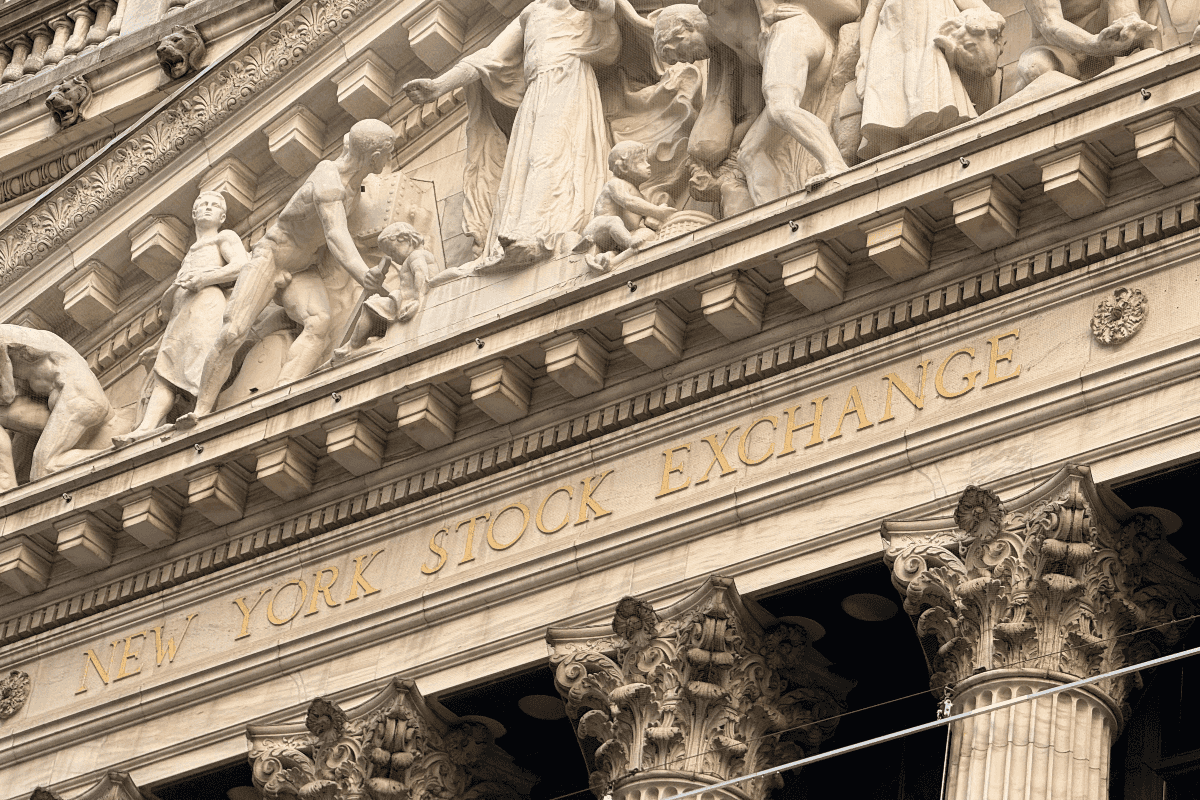
Ornate façade of the New York Stock Exchange featuring intricate stone sculptures during daylight.
Pexels
US stocks lost approximately USD 3.2 trillion in market value on Thursday as concerns over artificial intelligence investment intensified following the Democrats' sweeping victory in the midterm elections, according to the Financial Times.
The tech-heavy Nasdaq 100 plunged 6.4%, while the benchmark S&P 500 fell 4.4%, recording its steepest daily decline since April 2025. Nvidia, one of the biggest beneficiaries of the AI investment boom, dropped 9.3%, erasing more than USD 400 billion in market value.
The losses, measured across the S&P 1500 Composite index, represented one of the largest single-day market-value declines since the beginning of the century, the FT reported.
Why did the Democratic victory unsettle AI investors?
Investors worried that the Democrats' midterm victories could lead to tighter oversight of artificial intelligence and restrictions on data center construction, potentially slowing demand for chips, servers and other infrastructure. The concerns intensified after US stocks initially rallied on Wednesday following the election, before reversing sharply during Thursday's trading session.
Charles-Henry Monchau, chief investment officer at Swiss private bank SYZ Group, told the Financial Times that investors feared the industry's peak in AI capital spending might already have passed.
Adam Crisafulli, president of market research firm Vital Knowledge, described widespread selling as investors rushed to liquidate their positions.
The FT also reported that hedge funds were reducing large positions in a process known as de-grossing, adding to pressure on technology stocks.
Vincent Mortier, chief investment officer at Amundi, said the market's initial positive response to the election had been short-lived, with concerns over data center development and potential regulation driving a rapid reassessment of technology valuations.
How did the selloff affect technology stocks?
Nvidia's 9.3% decline was among the most significant losses in the sector, reflecting concerns that slower AI infrastructure development could weaken demand for advanced processors.
The broader selloff also affected semiconductor manufacturers and companies involved in financing and operating data centers, as investors questioned whether anticipated spending on chips, servers and computing infrastructure could be sustained.
The Philadelphia Semiconductor Index fell approximately 12.2%, while Advanced Micro Devices declined 17.3%, according to Reuters.
Existing concerns about the scale of AI investment and the returns companies could generate from that spending also contributed to the selloff.
What restrictions are newly elected Democrats proposing?
Abdul El-Sayed, the Democratic senator-elect from Michigan, has called for a pause in frontier AI development, arguing that technological advances are outpacing the safeguards needed to manage their risks.
El-Sayed has also advocated stronger public oversight of artificial intelligence.
Annie Andrews, the Democratic senator-elect from South Carolina, has called for a two-year moratorium on new data center construction in the state, citing concerns about the impact of large projects on local communities.
The proposals have raised questions about the future pace of AI infrastructure investment, although neither represents a nationwide restriction that has been enacted into law.
The market's sharp reversal highlights investor uncertainty over whether the AI spending boom that helped drive US stocks to record highs can continue at its previous pace.





Comments
See what people are discussing