

World Governments Summit, FTI Consulting launch report on creative economy growth
The report points to a paradigm shift in economic planning, arguing that cultural and creative industries are no longer peripheral sectors

Dubai Desk
The Dubai Desk reports on major developments across the UAE, covering news, culture, business, and social trends shaping the region.
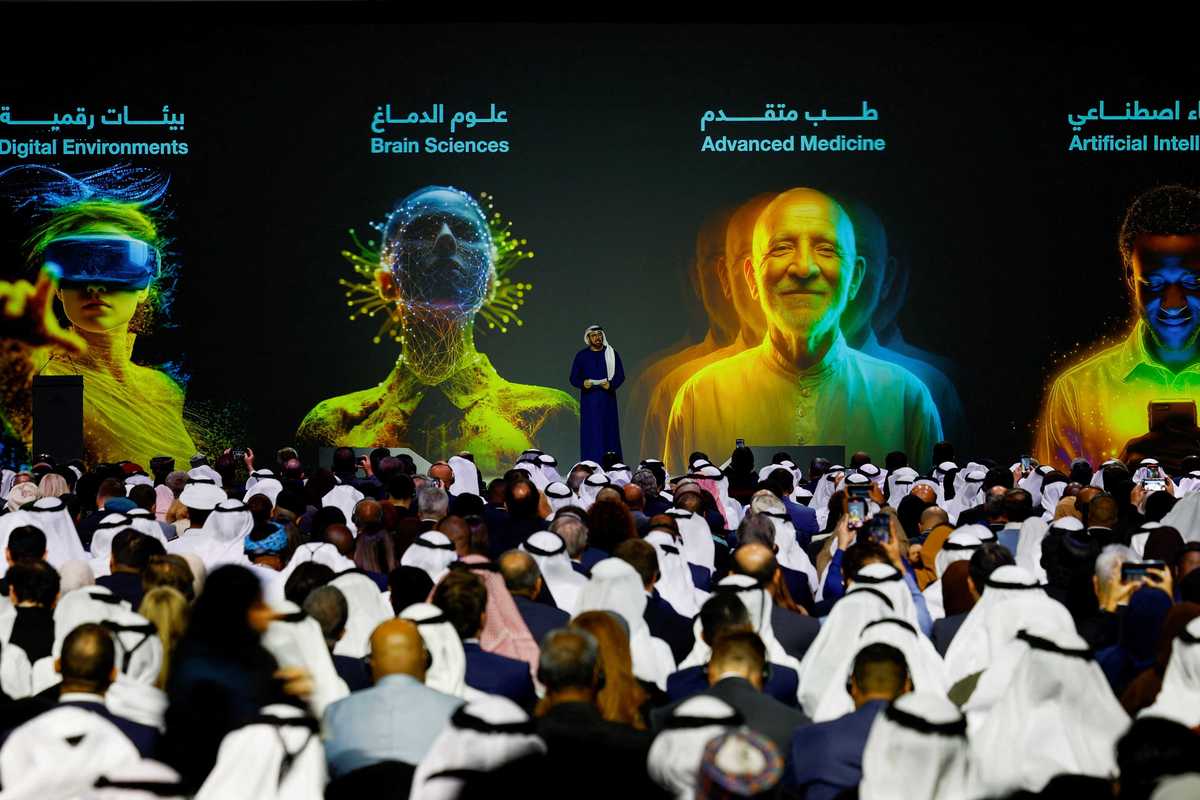
Chairman of the World Governments Summit, Mohammad Al Gergawi speaks during the World Governments Summit, in Dubai, United Arab Emirates, February 3, 2026.
Reuters
In partnership with the World Governments Summit, FTI Consulting has launched a joint report outlining how governments can harness the creative economy as a driver of economic growth and diversification.
The report, titled “Creative Futures: The Springboard for Sustained Economic Growth and Diversification,” offers what it describes as a strategic roadmap for governments and public sector leaders seeking to boost national prosperity, innovation and global influence, according to WAM news agency.
The report points to a paradigm shift in economic planning, arguing that cultural and creative industries are no longer peripheral sectors. Instead, it says they are increasingly central to sustainable growth, talent development and soft power.
It defines the creative economy broadly, spanning film, music, performing arts, publishing, design, gaming, architecture and digital content creation.
Once viewed as niche, these industries are now recognized as essential engines of economic activity, the report says, with spillover benefits across tourism, manufacturing and urban services.
According to the report, the global creative economy was valued at about $2.25 trillion in 2020. It accounted for 3.1% of global gross domestic product and employed nearly 6.2% of the global workforce.
The report also highlights the sector’s multiplier effect, stating that every $1 invested in creative industries generates approximately $2.50 in overall economic output.
“This report demonstrates that creativity is not just an asset for culture, it is a cornerstone of national economic strategy,” said Antoine Nasr, senior managing director and head of FTI Consulting Middle East.
By integrating governance, financing, talent development and global engagement, Nasr said, governments can unlock transformative value from the creative economy, driving innovation, job creation and international influence.
The report outlines several key policy insights aimed at helping governments translate creative potential into measurable economic impact.
One recommendation calls for whole-of-government governance models, with coordinated, cross-ministerial structures supported by dedicated units focused on cultural and creative industries.
Another highlights the need for innovative financing, including blended finance, guarantees and dedicated creative funds, to help creative enterprises overcome traditional capital barriers.
The report also stresses the importance of building a future-ready workforce. Embedding creativity, entrepreneurship and adaptive skills into education systems, it says, is essential to sustaining growth in the digital creative economy.
Expanding creative exports is another central theme. The report argues that creative industries serve as powerful tools of soft power, enabling countries to strengthen cultural diplomacy, global visibility and economic competitiveness.
In its conclusion, the report describes the creative economy as a generational opportunity for governments.
Countries that act decisively now, it says, can shape global cultural industries for decades to come. Those that delay risk becoming consumers rather than producers, and importers rather than exporters, in the evolving global creative landscape.

Comments
See what people are discussing