

$100 oil could push Pakistan inflation above 10%, analysts warn
Topline Securities says sustained energy prices may reshape inflation outlook and influence interest rates

Haris Zamir
Business Editor
Experience of almost 33 years where started the journey of financial journalism from Business Recorder in 1992. From 2006 onwards attached with Television Media worked at Sun Tv, Dawn Tv, Geo Tv and Dunya Tv. During the period also worked as a stringer for Bloomberg for seven years and Dow Jones for five years. Also wrote articles for several highly acclaimed periodicals like the Newsline, Pakistan Gulf Economist and Money Matters (The News publications)
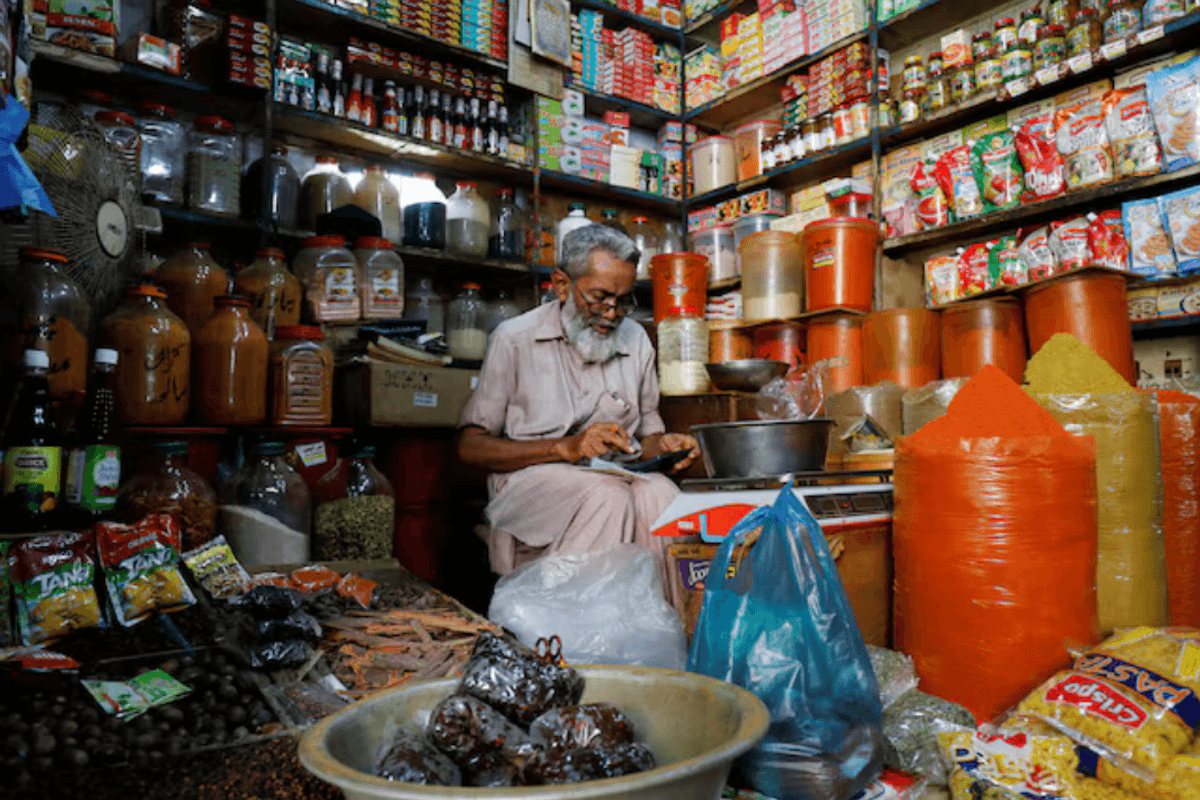
Pakistan’s inflation could climb sharply if global oil prices remain elevated, with analysts warning that sustained crude prices at $100 per barrel or higher would reshape the country’s inflation outlook and potentially influence future monetary policy decisions.
In a detailed research report, Topline Securities said it modeled a probable inflation trajectory for Pakistan under a scenario where Brent crude oil remains at $100 per barrel and above, amid elevated energy prices and uncertainty stemming from regional tensions.
The brokerage said that $100 oil would begin to push inflation noticeably higher, but cautioned that a sustained move toward $120 per barrel would “escalate the alarm a bit”, as real interest rates would start to come under pressure and policymakers may have to respond with tighter monetary policy.
Inflation trajectory under $100 oil
Based on historical sensitivity of Pakistan’s price basket, analysts estimate that oil averaging $100 per barrel would push headline inflation to:
- 10.92% in 4QFY26
- 9.33% in 1QFY27
- 7.47% in 2QFY27
- 8.22% in 3QFY27
Methodology and assumptions
Topline based its model on several pass-through assumptions for every $10 per barrel increase in oil prices:
- Petrol and diesel prices: increase of about 5.5%
- Transport service charges: increase of about 3.5%, reflecting roughly 65% fuel cost exposure
- Gas tariffs: 10% increase, assuming semiannual adjustments
- Electricity tariffs: 3% increase
- Food prices: increase equivalent to one-fifth of the transport price increase
For example, if transport prices rise by 10%, food prices are assumed to increase by 2%.
Interest rate outlook
The brokerage noted that Pakistan’s interest rate path does not depend solely on inflation, but also on external accounts, economic growth and fiscal conditions.
However, in Pakistan’s case, analysts said external stability and inflation dynamics remain the primary drivers of monetary policy decisions.
Pakistan’s external position has improved somewhat, according to the report, with net foreign exchange reserves at about $16.4 billion, current account balance expected to remain below 0.5% of GDP annually and workers’ remittances projected at more than $40 billion.
Even so, the outlook remains vulnerable because more than 50% of Pakistan’s remittances originate from Gulf Cooperation Council countries, which could be affected by geopolitical conflict.
Conditions for a rate hike
Topline said the central bank may be forced to tighten policy if oil prices remain sustainably above $120 per barrel, as real interest rates would start to erode.
“The term sustained oil price here emphasizes the continuation of higher oil prices rather than temporary spikes,” the brokerage said.
March inflation outlook
Pakistan’s CPI inflation for March is projected to reach 7-7.5% year-on-year, compared with 6.99% in February and 0.69% in March 2025.
If realized, the reading would mark the highest monthly inflation rate in 19 months.
On a month-on-month basis, inflation is expected to increase 1.1% in March, despite a decline in food prices.
Contrary to the typical Ramadan inflation pattern, food prices declined due to sharp drops in several key commodities:
- Tomatoes: down 36.72%
- Eggs: down 21.75%
- Potatoes: down 19.44%
- Wheat: down 5%
However, some protein items are expected to rise.
Transport as the main inflation driver
The transport segment is expected to contribute the most to year-on-year inflation in March.
On a monthly basis, the category is projected to surge 18%, reflecting higher global oil prices linked to geopolitical tensions in the Middle East.
Within transport costs, petrol prices are up 26.7% and high-speed diesel (HSD) up 25%.
Utilities and energy costs
The housing, water, electricity and gas category is expected to increase 1.08% month-on-month in March.
The rise is largely attributed to higher electricity costs and energy adjustments:
- Electricity tariffs: expected to rise 3.27% month-on-month
- Quarterly Tariff Adjustment (QTA): PKR 0.3504 per kWh for March-May
Fuel Charges Adjustment (FCA): PKR 1.6274 per kWh, compared with PKR 0.2841 per kWh in February
Real interest rate
With inflation projected at 7-7.5% in March, Pakistan’s real interest rate is estimated at 300-350 basis points, which is higher than the country’s historical average range of 200-300 basis points, according to the report.
Topline said the relatively high real interest rate currently provides some cushion for policymakers, but persistent energy shocks could quickly alter the inflation outlook and monetary policy trajectory.



Comments
See what people are discussing