


News Desk
The News Desk provides timely and factual coverage of national and international events, with an emphasis on accuracy and clarity.
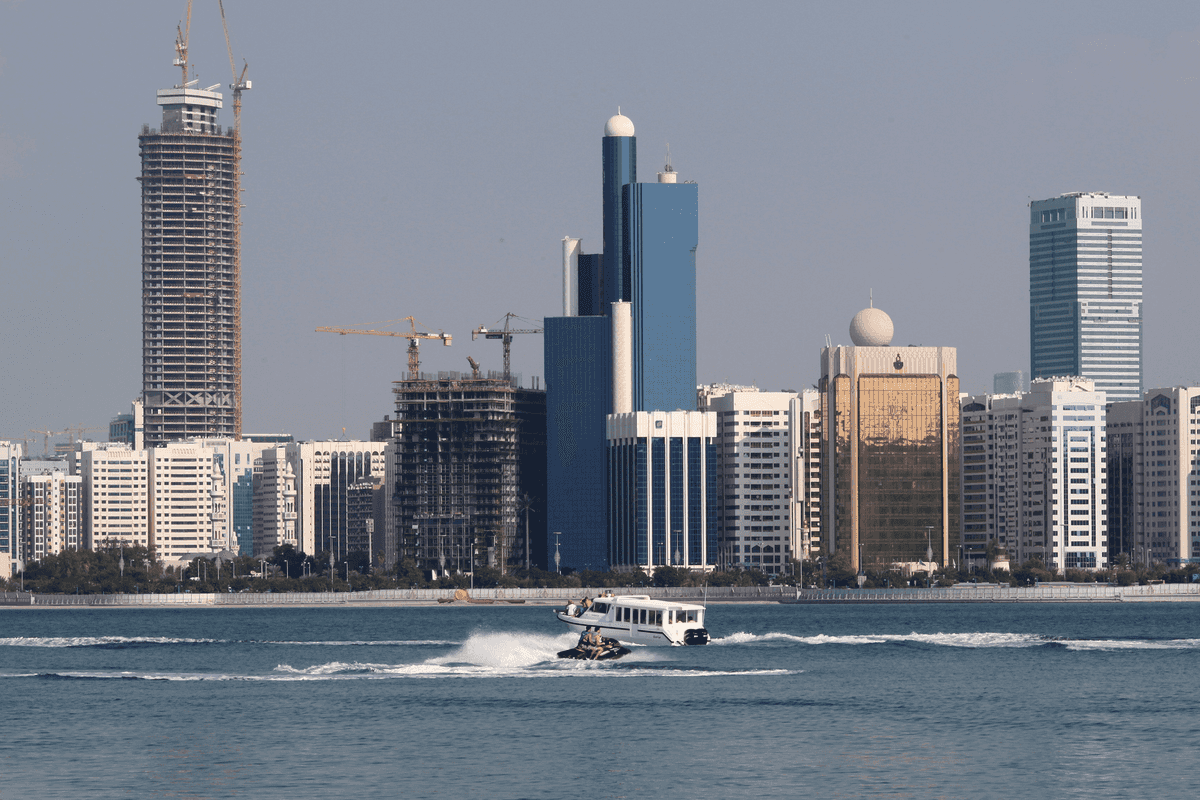
Abu Dhabi’s non-oil foreign trade rose 36% year-on-year in 2025 to AED415.4 billion, up from about AED306 billion in 2024, state news agency WAM reported, citing data from Abu Dhabi Customs.
The expansion was driven by a 63% surge in non-oil exports to AED175.4 billion, the strongest component of growth. Imports rose 22% to AED170.4 billion, while re-exports advanced 20% to AED70 billion.
What drove Abu Dhabi's non-oil trade growth in 2025?
The 36% rise in Abu Dhabi's non-oil trade was led by a sharp increase in exports, which grew 63% to AED175.4 billion. Imports and re-exports also posted solid gains, reflecting broader momentum across trade channels. Officials said the figures point to Abu Dhabi's deepening integration into global trade networks and growing competitiveness across major corridors.
What do the 2025 trade figures mean for Abu Dhabi's economic diversification?
Ahmed Jasim Al Zaabi, head of the Abu Dhabi Department of Economic Development, said the growth demonstrates a system designed to handle high-volume trade efficiently.
Coordinated policy, infrastructure investment and improved market access have enabled faster and more reliable flows of goods, he said. The results reflect the emirate's continued push to reduce its dependence on hydrocarbons.
Rashed Lahej Al Mansoori said the figures reflect the effectiveness of Abu Dhabi's economic model, which is built on diversification, sustainability and openness, supported by close collaboration between the public and private sectors.
Customs authorities are continuing to upgrade operations through digital systems and advanced risk management tools. The goal, he said, is to improve efficiency and facilitate faster cargo movement across ports.
How is Abu Dhabi's non-oil trade split by transport mode?
By mode of transport, land routes accounted for the largest share of total non-oil trade at 35%, followed by air freight at 33.5% and sea shipments at 31.5%.
The relatively even distribution across all three channels reflects a balanced and resilient logistics network. Officials said the spread underscores Abu Dhabi's positioning as a key logistics and trading hub, supported by infrastructure investments and streamlined supply chains.





Comments
See what people are discussing