

ADB chief urges regional cooperation as growth slows amid global shocks
ADB President Masato Kanda warns isolated responses will fail as the bank launches a $70 billion connectivity push at its 59th Annual Meeting in Uzbekistan

Business Desk
The Business Desk tracks economic trends, market movements, and business developments, offering analysis of both local and global financial news.
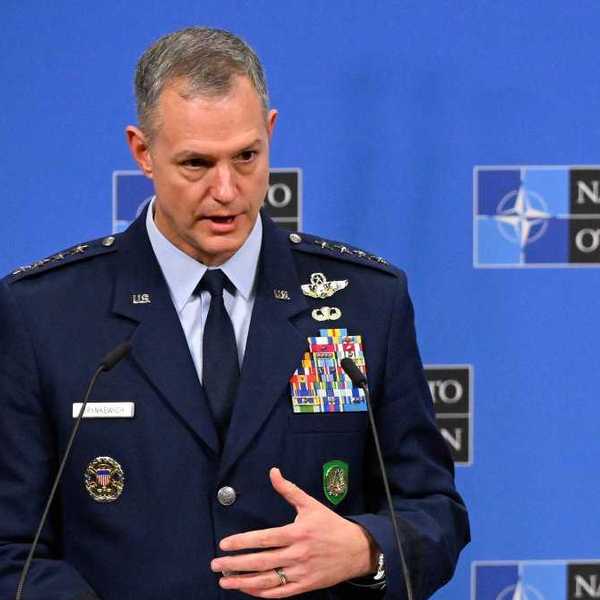
Asian Development Bank President Masato Kanda on Monday urged countries across Asia and the Pacific to strengthen regional cooperation, warning that fragmented responses to global shocks will fall short.
Speaking at the ADB's 59th Annual Meeting in Samarkand, Uzbekistan, he launched a $70 billion program to strengthen regional resilience through power and digital infrastructure.
What is the ADB and what does it do?
The Asian Development Bank is a multilateral development institution that supports economic and social development across Asia and the Pacific through loans, grants, and technical assistance.
It is headquartered in Manila, Philippines, and owned by 69 members.
In 2025, the ADB committed a record $29.3 billion in financial support, generating over 3.3 million jobs and benefiting more than 180 million people.
What did ADB announce at the 59th Annual Meeting?
The meeting, held from May 3 to 6 in Samarkand under the theme "Crossroads of Progress: Advancing the Region's Connected Future," brought together policymakers, private sector leaders, and development partners.
Kanda announced a $50 billion initiative to develop a Pan-Asia Power Grid integrating renewable energy across borders.
A separate $20 billion program aims to expand cross-border digital connectivity and reduce the digital divide.
At the annual meeting, Kanda called on member countries to act collectively. "Act together to develop together," he said, adding that "in this fragmented world, traditional and isolated development responses will fail."
Kanda described the ADB as "an anchor of stability" during a period marked by geopolitical fragmentation, economic disruption, and environmental stress.
He said the bank will continue to act as a financier, advisor, and mobilizer to attract private investment and address environmental challenges. "The work ahead is immense, but our purpose is clear. We have the strategy. We have the resources. We have the collective will to execute," he said.
How is the Middle East conflict affecting growth in Asia?
The ADB projects growth in developing Asia and the Pacific to slow to 4.7% this year, down from 5.4% last year, while inflation is expected to rise to 5.2% from 3.0%. The bank said it has begun providing crisis support to countries affected by the Middle East conflict, warning that prolonged disruptions are weighing on the region's outlook.
In a more severe scenario involving renewed escalation and higher oil prices, growth could slow further to 4.2% in 2026 and 4.0% the year after, while inflation could climb to 7.4%.
Why is the ADB scaling up regional connectivity investment?
Kanda said economic shocks are increasingly transmitted across borders through energy markets, supply chains, and digital systems, hitting vulnerable communities hardest.
The ADB is scaling up investments and accelerating reforms to integrate infrastructure, markets, and institutions across the region.
The bank is also working to attract private capital to close the gap between development needs and available public financing.




Comments
See what people are discussing