

Ahmed al-Sharaa’s journey from militant to Syria’s leader
Kamran Khan says Al-Sharaa’s rise shows how insurgents can quickly become recognized political leaders.

News Desk
The News Desk provides timely and factual coverage of national and international events, with an emphasis on accuracy and clarity.
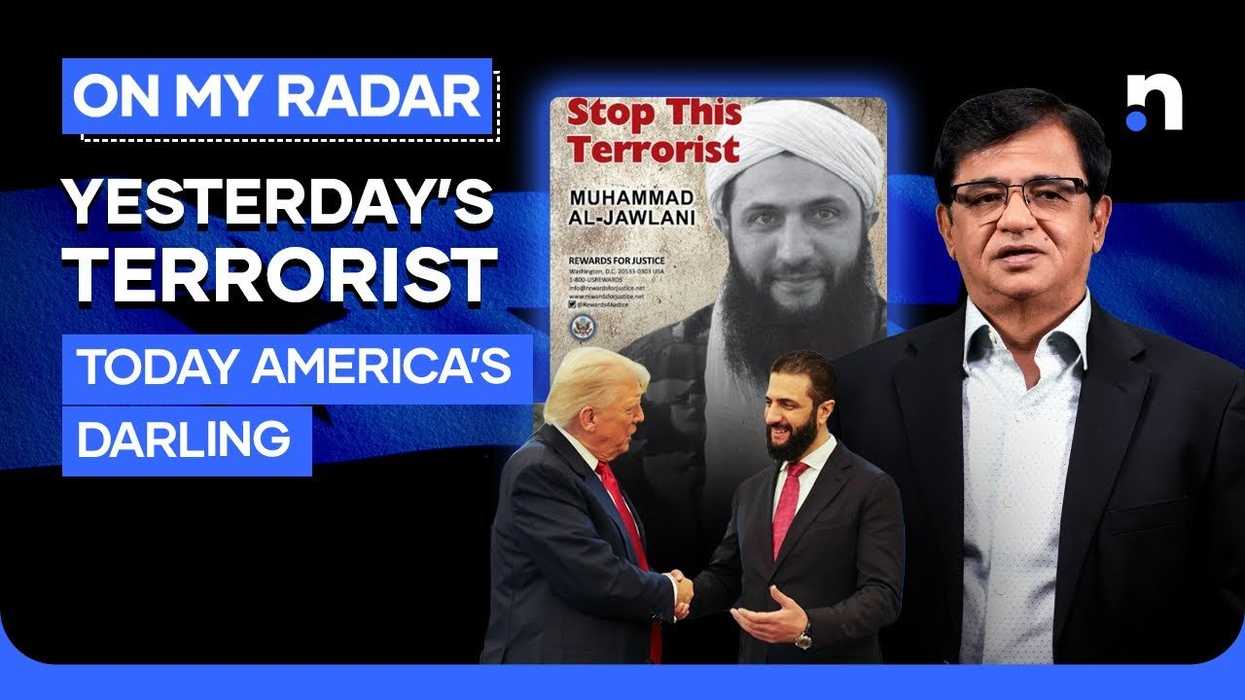
Syria has witnessed a dramatic political shift as former militant leader Ahmed Al-Sharaa, once a high-profile Al-Qaeda commander, has emerged as the country’s interim president following the collapse of Bashar al-Assad’s regime in December 2024.
Once known as Abu Muhammad Al-Julani, Al-Sharaa carried a $10 million U.S. bounty and was long considered a global terrorist. Today, he occupies the presidential palace in Damascus and is actively engaging with world leaders.
Kamran Khan said in the latest episode of On My Radar that Al-Sharaa’s rise underscores the complex transformations possible in global politics, where former insurgents can transition into recognized political leaders within months.
Over the past year, Al-Sharaa has met formally with several international figures, including former U.S. President Donald Trump, Russian President Vladimir Putin, Saudi Crown Prince Mohammed bin Salman, UAE President Sheikh Mohammed bin Zayed, Turkish President Recep Tayyip Erdogan and Qatari Emir Sheikh Tamim bin Hamad Al Thani. These engagements signal Syria’s growing diplomatic relevance under his leadership.
Syria’s strategic location on the Mediterranean, bordering Turkey, Israel, Iraq, Lebanon, and Jordan, has historically made it a hub for extremist groups, including Al-Qaeda and ISIS, as well as arenas of influence for Hamas, Hezbollah, Houthi forces, and Kurdish insurgents.
Despite this, Al-Sharaa has successfully balanced relations with the U.S., Russia, Saudi Arabia, Qatar, Turkey, and Iran, while reportedly positioning Syria as a potential participant in the Abraham Accords with Israel.
In a notable development, Syria and Israel have resumed talks under U.S. mediation to reduce border tensions. Held in Paris, the negotiations focused on reactivating a U.N.-monitored buffer zone. Leading Syria’s delegation were Foreign Minister Assad Al-Shibani and Intelligence Chief Hussein Al-Salma, key figures in Al-Sharaa’s government.
Al-Sharaa’s journey from militant to statesman has roots in the Iraq war of 2003, when he joined Al-Qaeda under Abu Musab Al-Zarqawi. Captured in 2006 and imprisoned at Camp Bucca, he connected with future ISIS founders.
Following his 2011 release, he aligned with ISIS leader Abu Bakr al-Baghdadi before establishing the Al-Nusra Front in Syria, which became Al-Qaeda’s Syrian branch. By 2017, he united multiple factions under Hay’at Tahrir al-Sham (HTS) and established control over Idlib province, laying the groundwork for his political ascent.
With Assad’s ouster, Al-Sharaa transitioned from rebel commander to interim president by January 2025. His government quickly normalized relations with the U.S., EU, Arab states, Russia, Turkey, and Israel. He was removed from U.S. terrorist lists, and Saudi Crown Prince Mohammed bin Salman facilitated meetings with President Trump, effectively clearing the way for Al-Sharaa’s entry into global diplomacy.
History offers similar examples of insurgents turning into global leaders. Figures such as Nelson Mandela, Yasser Arafat, Michael Collins, Robert Mugabe, Fidel Castro, Ho Chi Minh, Menachem Begin, and Narendra Modi were once labeled insurgents or terrorists before gaining recognition and legitimacy. In Pakistan, Mir Murtaza Bhutto’s transition from leading the allegedly militant group Al-Zulfiqar to becoming a political actor reflects a comparable trajectory.
A contrast with Afghanistan further highlights Al-Sharaa’s diplomatic success. Within one year, Syria under his leadership gained international recognition and access to reconstruction funds, whereas the Afghan Taliban, despite three and a half years in power, remain largely isolated, with frozen funds and limited diplomatic engagement.
Despite his militant past, Al-Sharaa has established himself as a skilled politician, welcomed by the global community. His story illustrates a core truth of politics: today’s rebels can become tomorrow’s recognized leaders and current rulers may themselves face unpredictable transformations in the years ahead.



Comments
See what people are discussing