

Pakistan army warns against repeat of May 9 violence, vows firm response
Army commanders said any attempt to create unrest or replicate the May 9, 2023 violence would face "decisive force" and the rule of law

Aamir Abbasi
Editor, Islamabad
Aamir; a journalist with 15 years of experience, working in Newspaper, TV and Digital Media. Worked in Field, covered Big Legal Constitutional and Political Events in Pakistan since 2009 with Pakistan’s Top Media Organizations. Graduate of Quaid I Azam University Islamabad.

News Desk
The News Desk provides timely and factual coverage of national and international events, with an emphasis on accuracy and clarity.
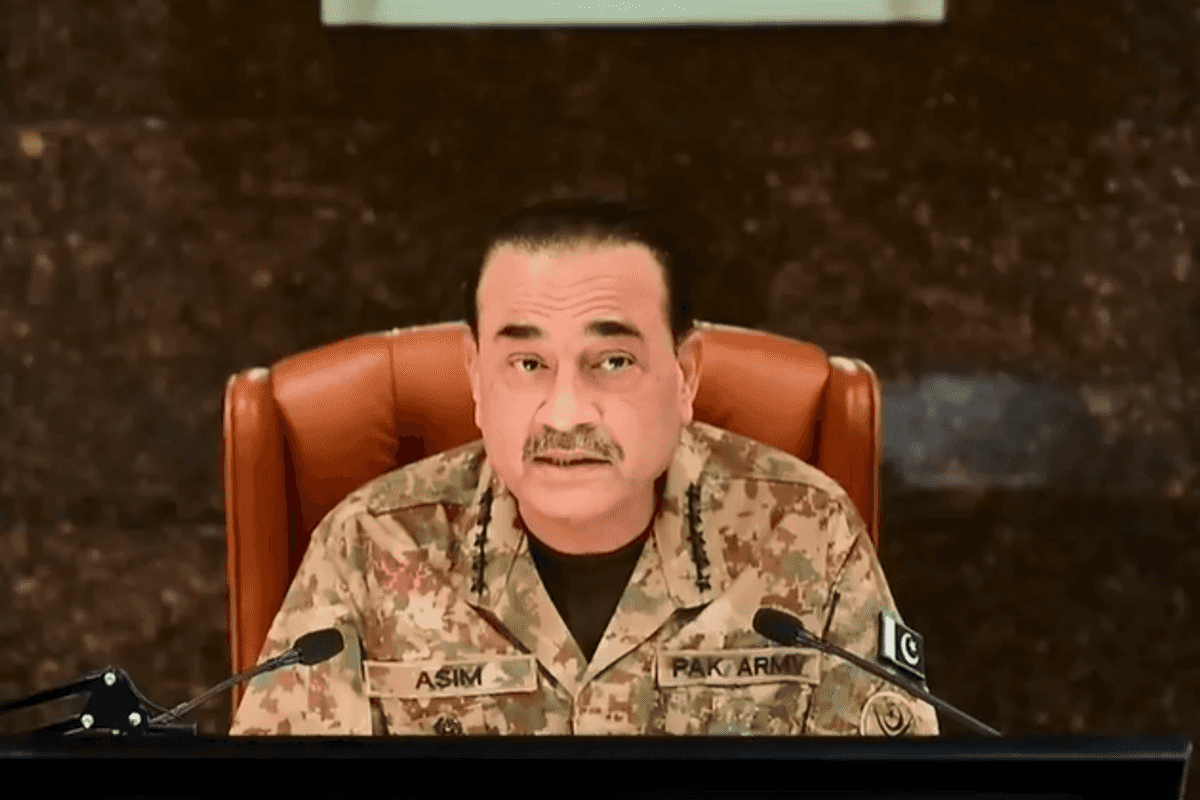
Army commanders warned that attempts to repeat the May 9 violence would be met with “decisive force” and the rule of law, ISPR said.
ISPR
Pakistan's army has warned that any attempt to repeat the violence of May 9, 2023 would be met with a firm response.
The warning came at the 277th Corps Commanders' Conference in Rawalpindi, chaired by Field Marshal Syed Asim Munir, as commanders reviewed domestic stability and security.
What did the Pakistan army say about May 9?
Army commanders said attempts to create unrest or replicate the events of May 9 would be handled with "decisive force" and the rule of law, according to the Inter-Services Public Relations (ISPR).
The statement did not name any group or activity as the immediate trigger for the warning. The forum was held at army headquarters, and Munir serves as Chief of Army Staff and Chief of Defense Forces.
What happened on May 9, 2023?
The violence followed the arrest of former Prime Minister Imran Khan and saw protests and attacks on military and government installations in several parts of Pakistan. Khan's supporters have rejected allegations that he or his party were responsible for the attacks.
Beyond domestic stability, the commanders reviewed Pakistan's security environment and reaffirmed a high level of operational readiness. The forum also reviewed ongoing counterterrorism operations and what ISPR described as sustained intelligence-based operations by law enforcement agencies.
What did the army say about Afghanistan and counterterrorism?
The military leadership warned that Pakistan retained the right to take targeted action against terrorism originating from Afghanistan. According to ISPR, the commanders held Afghanistan's Taliban leadership responsible for facilitating terrorism and said it would bear responsibility for the consequences.
The forum said countering militancy required measures beyond security operations. These include improved governance at the grassroots level, greater public engagement, the dismantling of links between terrorism and organized crime, and stronger police capabilities.
What is the Makkah Joint Defense Agreement?
The commanders reviewed Pakistan's external security partnerships and welcomed the recently concluded Makkah Joint Defense Agreement involving Pakistan, Saudi Arabia and Turkey. According to ISPR, the forum said the agreement would contribute to the countries' longstanding strategic and collective defense ties.
The commanders also condemned attacks by Yemen's Houthi movement against Saudi Arabia and expressed solidarity with Riyadh. They reaffirmed Pakistan's commitment to the security and sanctity of the Haramain Sharifain, Islam's two holiest sites in Makkah and Medina.
On Kashmir, the commanders reiterated Pakistan's longstanding position on Indian-administered Jammu and Kashmir. They said Islamabad supports a settlement in line with relevant UN Security Council resolutions and what it described as the aspirations of the Kashmiri people.
What did Field Marshal Munir tell commanders?
In his closing remarks, Munir directed commanders to strengthen intelligence-based operations and enhance combat capabilities through modern technology, improved training and greater integration across military domains. He said the armed forces remained prepared to safeguard Pakistan's sovereignty, territorial integrity and national security, with the support of the Pakistani public, according to ISPR.
What did the previous Corps Commanders' Conference focus on?
The previous conference in July focused in part on Pakistan's water security amid tensions with India over the Indus Waters Treaty. The forum reaffirmed its commitment to taking measures to secure what it described as Pakistan's rightful share of water, in line with government directives.
It also referred to guidance issued by the National Security Committee on April 24, 2025, after India's unilateral decision to place the treaty in abeyance.
The commanders also expressed concern over what ISPR described as the use of Afghan territory by India-sponsored militant groups, including Fitna al Khawarij and Fitna al Hindustan, to carry out attacks inside Pakistan.
Pakistan has repeatedly accused Afghanistan of allowing its territory to be used by militants, allegations the Afghan Taliban authorities have rejected.




Comments
See what people are discussing