

Pakistan top court lifts ban on converting residential plots for commercial use in Karachi
FCC disposes of a long-running illegal construction case, withdraws earlier restrictions

Business Desk
The Business Desk tracks economic trends, market movements, and business developments, offering analysis of both local and global financial news.
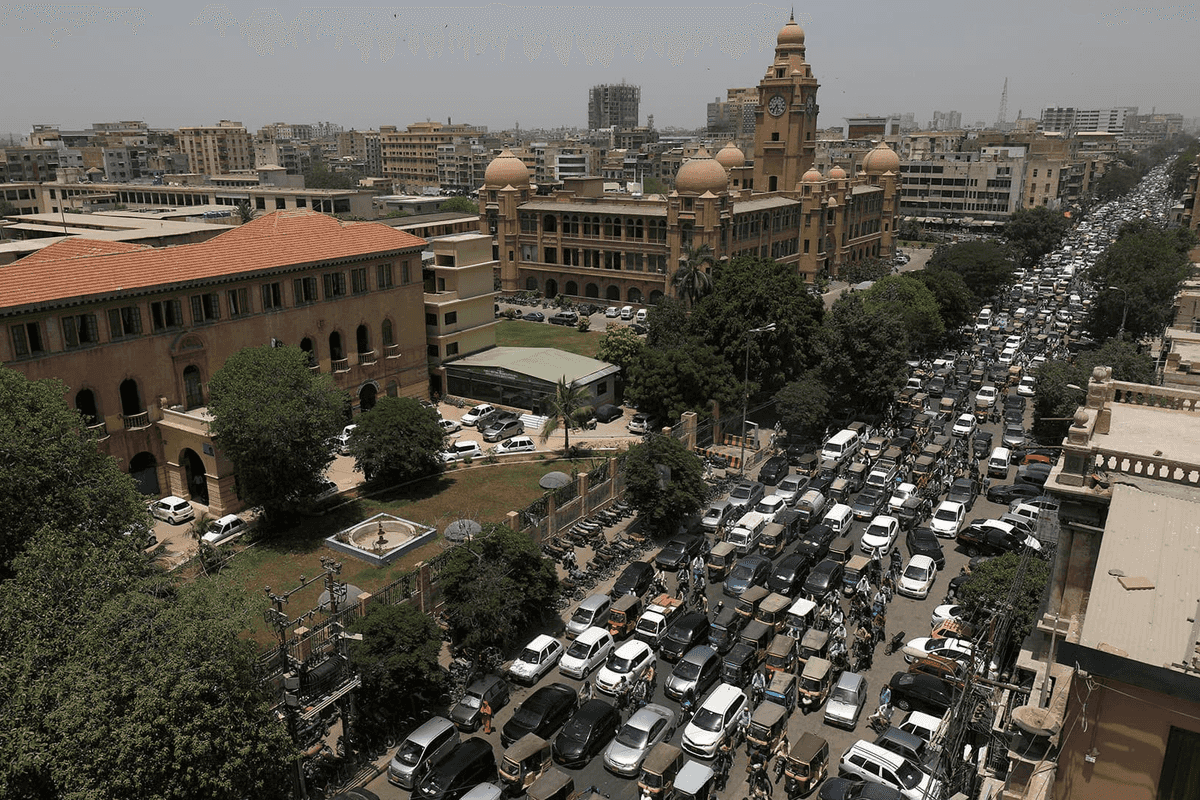
The Federal Constitutional Court lifted the ban on converting residential plots for commercial and recreational use in Karachi on Tuesday, providing major relief to builders and developers.
A bench headed by Justice Aamer Farooq disposed of the long-running illegal constructions case and withdrew earlier restrictions on changing residential plot categories.
What did the Federal Constitutional Court rule on Karachi plot conversions?
The FCC lifted restrictions on converting residential plots to commercial and recreational use in Karachi, ending a ban originally imposed by the Supreme Court in 2019.
According to the Associated Press of Pakistan, the court clarified that amenity plots, including parks, hospitals, schools, mosques, playgrounds, and graveyards, cannot be converted for commercial or residential purposes.
All other earlier restrictions on plot category changes were withdrawn.
What did the court say about building regulations and institutions?
Justice Aamer Farooq said the court would not interfere in the functioning of institutions such as the Sindh Building Control Authority. He added that if any institution violates the law, the relevant forum or the high court can be approached, and that affected parties have the right to file appeals against high court decisions.
Justice Arshad Hussain remarked that any official found violating the law would face legal action.
The bench also noted that the FCC's suo motu powers no longer exist and that laws are already in place to address violations of building regulations.
"We expect town planning institutions to work in good faith," Justice Farooq said. The court also clarified that the Supreme Court's earlier ruling on plot category conversions would not obstruct the functioning of relevant authorities.
What will be the impact of FCC's decision?
Hasan Bakshi, Chairman of the Association of Builders and Developers of Pakistan (ABAD), has hailed FCC’s decision.
He noted that while land conversion remained open across the rest of the country, restrictions were imposed in Karachi, leading to a rise in illegal constructions.
Bakshi emphasized that the ruling will now channel investments back into legal businesses, allowing citizens to purchase homes and offices through legitimate means.
What the ban was imposed?
The Sindh High Court had previously heard a petition filed by Jamaat-e-Islami Karachi challenging the Sindh government's move to legalize the commercial use of residential plots.
During those proceedings, SBCA Director General Ishaq Khoro informed the court that a March 13 notification allowing such activities had been withdrawn. The Sindh High Court disposed of that petition following the submission.
The petition had been filed by City Council opposition leader Saifuddin Advocate, along with nine town chairmen.
Saifuddin Advocate welcomed the withdrawal at the time, calling it a victory for Karachi's residents. He had alleged that allowing commercial activities on residential plots was part of a conspiracy to damage the city.




Comments
See what people are discussing