

US, Africa make up 73% of Cnergyico's FY26 crude mix
Middle Eastern crude fell to 21% of the refiner's processed mix from 72% a year earlier, while a USD 1.5 billion refinery upgrade remains on the agenda

Business Desk
The Business Desk tracks economic trends, market movements, and business developments, offering analysis of both local and global financial news.
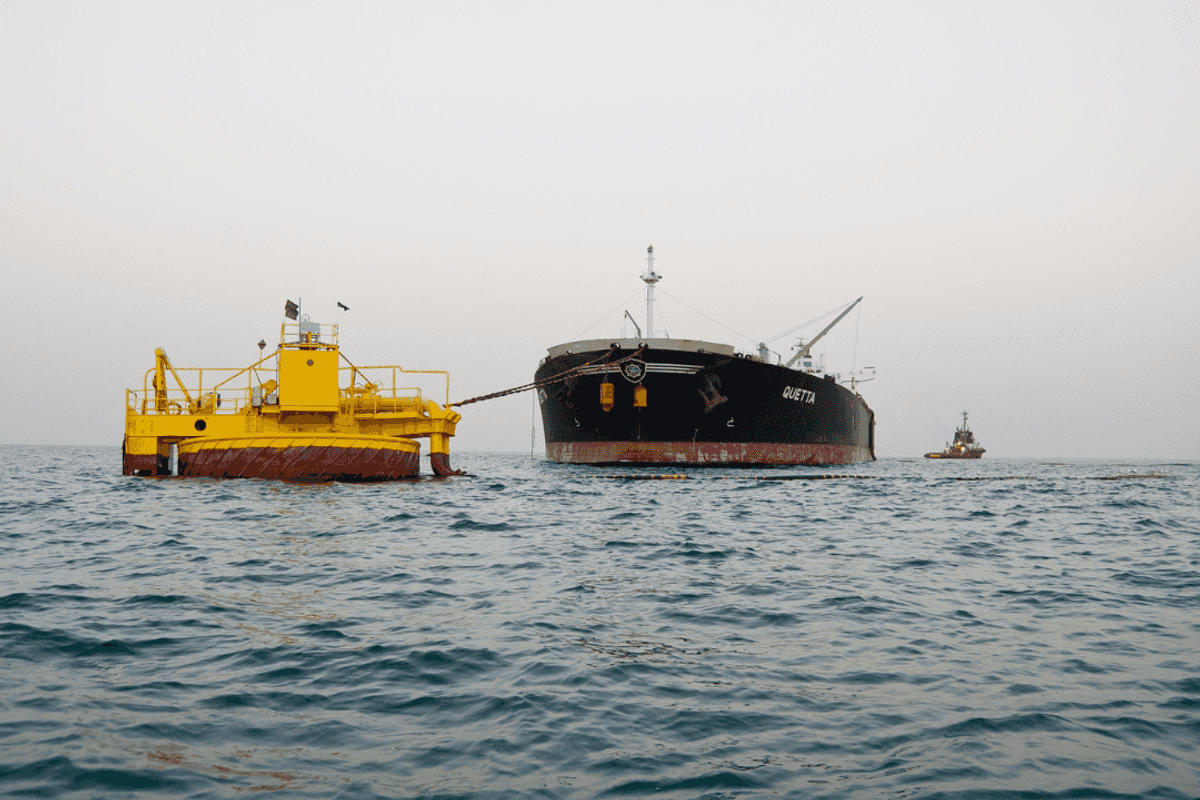
Cnergyico Pk Ltd. processed 73% of its crude from the United States and Africa in FY26, up from none in FY25, sharply reducing its reliance on Middle Eastern supplies, its November 24 corporate briefing showed. Management said crude purchases were driven by refining margins and delivered costs rather than regional preferences.
How did Cnergyico's crude sourcing change in FY26?
The United States accounted for 48% of the crude Cnergyico processed in FY26 and Africa for 25%, compared with zero from either region in FY25. The Middle East's share fell to 21% from 72%, while the Caspian region's dropped to 6% from 28%, according to the company's presentation.
Cnergyico imported approximately 7 million barrels of US crude valued at USD 750 million during FY26, according to its presentation filed with the Pakistan Stock Exchange (PSX).
Management told analysts that crude procurement decisions were primarily based on refining margins, availability and delivered costs rather than geographical preferences.
Delivered premiums on crude cargoes have eased from peak levels of around USD 15 per barrel to USD 6–8 per barrel for January bookings, according to reports by JS Global and Topline Securities.
Freight rates are expected to remain elevated through December before potentially moderating in January, offering some relief to procurement costs. Management estimated the additional landed cost of West Texas Intermediate (WTI) crude at USD 20–22 per barrel.
The diversification has also allowed Cnergyico to process low-sulfur crude grades suitable for producing very low sulfur fuel oil (VLSFO), which commands higher prices than conventional high-sulfur fuel oil.
Management said VLSFO currently trades at a premium of approximately USD 300 per tonne over high-sulfur fuel oil.
Although Cnergyico has not booked US crude cargoes for December and January, it has secured West African supplies to maintain VLSFO production, according to the brokerage reports.
How has Cnergyico's financial performance changed?
Stronger product-to-crude spreads, particularly during the fourth quarter of FY26, helped improve Cnergyico's financial performance, according to the brokerage reports.
The company's gross profit margin increased to 4.93% in FY26 from 1.68% a year earlier, according to its official financial presentation.
The margin increased further to 15.39% in the first quarter of FY27, compared with 1.51% in the corresponding quarter of FY26.
Refinery throughput reached approximately 52,000 barrels per day in Q1 FY27, compared with 27,000 barrels per day in the immediately preceding quarter.
Management expects the higher throughput trend to continue during the current quarter, supporting domestic diesel availability and reducing dependence on imports.
According to the brokerage reports, Cnergyico recorded the highest diesel sales among domestic refineries in October, marginally exceeding Pakistan Arab Refinery Ltd. (PARCO), supported by inventory carried into the month.
However, November sales were comparatively weaker, and management expects some inventory losses as petroleum prices decline.
How will Cnergyico finance its refinery upgrade?
Cnergyico is pursuing a refinery upgrade estimated to cost USD 1.2 billion to USD 1.5 billion, with its official presentation putting the tentative cost at USD 1.5 billion.
Under the company's proposed financing structure, approximately 75% of the project cost would come from equity, sponsor-arranged financing and bank financing, while the remaining 25% would be supported by incentives under the government's brownfield refinery policy.
At the lower USD 1.2 billion estimate, approximately USD 300 million would be financed through customs duty incentives, with the remaining USD 900 million coming from sponsors and lenders, according to the brokerage reports.
Management is exploring USD 150 million to USD 300 million in project financing from international institutions, including the Export-Import Bank of the United States (US EXIM Bank), the U.S. International Development Finance Corporation (DFC) and Middle Eastern lenders.
Discussions with US EXIM Bank have been encouraging, management said, although no financing agreement was announced.
The refinery upgrade agreement was signed with Inter State Gas Systems on September 24, following the notification of the revised refining policy on September 10.
The upgrade will be implemented in three phases.
The first phase will improve motor gasoline and high-speed diesel production to meet Euro-V specifications, followed by fuel oil conversion in the second phase.
The third phase will focus on increasing refinery capacity and upgrading port facilities.
Management is also holding preliminary discussions with potential investors regarding a second single-point mooring facility to support petroleum product exports.
Why is Cnergyico opposing the government's fuel pricing formula?
Cnergyico has reiterated its opposition to the government's USD 38-per-barrel ceiling on high-speed diesel (HSD) crack spreads, arguing that intervention in refining margins creates uncertainty and restricts long-term operational planning.
The government reduced the diesel crack-spread ceiling from USD 41.89 to USD 38 per barrel on October 20.
Management expects the cap to be withdrawn once average crack spreads fall below the threshold, citing previous government practice.
The company also expects the government to discontinue the arrangement requiring refineries to surrender PKR 49.02 per liter into the petroleum levy account under the revised motor gasoline pricing formula introduced on October 31.
According to management, around PKR 30–35 per liter directly affects Cnergyico's profit and loss account, while the remainder represents the customs duty component intended for the refinery upgrade account.
Management said the revised motor gasoline pricing formula was introduced without consulting refineries and warned that an extension could force companies to reduce throughput because of negative gasoline margins.
The refinery industry plans to approach the anomaly committee under the upgrade agreement before considering arbitration, if necessary.
The company also expects a PKR 3 billion write-back relating to the Balochistan cess, together with the release of previously deposited guarantees.
Separately, a PKR 4 billion penalty arising from the reduction in deemed duty on high-speed diesel from 7.5% to 5% was recognized in Cnergyico's FY26 accounts and paid after September, according to the brokerage reports.




Comments
See what people are discussing