

Pakistani doctor says she was threatened to declare Mir Raza's death a suicide
Dr Samia told a judicial commission she was threatened, followed for two days and pressured to declare Mir Raza's death a suicide, she said

Ahmer Rehman
Senior Correspondent
Ahmer Rehman Khan is a experienced Journalist with over 17 years of expertise, specializing in crime and investigative reporting. His career includes serving as the Chief Crime Reporter at Samaa TV, where he led significant coverage of crime events. Prior to that, he held Senior Correspondent roles at major news networks including Geo TV, Dunya TV, Express TV, and Aaj News.
News Desk
The News Desk provides timely and factual coverage of national and international events, with an emphasis on accuracy and clarity.
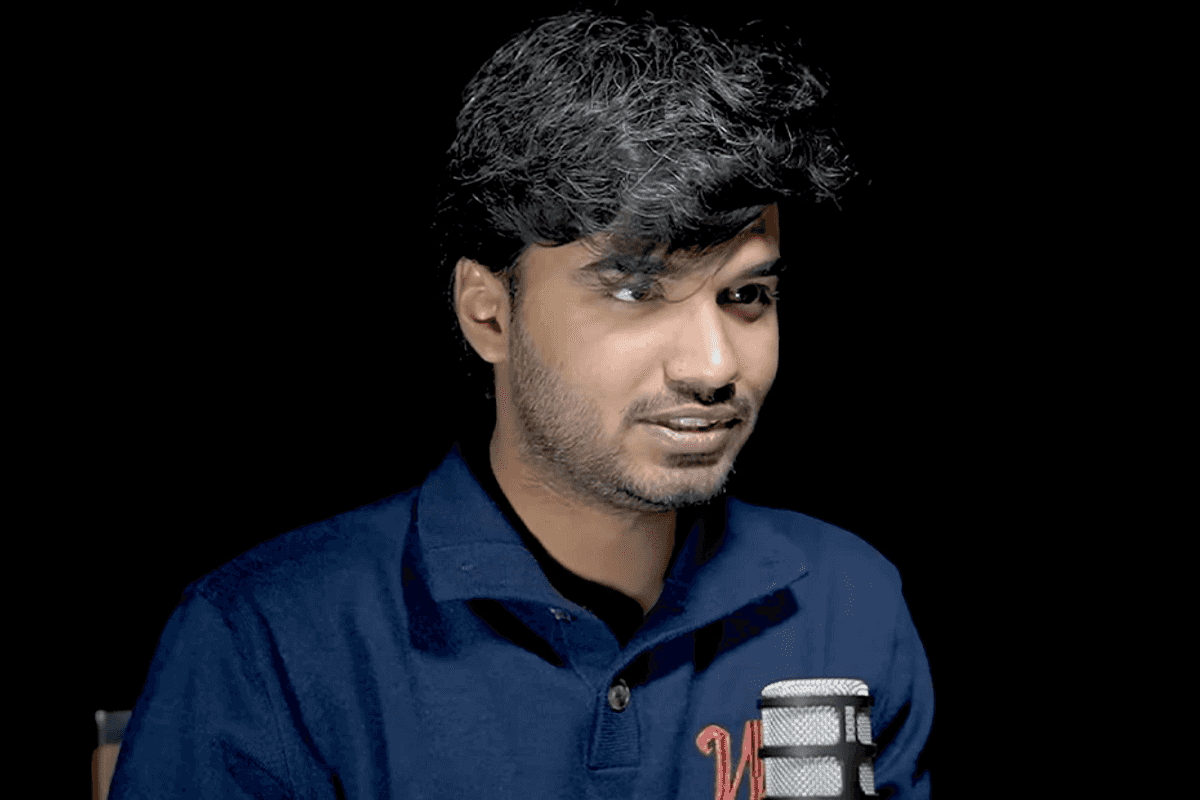
A file image of Mir Raza, whose body was found in Karachi on July 29, a day after he went missing.
YouTube screengrab
A Pakistani police surgeon told a judicial commission on Monday that she was threatened and followed over her findings in the death of Mir Raza and was told she would be treated leniently if she declared the case a suicide.
Why did Dr Samia say she was threatened in the Mir Raza case?
Dr Samia told a judicial commission that she had put her career at stake over the case. She said she was followed on a motorcycle for two days, faced a public campaign against her, and was told she would be treated leniently if she ruled Mir Raza's death a suicide.
She also told the commission that she had filed a complaint with the National Cyber Crime Investigation Agency. "For me, this is a test case," Dr Samia told the commission, adding that she would take a similar position in another case if the evidence warranted it.
Her testimony came as the commission examined medical findings that she said contradicted the earlier conclusion of suicide in Mir Raza's death, a case that has generated controversy and allegations by his family that authorities attempted to suppress facts surrounding his death.
What led to the exhumation of Mir Raza's body?
Mir Raza's body was found on July 29, a day after he went missing. Police initially pursued the case as a possible suicide, prompting questions from his family over the circumstances of his death.
Days after the body was recovered, Dr Samia had raised questions about the initial post-mortem, saying some observations in the report did not appear to correspond with photographs available to investigators.
On August 6, a Karachi court allowed an application by Mir Raza's father seeking exhumation of the body and ordered the formation of a medico-legal board to conduct a second examination.
The Sindh health department subsequently formed an eight-member board with Dr Samia as its convener. In the early hours of August 7, however, the department reconstituted the board through an order issued by its director general, retaining Dr Samia as convener but replacing its other members.
Mir Raza's family rejected the reconstituted board, resulting in the postponement of the planned exhumation. The family's lawyer, Jibran Nasir, accused authorities of attempting to bury the facts surrounding the case.
What did the anaesthesia findings reveal in Mir Raza's autopsy?
Presenting the findings of the exhumation and post-mortem examination, Dr Samia said forensic testing showed an anaesthetic was present in Mir Raza's heart, indicating that the drug had entered his bloodstream.
She said the findings established that anaesthesia was present in Mir Raza's body when he was shot, although forensic testing could not determine the quantity. Dr Samia said local anaesthesia causes loss of sensation and that its effects can last between two and nine hours. If administered directly into a vein, she said, it could act immediately and could be fatal if given in a sufficiently high amount.
She said another doctor, Dr Usama, had incorrectly stated the drug's half-life. The presence of anaesthesia in the heart, she added, indicated that the drug had been present in the bloodstream.
The commission asked whether anaesthesia could be administered through a spray. Dr Samia said that if it had been administered in that manner, it might not have left a detectable trace in forensic testing.
The doctor said the medical board had ruled out suicide and that the findings from her team's examination were not consistent with it. She said the exhumation had been conducted to examine questions raised about the earlier findings.
What injuries did Mir Raza's second post-mortem uncover?
Dr Samia told the commission that the exhumation had also revealed several injuries. She said Mir Raza had an injury to his head, including a mark on the back of the head indicating that he had been struck by a hard object. His nasal bone was also fractured, she said, adding that the head injury had been sustained while he was alive.
The bullet that struck Mir Raza fractured his ribs and damaged his lung and heart, according to Dr Samia. She said the mark on his chest that had initially been identified as the bullet's entry point was incorrectly identified.
She also said there were chemical burn marks on his hands and feet and that she had consulted four skin specialists about the findings. Hydrochloric acid could convert polyester into carbon, she said, adding that carbonization was found on Mir Raza's shirt.
Dr Samia said only findings on which all members of the medical team agreed had been included in the post-mortem report. She also told the commission that decomposition on Mir Raza's face differed from that on the rest of his body and that there were no signs of decomposition on his back.
The doctor said only a small amount of blood was found at the crime scene. Given the injury to the heart, she said, a significantly larger amount of blood would normally have been expected.
What did police tell the commission about the investigation?
The commission separately questioned Ferozabad Station House Officer Adeel Afzal over the handling of the initial investigation. Mir Raza's father, Mir Hussain, told the commission that his family had initially been told that an FIR could not be registered for 24 hours. He said police officials at the station had told them that boys sometimes left home after becoming upset.
Afzal denied seeing Mir Raza's body and said the investigation was assigned to Sub-Inspector Arshad Javed after the FIR was registered. The commission questioned why Afzal had continued checking CCTV footage after another officer had been assigned the investigation. Afzal said Section 156 of Pakistan's Code of Criminal Procedure permitted him to do so.
The commission also questioned the sequence of events after police allegedly traced suspects. Mir Hussain said the SHO had told the family on July 30 that the suspects had been traced and that they would receive an update within 48 hours. The commission noted that the case was subsequently declared a suicide.
What questions were raised over evidence in the Mir Raza case?
The commission also questioned police about the collection and documentation of evidence from the scene. Afzal said police took Mir Raza's smartwatch for forensic examination and prepared a memo. The commission questioned why the memo contained the names of additional officials when witnesses had said only two people had gone to the house.
Nasir told the commission that ASI Faisal Rahim, who prepared the memo, had not been present at the scene. He also said the same officer had recovered a holster connected with the case. Afzal said Faisal Rahim, who was posted with the Shaheen Force, also performed extra duty at the police station.
The commission questioned why a police officer had been made a witness while the family was present. It also questioned why police had asked the family for Mir Raza's passport. Afzal said the Counter Terrorism Department's technical department had requested it but acknowledged that he did not have the relevant letter.
Police also recovered a pair of Mir Raza's slippers from the scene the following day and handed them to his father, Afzal said. The commission questioned whether a formal memo had been prepared for the handover.
The whereabouts of a digital video recorder from the guesthouse also came under scrutiny. Afzal said an official from the Gulistan-e-Johar IT department had obtained CCTV footage. Mir Hussain told the commission that police had shown him the DVR while handing over the slippers and said they had taken it from the guesthouse.
The commission further questioned allegations that police had prevented witnesses from meeting Mir Raza's family or joining protests. Afzal denied making such a request, saying hundreds of people had taken part in the protests and there would have been no reason to stop only two people.
The commission is examining conflicting medical findings, the reported presence of anaesthesia in Mir Raza's body and the handling of evidence by police as it investigates the circumstances surrounding his death.




Comments
See what people are discussing