

DP World to develop two new Fujairah terminals under 50-year concession deal
DP World signs a 50-year concession with Fujairah Ports Authority to build two new terminals, expanding the UAE's maritime and logistics capacity

Dubai Desk
The Dubai Desk reports on major developments across the UAE, covering news, culture, business, and social trends shaping the region.
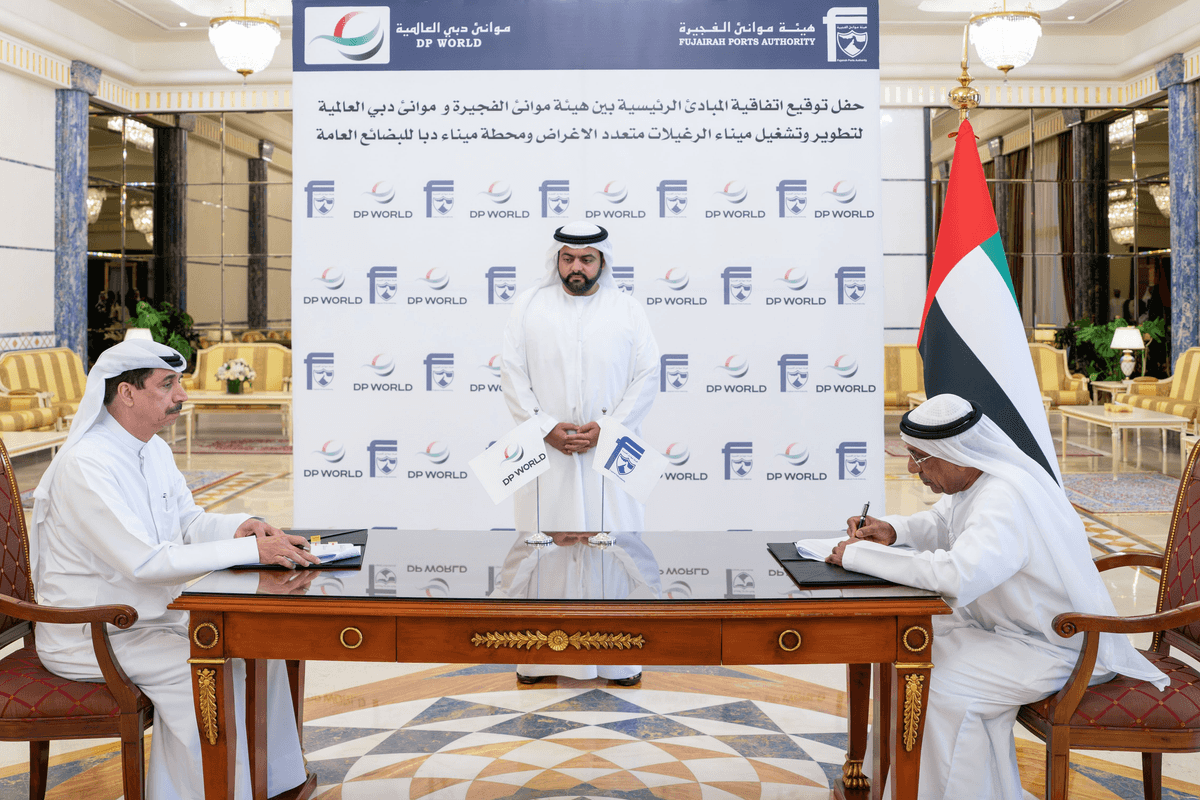
Under the 50-year concession, DP World will develop two facilities in Fujairah: the Al Rugaylat container and multipurpose terminal, and Dibba Al Fujairah Port.
Courtesy: WAM
DP World and the Fujairah Ports Authority have signed a 50-year concession agreement to develop two multipurpose port facilities in Fujairah, expanding the UAE's maritime and logistics infrastructure. The agreement was reported by the state-run WAM news agency.
What did DP World agree to build in Fujairah?
Under the 50-year concession, DP World will develop two facilities in Fujairah: the Al Rugaylat container and multipurpose terminal, and Dibba Al Fujairah Port. The deal expands the emirate's maritime capacity and reinforces Fujairah's position as a regional logistics hub. Both projects fall under a single long-term concession structure.
The agreement was signed in the presence of Sheikh Mohammed bin Hamad bin Mohammed Al Sharqi, Crown Prince of Fujairah. Essa Kazim, chairman of DP World's board of directors, and Mousa Murad, director of Fujairah Port, also attended the signing ceremony.
Sheikh Mohammed said the agreement reflects the vision of Sheikh Hamad bin Mohammed Al Sharqi, Supreme Council Member and Ruler of Fujairah, to strengthen the emirate's position as a global maritime and logistics hub. He added that the project would enhance Fujairah's economic infrastructure, attract investment, improve supply-chain efficiency and create jobs. He said it would also support sustainable development goals and strengthen the UAE's competitiveness in global trade.
How much capacity will the new Fujairah terminals add?
Al Rugaylat will have the capacity to handle up to 2.5 million twenty-foot equivalent units (TEUs) annually. It will also handle 1.7 million tonnes of general cargo and 190,000 car equivalent units (CEUs) each year. Dibba Al Fujairah Port will add up to 3.6 million tonnes of annual general cargo capacity.
Fujairah sits on the Gulf of Oman on the UAE's eastern coast. Officials said the new terminals build on the emirate's growing role in maritime services and logistics. Once operational, the development is expected to raise DP World's total container handling capacity in the UAE from 19.4 million TEUs to nearly 22 million TEUs, while also expanding general cargo and roll-on/roll-off capabilities.
How will the terminals connect to DP World's wider UAE network?
DP World said the new terminals will be linked to Jebel Ali through its inland logistics network. They will also be integrated with the Jebel Ali Free Zone, known as Jafza, allowing cargo to move between ports, logistics hubs and end markets across the UAE. Construction will happen in phases and is expected to take about 24 to 30 months from the start of development.
What have officials said about the Fujairah port deal?
Sheikh Saleh bin Mohamed Al Sharqi, chairman of the Fujairah Ports Authority, said the partnership marks an important milestone in Fujairah's development as a regional maritime gateway. He said it would bring additional capacity, investment and operating capability to the emirate. Essa Kazim, chairman of DP World, said the investment reflects the company's confidence in the UAE's future as a global trade and logistics hub and reinforces the country's role in international commerce.
Capt. Mousa Murad, managing director of the Fujairah Ports Authority, said the project would enhance Fujairah's port infrastructure and improve services for cargo owners and logistics customers. Yuvraj Narayan, group chief executive officer of DP World, said the development would provide additional capacity to support long-term growth. He added that it would offer greater flexibility and resilience for supply chains.




Comments
See what people are discussing