


News Desk
The News Desk provides timely and factual coverage of national and international events, with an emphasis on accuracy and clarity.
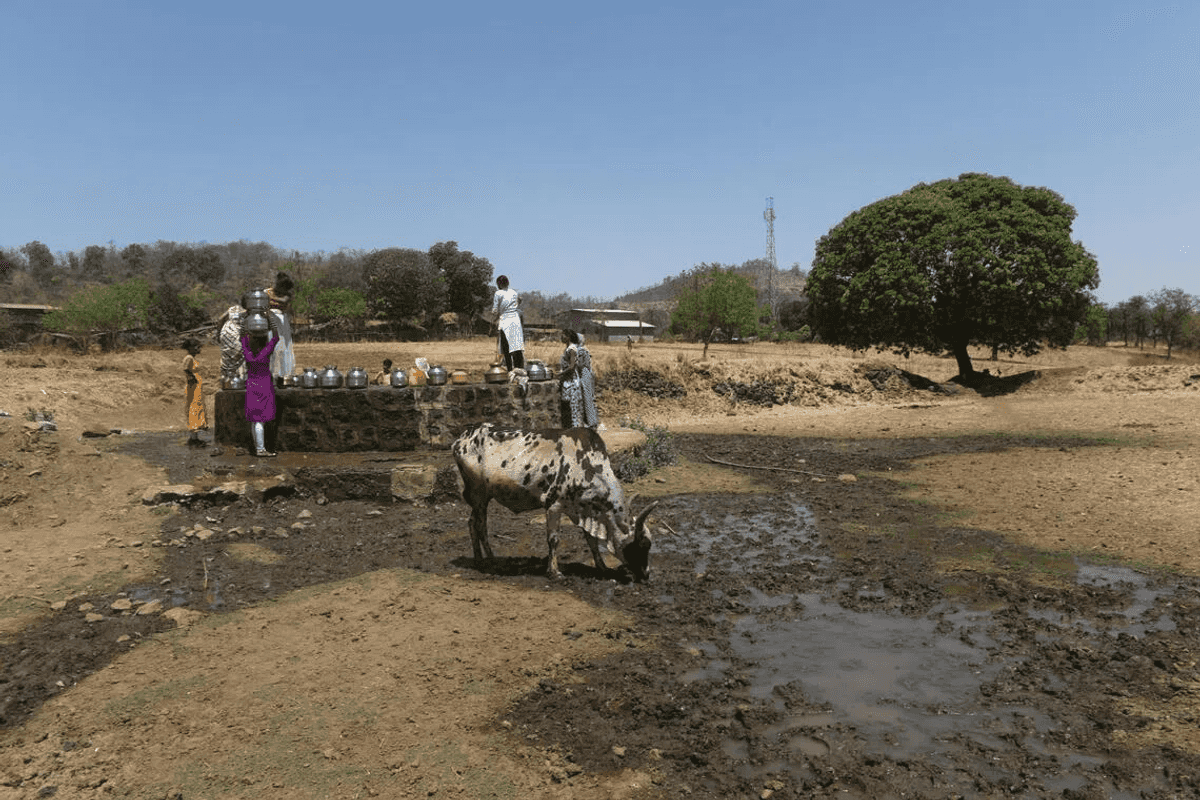
Maharashtra declares drought as 74% of state faces water shortage.
AFP/File
Drought has hit three-quarters of India's richest state of Maharashtra, the government said on Saturday, after prolonged low rainfall across the region home to the megacity of Mumbai.
The declaration followed a national weather forecast pointing to a monsoon season rainfall deficit that threatens farmers' livelihoods.
Why has drought been declared in Maharashtra?
Maharashtra's government declared drought after months of below normal rainfall linked to a stronger than usual El Nino pattern, which typically brings drier weather to South Asia. Officials say 74 percent of the state is now affected, threatening crop yields and the livelihoods of millions of farmers who depend on the monsoon.
The national weather department has said the abnormal rain patterns stem from this stronger El Nino effect. Chief Minister Devendra Fadnavis said the administration stood "firmly behind our farmer brethren" during the crisis, and his office said the government would assess crop damage to ensure farmers, farm labourers and rural families receive assistance in a timely manner.
How is drought affecting farmers across India?
Hundreds of millions of people in India depend on the June to September monsoon for the rains that sustain agriculture and industry. Maharashtra, whose capital Mumbai is India's financial and commercial center, has a population of 130 million and is a major agricultural state producing cotton, soybeans, sugarcane and pulses.
Many farmers depend on rain for irrigation and are highly vulnerable to crop failures, which can push entire families into financial crisis. The impact of low rainfall is also being felt in southern India, where Karnataka state has announced aid for farmers in drought hit areas.
El Nino is a naturally occurring climate pattern associated with warmer ocean temperatures in the Pacific that can shift wind and rainfall patterns around the world. Scientists say human caused climate change can amplify its effects by making more energy and moisture available to fuel extreme weather.





Comments
See what people are discussing