

EU ambassador meets Pakistan’s textile leaders to discuss GSP+ trade facility
EU envoy urges Pakistan to implement key laws to retain GSP+ status

Business Desk
The Business Desk tracks economic trends, market movements, and business developments, offering analysis of both local and global financial news.
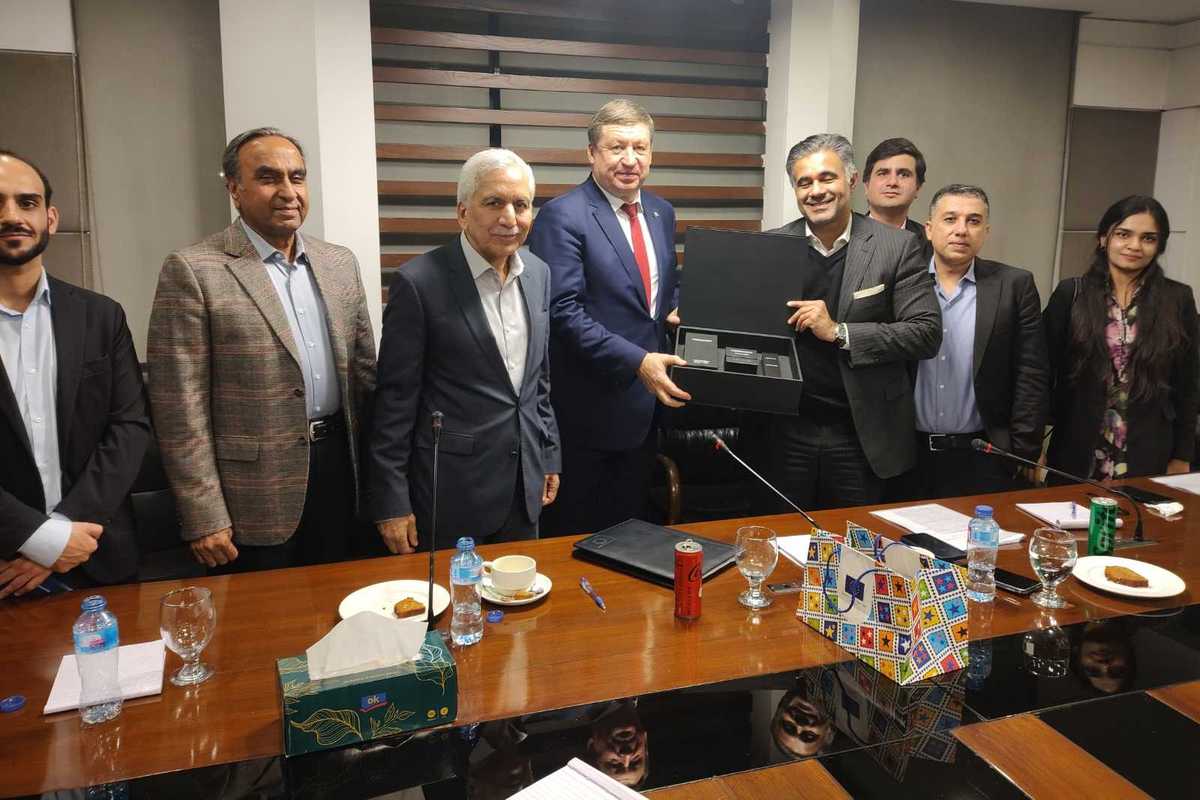
EU Ambassador Karoblis, with Piotr Buszta, meets APTMA leadership including top officials.
APMTA
European Union Ambassador Raimundas Karoblis met with the leadership of the All Pakistan Textile Mills Association (APTMA) on Friday to review progress on Pakistan’s GSP+ trade facility and discuss measures to promote exports.
The ambassador, accompanied by Piotr Buszta, Head of Political, Trade, and Communications, was received by APTMA officials including Chairman Kamran Arshad, Chairman North Asad Shafi, Haroon Elahi, and Secretary General Raza Baqir, along with other senior members.
Karoblis emphasized the need for Pakistan to implement key laws and conventions required to maintain its GSP+ status. He urged exporters to adopt immediate measures and engage with the government on human and labor rights provisions to secure a potential extension of the facility for another ten years.
He commended the textile industry’s efforts on sustainability, noting its high ranking in EU assessments for GSP+ eligibility.
Kamran Arshad said the EU is Pakistan’s largest trading partner and GSP+ has allowed the textile sector to export 78% of key products duty-free, boosting employment, investment, technology upgrades, and foreign investment. He highlighted the industry’s role in advancing Pakistan’s Green Future and zero-carbon goals, with several companies targeting net-zero emissions by 2050.
Arshad warned that withdrawal of GSP+ could severely impact Pakistan’s exports, potentially costing over one trillion rupees annually, increasing unemployment, mill closures, and poverty. He also cautioned about ripple effects on banking, transport, real estate, and allied sectors, while undermining initiatives on human and labor rights, anti-corruption, and environmental standards.
Asad Shafi noted that the textile sector has invested billions in machinery imports from the EU under expansion plans and emphasized that extension of GSP+ could further support poverty alleviation and raise workers’ incomes through skill development. He also urged the ambassador to support early finalization of a Pakistan-EU free trade agreement modeled on the India-EU FTA to eventually replace GSP+.


Comments
See what people are discussing