

EU unveils Arctic strategy to counter Russian threats
European Commission presented a comprehensive Arctic strategy targeting critical raw materials, polar icebreakers, sovereign undersea cables, and satellite security, seeking to protect the High North from Russian hybrid warfare

News Desk
The News Desk provides timely and factual coverage of national and international events, with an emphasis on accuracy and clarity.
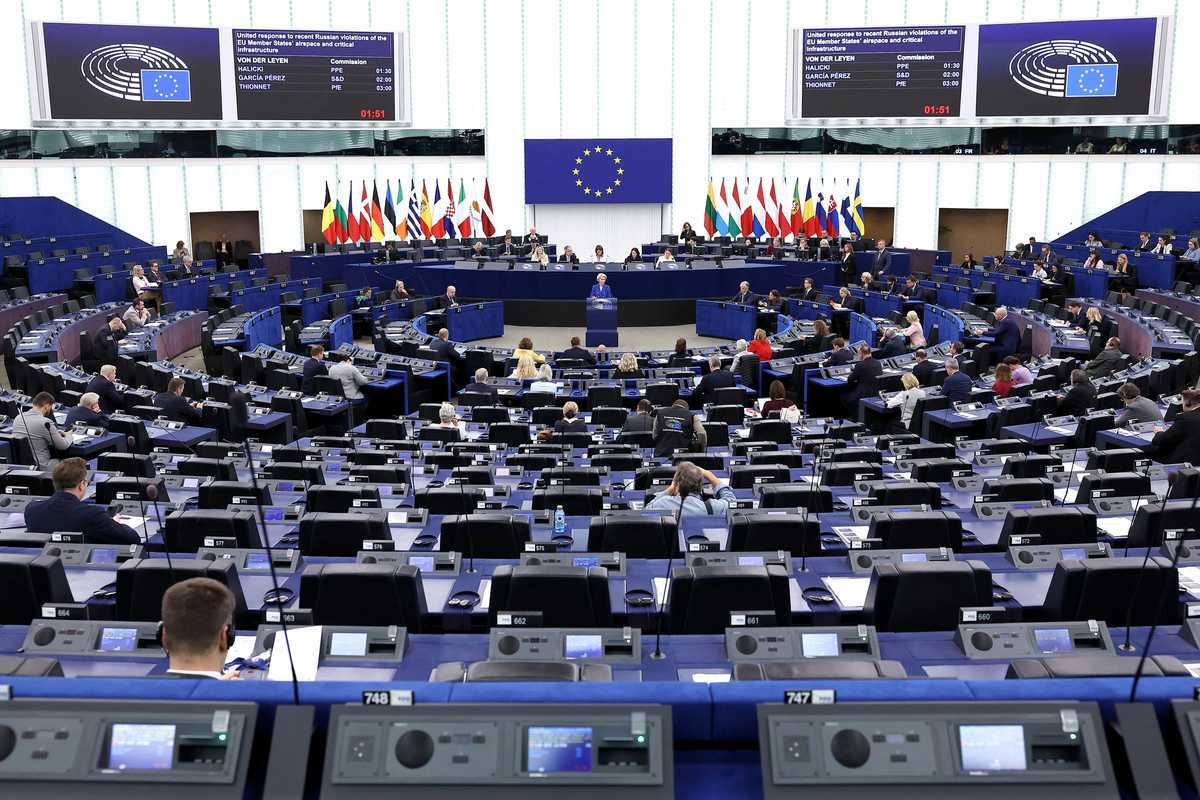
The European Union unveiled a strategic roadmap on Tuesday, October 20, aimed at significantly expanding its footprint across the Arctic, positioning the bloc to defend critical maritime corridors, counter Russian hybrid aggression, and hedge against geopolitical shifts from Washington.
What are the core pillars of the EU's new Arctic strategy?
Presented by European Commission President Ursula von der Leyen and drafted under the leadership of EU International Partnerships Commissioner Jozef Síkela, the 20-page blueprint seeks to establish a unified European posture in an increasingly militarized and climate-impacted High North.
"The new reality in the Arctic requires Europe to be a strong and reliable partner. That is precisely what we aim to achieve with our new strategy," Síkela stated, emphasizing that the paper tackles challenges ranging from melting polar ice caps to heightened security and resource competition.
With three member states—Denmark, Finland, and Sweden—holding sovereign territory in the Arctic circle, the strategy focuses heavily on securing critical infrastructure and raw materials. To safeguard communications and reduce external reliance, Brussels plans to lay a sovereign submarine telecommunications cable connecting Greenland directly with continental Europe as part of a wider "Pan-Arctic" route linking Canada, Japan, and South Korea.
Concurrently, the EU will deploy its sovereign IRIS² multi-orbital satellite constellation across the High North to guarantee encrypted government communications and rival commercial networks such as Starlink. In the maritime security sphere, the European Commission is proposing joint allied procurement, pooling, and sharing of polar-class icebreakers, alongside targeted investments in renewable energy and critical mineral extraction.
How does the plan counter Russian hybrid warfare and recalibrate ties with Washington?
The strategy places countering Moscow at the forefront of European defense priorities in the polar region, calling for enhanced multilateral intelligence-sharing to track Russia’s sanctions-evading "shadow fleet" of maritime oil tankers. The paper explicitly warns against escalating hybrid threats, citing frequent unauthorized drone incursions near Arctic critical infrastructure and the vulnerability of seabed energy and data cables to sabotage.
Diplomatically, the strategy marks a notable recalibration of transatlantic relations. While establishing a "Northern Neighbourhood" summit mechanism with non-EU partners like Canada, Norway, and the United Kingdom, the document mentions the United States only a handful of times, compared to nearly two dozen references to Canada.
European policymakers remain wary following past rhetoric from President Donald Trump regarding Greenland—an autonomous Danish territory—despite recent bilateral security agreements between Washington, Nuuk, and Copenhagen.
According to The Brussels Times and High North News, the European Council and the European Parliament will formally review the Arctic framework ahead of upcoming ministerial deliberations.





Comments
See what people are discussing