

Fitch affirms Pakistan rating at ‘B-’ with stable outlook
IMF program and improved reserves support outlook, but energy shock remains key risk

Business Desk
The Business Desk tracks economic trends, market movements, and business developments, offering analysis of both local and global financial news.
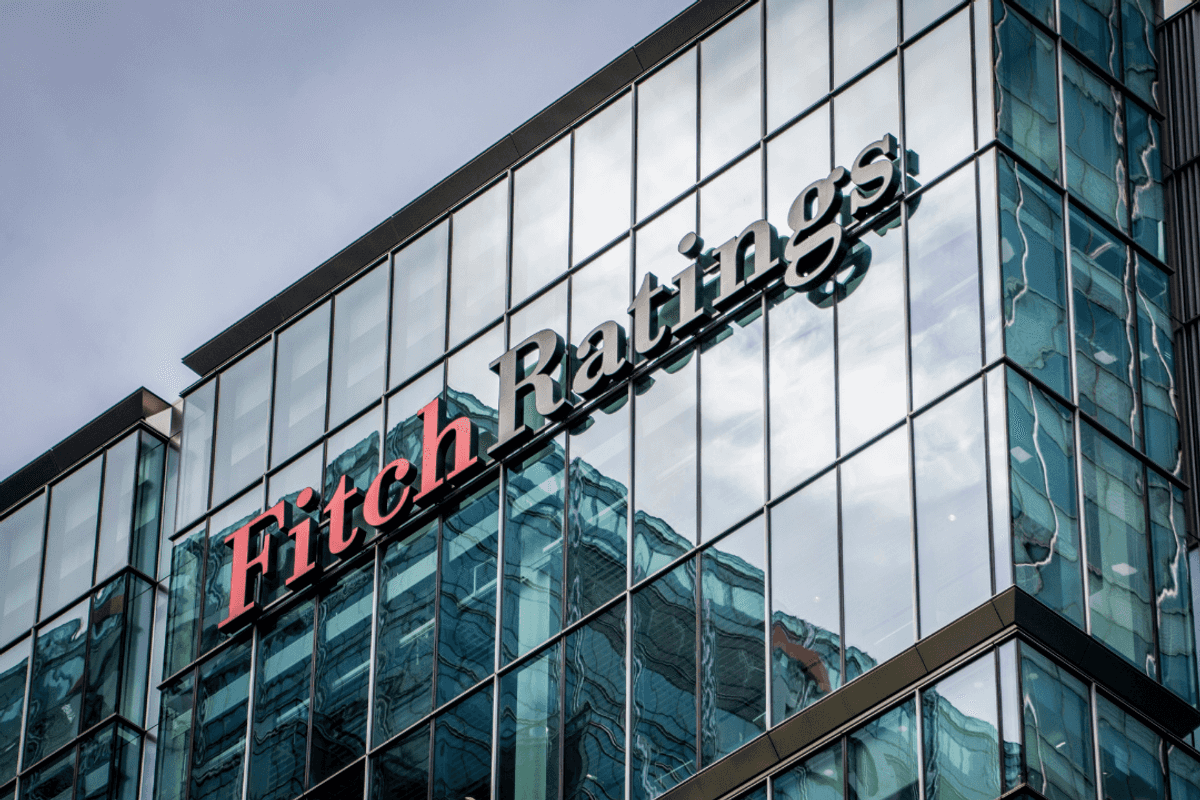
Fitch Ratings has affirmed Pakistan’s Long-Term Foreign-Currency Issuer Default Rating at ‘B-’ with a Stable Outlook, citing progress on fiscal consolidation and macroeconomic stability.
The rating reflects measures broadly in line with Pakistan’s International Monetary Fund program, which Fitch said are supporting the country’s funding capacity.
Foreign exchange buffers rebuilt over the past year provide some protection against the economic impact of the Middle East conflict, although risks remain.
Fitch said Pakistan’s role as a ceasefire broker in the conflict could offer tangible benefits and partly offset external pressures. However, the country’s high exposure to global energy price shocks remains a key vulnerability, particularly if it leads to a sharp decline in foreign exchange reserves.
Energy exposure and inflation risks
Pakistan sources up to 90% of its oil from the Gulf and has limited storage capacity, leaving it highly exposed to disruptions linked to the Middle East conflict and constrained energy flows through the Strait of Hormuz.
Fitch said fuel subsidies introduced since early March have been financed by reallocating spending from other areas of the budget. Costs have also been reduced through significant increases in pump prices and a shift to a more targeted subsidy scheme from April.
The agency expects the overall impact on the fiscal deficit to remain contained, as the government is likely to offset pressures by cutting other expenditures.
Higher global energy prices are expected to push inflation up in the coming months, particularly following the shift to targeted subsidies and base effects. Fitch forecasts inflation to average 7.9% in fiscal year 2026, higher than in FY25 but well below the 23.4% recorded in FY24.
Growth and monetary policy
The State Bank of Pakistan cut the policy rate to 10.5% by end-2025 from 22.0% in May 2024, with market rates declining accordingly.
However, the term interbank rate rose to about 100 basis points above the policy rate by early April, reflecting inflation concerns linked to tighter energy supply.
Fitch said the energy shock will weigh on economic growth but expects GDP to expand 3.1% in FY26, slightly higher than 3.0% in FY25, supported by improved confidence from lower borrowing costs.
External financing pressures
Pakistan faces large external financing needs, with debt amortisations projected to rise to $12.8 billion, or 2.9% of GDP, in FY26 from nearly $8 billion in FY25.
A $3.5 billion deposit was repaid to the United Arab Emirates in April. Fitch said its projections exclude a further $9.2 billion in bilateral deposits and loans expected to be rolled over.
The agency expects financing to come mainly from the IMF and other multilateral and bilateral sources, followed by commercial borrowing. Pakistan also plans to issue a panda bond during the current fiscal year.
Fiscal and debt outlook
Fitch expects Pakistan’s primary surplus to narrow to 2.1% of GDP in FY26, below the official target, due to rising non-interest expenditures and constraints in boosting tax revenue.
The surplus is projected to shrink further in FY27 as exceptionally high central bank dividends are unlikely to continue, although lower interest payments are expected to keep the fiscal deficit broadly stable at around 5.3% of GDP.
Government debt is forecast to decline to 68.9% of GDP in FY26 from 70.7% in FY25, though it will remain well above the ‘B’ median of 51.3%.
Pakistan’s interest-to-revenue ratio is expected to stay elevated at 46.5%, compared with a ‘B’ median of 12.1%.
External account outlook
Fitch expects the current account to return to a deficit of 1.1% of GDP in FY26, compared with a surplus of 0.5% in FY25.
The agency said Pakistan’s foreign exchange policy continues to show rigidities despite moves toward liberalisation in 2023. The rupee has appreciated by about 30% in real effective terms since early 2023, contributing to wider trade deficits.
Hydrocarbon imports typically account for between a quarter and a third of total goods imports.
IMF support
Fitch said continued support from the IMF will remain critical to Pakistan’s economic outlook.
The authorities reached a staff-level agreement with the IMF in March 2026 on the third review of the Extended Credit Facility and the second review of the Resilience and Sustainability Facility.
The agreement, once approved by the IMF’s executive board, is expected to unlock about $1.2 billion in funding.
Fitch said the program will continue to serve as a key policy anchor, particularly for fiscal management, while also helping to mobilize additional multilateral and bilateral financing.



Comments
See what people are discussing