

Why healthy food is becoming unaffordable in Pakistan
Kamran Khan says rising inequality is shrinking consumption of staples and raising concerns over nutrition and long-term health

News Desk
The News Desk provides timely and factual coverage of national and international events, with an emphasis on accuracy and clarity.
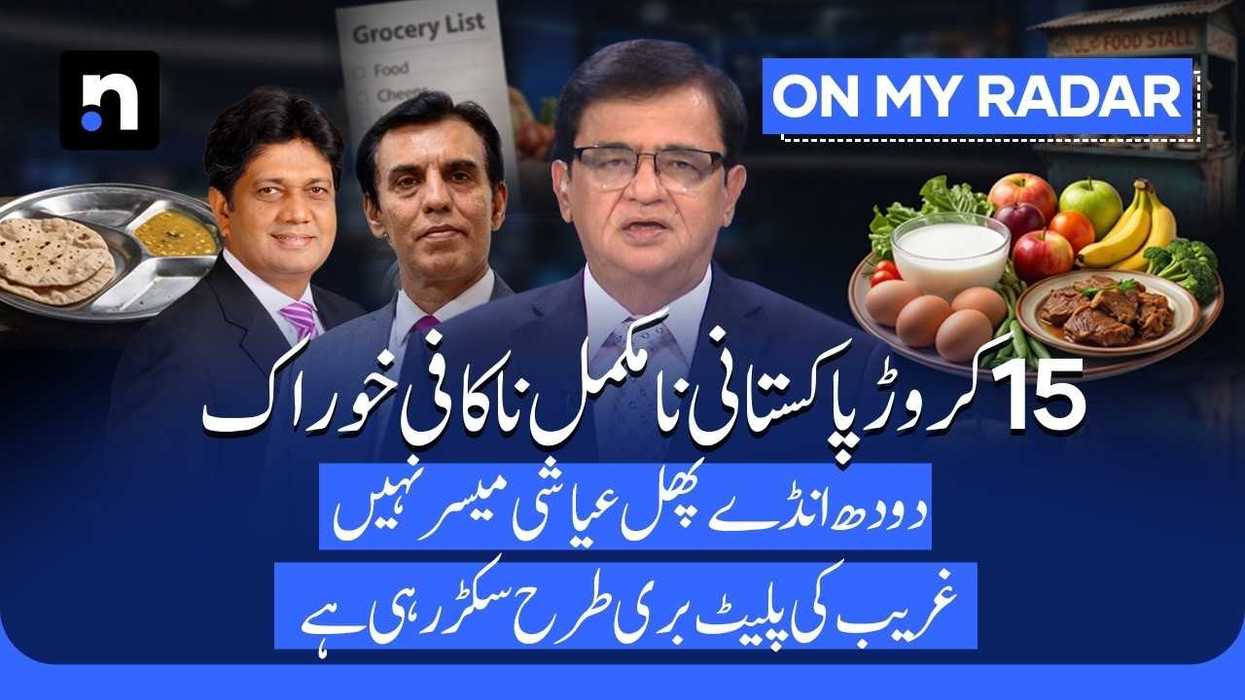
Pakistan’s food crisis is no longer simply about whether food is available — it is increasingly about whether people can afford to eat well. Last year, around 161 million Pakistanis, or 63% of the population, could not afford a healthy diet, highlighting the growing pressure on household budgets.
While nominal household incomes may have nearly doubled, inflation has eroded purchasing power, with real incomes falling and poverty rising from 21.9% to 28.9%. The burden has been particularly severe for poorer households: real consumption among the bottom 20% fell 16%, while consumption among the richest 20% rose 7%.
The impact is increasingly visible in what families put on their tables. Consumption of staples such as rice, pulses, milk and meat has declined, while widening income inequality is reshaping diets and raising concerns about nutrition and long-term health.
What does this mean for Pakistan’s food security, poverty and the health of future generations?




Comments
See what people are discussing