

French high school blockades escalate into nationwide clashes, leading to over 400 detentions
Protests over overcrowded classrooms, teacher shortages, and budget cuts escalated across France as high school students blockaded entrances and clashed with police, resulting in hundreds of detentions and dozens of injuries

News Desk
The News Desk provides timely and factual coverage of national and international events, with an emphasis on accuracy and clarity.
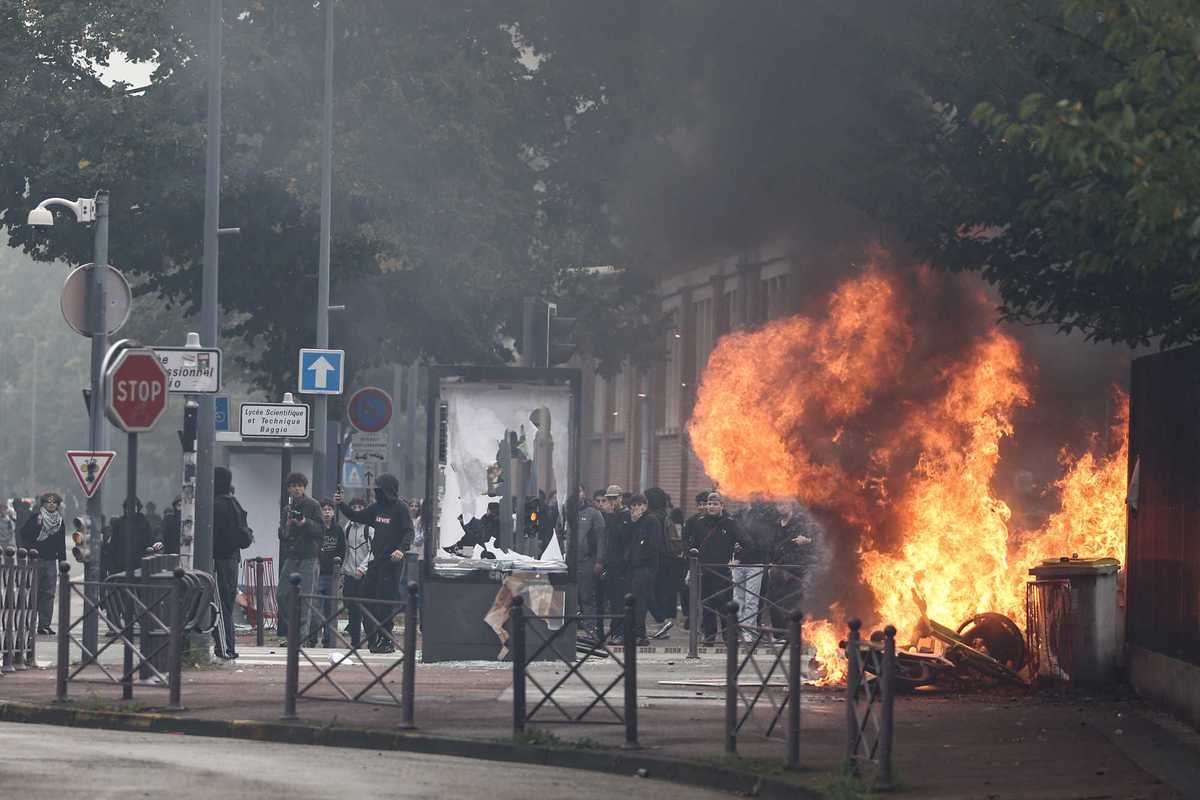
Black smoke billows from burning bins and bicycles as students carry out a blocking protest at the Cesar Baggio secondary school during a day of nationwide public sector strikes and demonstrations, in Lille, on September 29, 2026.
AFP
High school blockades and student demonstrations escalated across France on Tuesday, leading to clashes with riot police, localized property damage, and the detention of more than 440 individuals—the majority of them minors.
What sparked the nationwide high school blockades?
The protest movement across French lycées—secondary schools serving students aged 15 to 18—originated in the Île-de-France region around Paris before spreading to major urban centers including Lille, Marseille, Lyon, Nantes, Rennes, and Bordeaux.
According to the French Education Ministry, demonstrations or disruptions affected approximately 400 of the country's 3,700 high schools on Tuesday, with 40 institutions fully blockaded and another 44 facing attempted blockades.
Students organized under groups like the Union Syndicale Lycéenne (USL) mobilized against deteriorating school conditions, citing overcrowded classrooms of 32 to 35 students, chronic teacher shortages, exhausting timetables, and inadequate ventilation during recent heatwaves.
The blockades coincided with broader nationwide public-sector strikes and union marches directed against Prime Minister Sébastien Lecornu's proposed austerity budget, which targets significant cuts in public expenditure.
How did French authorities respond to the escalating violence?
Tensions flared outside school gates as groups of masked demonstrators set fire to rubbish bins, damaged bus stops, and hurled bottles, paving stones, and chemical projectiles at police lines. Security forces deployed batons and tear gas to break up blockades and secure school entrances:
- Detentions and Custody: Interior Minister Laurent Nuñez confirmed on BFMTV that 440 people were detained nationwide, with approximately two-thirds placed in formal police custody.
- Casualties & Injuries: Law enforcement officials reported that 48 police officers were injured in clashes, while at least 10 education staff members and multiple students sustained injuries.
- Political Friction: Education Minister Édouard Geffray and Prime Minister Lecornu condemned the violence and initiated legal proceedings, accusing opposition leaders from the hard-left La France Insoumise (LFI) party of inciting student unrest. In response, LFI lawmakers and student union leaders accused the government of ordering disproportionate police force against teenage protesters.
According to Le Monde and The Guardian, labor and student unions are reviewing options for further coordinated strikes if budget discussions remain stalled.





Comments
See what people are discussing