

Global oil demand shows signs of recovery despite ongoing Middle East conflict, IEA says
The International Energy Agency reports that global oil demand and supply are rebounding from their May lows as Strait of Hormuz transit partially resumes, though renewed US-Iran hostilities cloud the outlook

News Desk
The News Desk provides timely and factual coverage of national and international events, with an emphasis on accuracy and clarity.
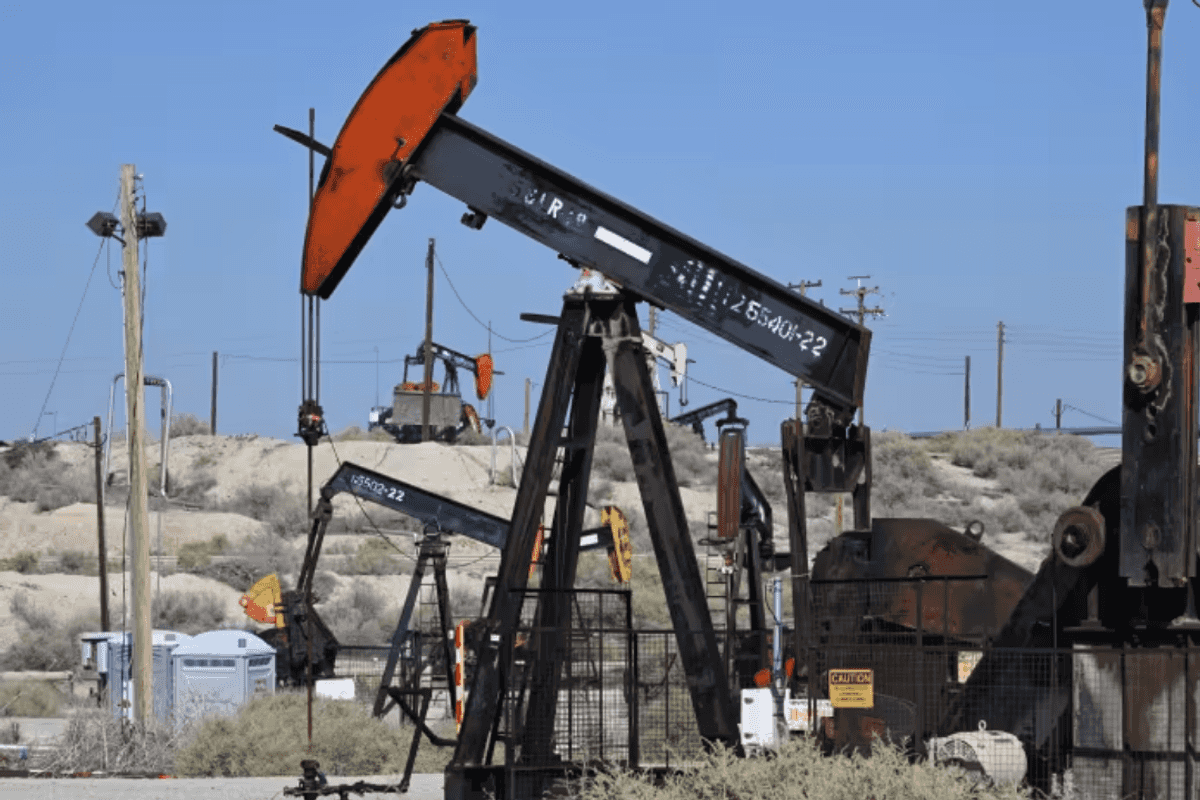
The International Energy Agency (IEA) announced on Friday that global oil demand is beginning to stage a recovery.
This energy turnaround comes as shipping traffic through the strategically vital Strait of Hormuz gradually resumes and crude prices ease, despite persistent geopolitical friction in the region.
How is the global oil outlook improving after the May low?
According to the IEA’s latest monthly oil market report, global oil consumption has finally started to turn a corner after bottoming out earlier in the year. The agency noted that a clear demand recovery is underway, lifting global fuel consumption levels from what it described as its May nadir.
The improved landscape has prompted the Paris-based energy watchdog to revise its overarching macroeconomic projections for the remainder of the year. The IEA previously projected a steep demand drop of 1.1 million barrels per day for 2026 due to the war, but its latest assessment adjusts this figure to a slightly milder contraction of 1.0 million barrels per day.
Concurrently, worldwide oil supply surged by 4.1 million barrels per day in June, reaching a total of 98.8 million barrels per day as energy exports from the Gulf partially restarted. Total oil exports out of Gulf nations, including alternative routes bypassing the Strait of Hormuz, climbed sharply by 6.5 million barrels per day to reach 16.1 million barrels per day in June.
Despite these notable positive shifts, the international energy architecture remains heavily impacted by the conflict. Overall worldwide crude production continues to lag approximately 9.4 million barrels per day below pre-war baselines, while total Gulf exports remain well under their historical pre-war average of 24 million barrels per day.
Why does the renewed US-Iran escalation threaten market normalization?
The IEA highlighted that the trajectory of further market growth remains entirely dependent on a sustained de-escalation of military hostilities. Global inventories tracked an increase in June for the first time since the outbreak of the war, which was triggered by the initial US-Israeli air strikes on Iran on February 28.
However, commercial oil stockpiles within advanced economies have continued an independent decline due to sluggish seaborne import volumes.
While oil prices dropped significantly throughout June to offer consumer relief, a fresh round of retaliatory airstrikes exchanged between the United States and Iranian forces this week has once again injected volatility into the energy markets.
"Renewed exchanges of fire in the Gulf this week highlight the risks of not reaching a lasting peace agreement, which is a must for the normalisation in oil markets."
— International Energy Agency Report
The agency concluded that if a swift diplomatic resolution is reached, a normalized Strait of Hormuz could potentially inject an additional 7.5 million barrels per day of supply into the global marketplace by next year.
Without a lasting peace accord, however, the fragile recovery in supply and consumption remains highly vulnerable to sudden operational disruptions.



Comments
See what people are discussing