

Hope rises for US-Iran ‘grand deal’ amid renewed diplomacy
Kamran Khan says Islamabad emerges as likely venue for potential deal that could bring end to more than six weeks of hostilities

News Desk
The News Desk provides timely and factual coverage of national and international events, with an emphasis on accuracy and clarity.
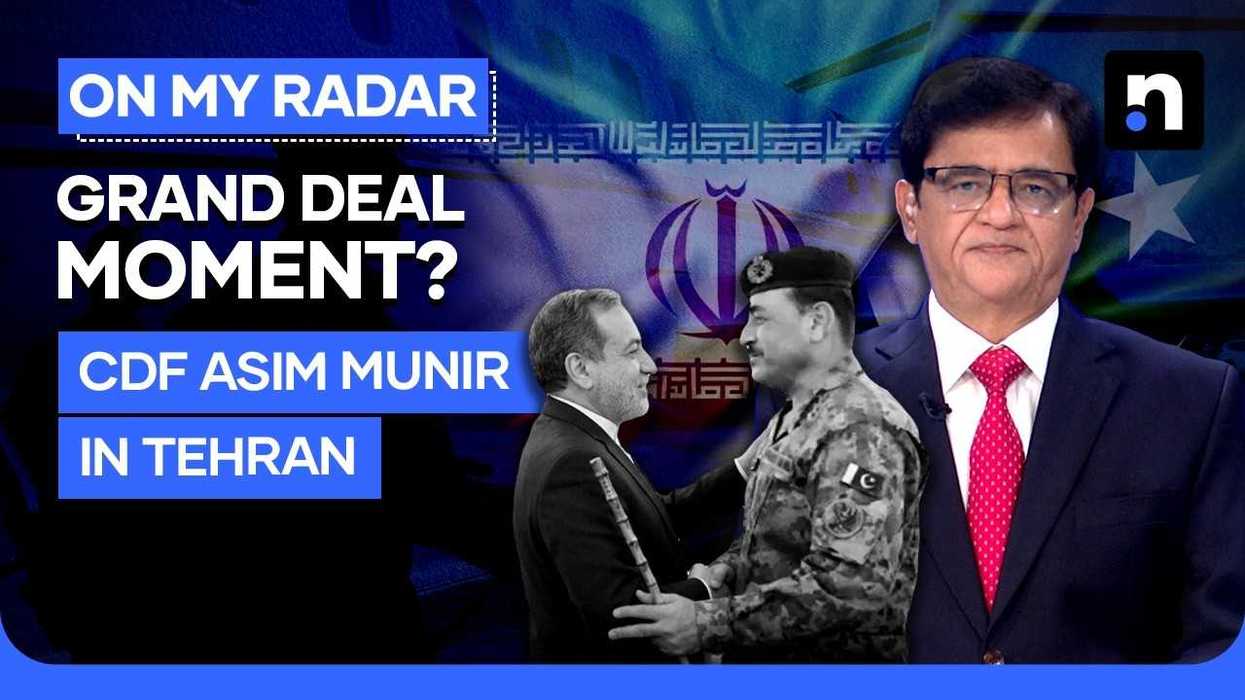
Hopes for a landmark peace agreement between the United States and Iran are gaining momentum, with Islamabad emerging as the likely venue for a potential deal that could bring an end to more than six weeks of hostilities, according to remarks made during an episode of “On My Radar” hosted by Kamran Khan.
Speculation about the conflict’s trajectory appears to be fading as both Washington and Tehran signal readiness for a diplomatic resolution. Khan said statements from U.S. President Donald Trump and Iranian leadership suggest that the ongoing war is nearing its conclusion, raising expectations that peace negotiations will ultimately succeed.
Trump indicated in a recent interview with Fox News that the war could end soon. He also told the New York Post that negotiations between the United States and Iran could take place within “two days,” with a strong possibility that both delegations would travel to Islamabad for talks. Trump added that one reason for returning to the Pakistani capital could be the presence of Pakistan’s Army Chief, Field Marshal Asim Munir, whom he described as “fantastic.”
Reaffirming Pakistan’s role in facilitating a negotiated settlement, Trump questioned the rationale for holding talks in any country not directly connected to the issue, emphasizing Islamabad’s relevance as a diplomatic venue.
Iran also signaled openness to continued engagement. Iranian Foreign Ministry spokesperson Esmail Baqaei confirmed that, following earlier Islamabad talks, the exchange of messages between Tehran and Washington has continued through Pakistan. He reiterated Iran’s longstanding position that allegations of seeking to build a nuclear bomb are unfounded, while noting that Tehran remains willing to discuss nuclear enrichment.
International media organizations, including Reuters, Al Jazeera and The Associated Press, have reported that U.S. and Iranian negotiating teams may return to Pakistan later this week for a second round of discussions. However, the start of negotiations on Thursday appears unlikely due to the absence of Pakistan’s top civilian leadership. Prime Minister Shehbaz Sharif and Deputy Prime Minister Ishaq Dar are currently on official visits to Saudi Arabia, Qatar and Turkey, making high-level talks during their absence improbable.
The diplomatic timeline is further compressed by the expiration of a ceasefire on April 21, leaving only a narrow window of approximately four days for a decisive breakthrough. Khan suggested that the second round of negotiations could instead take place over the weekend, possibly on Saturday or Sunday.
Recent developments have strengthened optimism surrounding the peace process. Despite heightened tensions, both sides have demonstrated restraint. Notably, Iran has refrained from military retaliation in response to a three-day U.S. blockade in the Strait of Hormuz, a move interpreted by analysts as a sign of diplomatic flexibility.
U.S. officials have also adopted a more conciliatory tone. Vice President JD Vance stated that “a ton of progress” had been made in negotiations with Iran, expressing satisfaction with the direction of the talks. While acknowledging that nearly five decades of mistrust cannot be resolved overnight, Vance emphasized that recent diplomatic engagement represents a significant shift.
Trump further reinforced this optimism by stating that Iran had initiated contact on Monday morning, expressing a desire to reach an agreement. According to Reuters, a senior Pakistani official also confirmed that Tehran responded positively to ongoing diplomatic efforts and is prepared for the next phase of negotiations.
Global financial markets have reacted swiftly to these signals of de-escalation. The U.S. benchmark S&P 500 rose by 1.2%, while the Nasdaq gained 2%. Oil prices also declined significantly amid expectations of reduced geopolitical risk. Brent crude fell 4.6% to $94.7 per barrel and continued trading near that level, while West Texas Intermediate (WTI) dropped nearly 8% to $91.2 per barrel, hovering around $92 the following day.
As diplomatic pressure mounts alongside growing optimism, the coming days are expected to be decisive. Whether the talks culminate in a historic peace agreement or a renewed crisis remains uncertain, but expectations are increasingly tilted toward a peaceful resolution. If successful, Islamabad could witness the signing of a landmark accord between the United States and Iran, marking a significant turning point in regional and global geopolitics.

Comments
See what people are discussing