

How net metering is shifting Pakistan’s power costs onto grid consumers
As rooftop solar adoption surges, capacity payments and fixed grid costs are increasingly borne by non-solar users

Business Desk
The Business Desk tracks economic trends, market movements, and business developments, offering analysis of both local and global financial news.
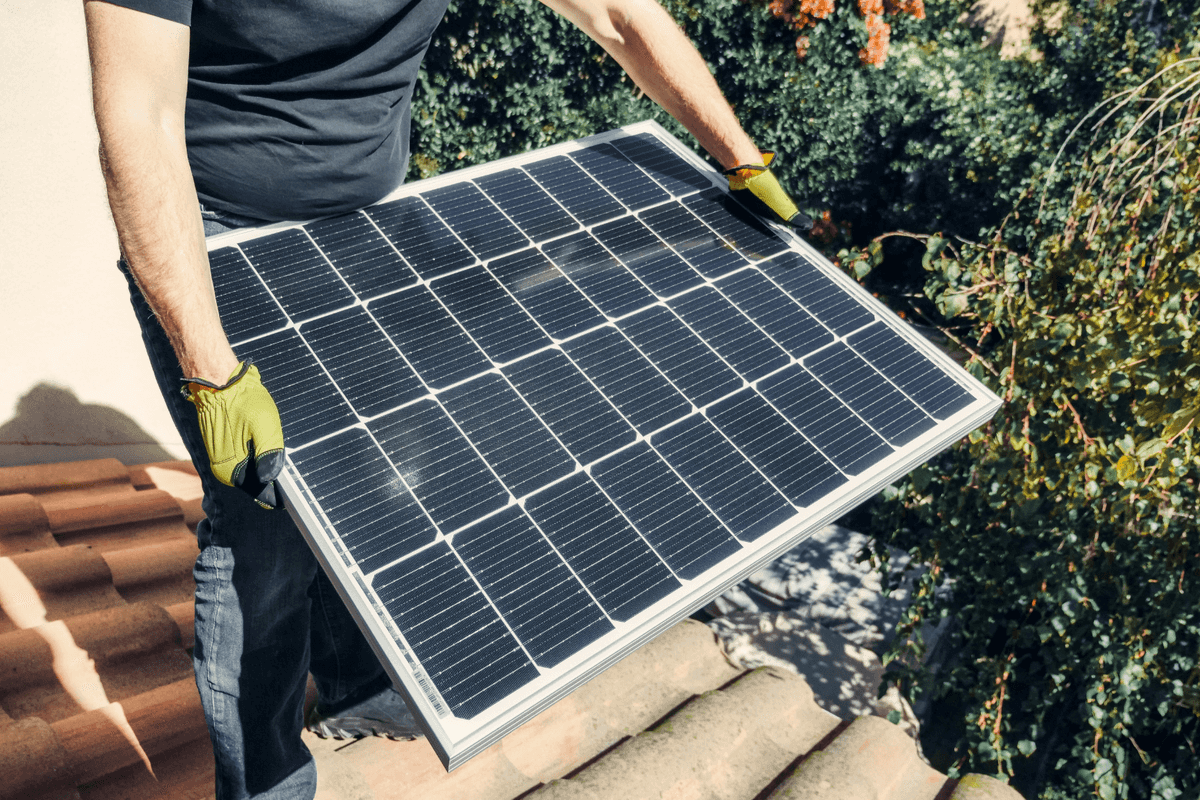
Pakistan’s rapid shift toward rooftop solar has turned thousands of electricity consumers into prosumers, cutting their power bills and allowing them to sell surplus energy back to the grid. But as net metering expands, policymakers and regulators warn that the system’s fixed costs are being redistributed, placing a growing financial burden on consumers who remain fully dependent on the national grid.
As net metering customers save on their power bills and end up becoming prosumers in the process, they earn through the National Average Purchase Price of PKR 25.98 per kWh.
Consider the analogy of neighborhood buffet to understand the impact of net metering on grid customers: Pakistan’s electricity system can be likened to a neighborhood buffet where everyone pays according to their capacity, with wealthier households contributing more and indirectly subsidizing those who cannot afford the full cost.
But as some affluent families begin bringing their own food (rooftop solar), they consume far less from the buffet while still using the common chairs, tables, and plates (the national grid infrastructure). At times, they even sell their leftover food back to the buffet at premium rates, just as prosumers export surplus electricity at favorable buyback prices.
Yet the buffet’s fixed costs remain unchanged: the chefs must still be paid, the kitchen must stay open, and the gas stoves must keep running. These fixed costs are the equivalent of Pakistan’s capacity payments, which the system must pay to power producers whether or not electricity is consumed.
When high-paying customers begin eating less or leave the buffet entirely, the burden of keeping the kitchen running does not disappear. Instead, it is redistributed among the fewer diners who remain fully dependent on the buffet. Similarly, grid-dependent consumers end up covering a rising share of these unavoidable capacity payments, intensifying the financial pressure on them.
This dynamic illustrates not only the widening revenue gap and the PKR 159 billion burden shifted onto non-solar users, but also how affluent prosumers, unintentionally, drive up costs for those who continue relying solely on the grid.
Solar energy’s adoption has been following an upward trend due to rising electricity costs, making it a practical alternative for not just affluent households and businesses across the country but also in rural areas which now take the lead. With the average cost of installing rooftop solar ranging between PKR 1 million to PKR 1.5 million, the payback period fits this time period.
The federal minister for energy shed light on solar net metering and the adverse impact on grid customers during the time when the government was contemplating revising the buyback rate from PKR 27 to PKR 10 which didn’t see the light of day considering the massive backlash at the time. This time again, the government is considering this much needed policy revision, the failure of which will keep hurting gird customers.
Some time back, in a TV interview, he mentioned that rooftop solar remains a highly attractive investment, even for new net metering applicants. He had mentioned that the payback period is still under four years despite the policy revisions, significantly better than most alternatives given the 12% risk-free rate.
Progress of net metering
Latest data further indicates that net metering customers have now reached 424,841 in residential, commercial and industrial consumers in the country with an installed capacity close to 6,500MW. Reflecting back, as per NEPRA’s State of Industry Reports, the number of net metering customers were 36,362 in FY22 which increased to 157,844 in FY24. Lahore alone accounts for more than 25% of these connections.
The energy minister also highlighted that net-metered solar capacity is projected to grow by roughly 1,000MW annually. For context, total rooftop net-metered capacity in 2021 was only 321MW and rapidly rose to 735MW in FY22. According to him, the updated policy is essential for long-term consumer welfare, and without timely correction, future consumers would hold policymakers responsible for the system’s imbalance.
As per estimates, FY26 is expected to see an additional 2,633MW of rooftop solar capacity added to the system, alongside an estimated 200,000 new net metering consumers. A lot has been added already.
Net metered solar capacity
The power minister has also warned that if reforms are not implemented, the financial impact caused by affluent urban net-metered households will escalate to PKR 3.6 per unit by 2034 for grid customers, amounting to nearly PKR 545 billion.
By December 2024, the number of rooftop solar users had risen to 283,000 (up from 226,440 in October that year), shifting an estimated PKR 159 billion burden and PKR 1.5 per unit onto grid-dependent consumers, as confirmed by the Power Division which further states that net metering customers are adding an annual burden of PKR 101 billion on those on the grid.
According to a study conducted by Arzachel regarding the same issue called the ‘Distributed Divide’, it was mentioned that energy sales and demand from the grid had decreased by 8% to 10% due to increased penetration of solar energy. A 5% reduction in demand was to shift PKR 131 billion to non-solar consumers.
Meanwhile, a 10% reduction is expected to shift PKR 261 billion on to these grid customers.
Capacity payment build-up
Net metering consumers are like the Independent Power Producers (IPPs), leading to excess capacity left unutilized. When consumers move off grid, the burden of excess capacity and hence, related charges shift to the remaining grid customers which, consequently, increases their tariff. Yet, at the same time, net metering customers still rely on the utility's infrastructure for reliability.
Eventually, they use the grid as a battery when needed as the sun goes down, without contributing to the fixed cost of maintaining that infrastructure. Looking at it in monetary terms, the total power payments stand at PKR 3.5 trillion which include whopping capacity charges around PKR 1.8 trillion and power purchase price of PKR 3.1 trillion.
*This article was prepared by an independent researcher. Nukta does not endorse or assume responsibility for the content, opinions, or conclusions expressed herein.



Comments
See what people are discussing