

IMF sees Pakistan GDP at PKR 193.6 trillion by 2030, exports below target
Fund projects exports at $46 billion, far short of government’s $60 billion goal

Haris Zamir
Business Editor
Experience of almost 33 years where started the journey of financial journalism from Business Recorder in 1992. From 2006 onwards attached with Television Media worked at Sun Tv, Dawn Tv, Geo Tv and Dunya Tv. During the period also worked as a stringer for Bloomberg for seven years and Dow Jones for five years. Also wrote articles for several highly acclaimed periodicals like the Newsline, Pakistan Gulf Economist and Money Matters (The News publications)
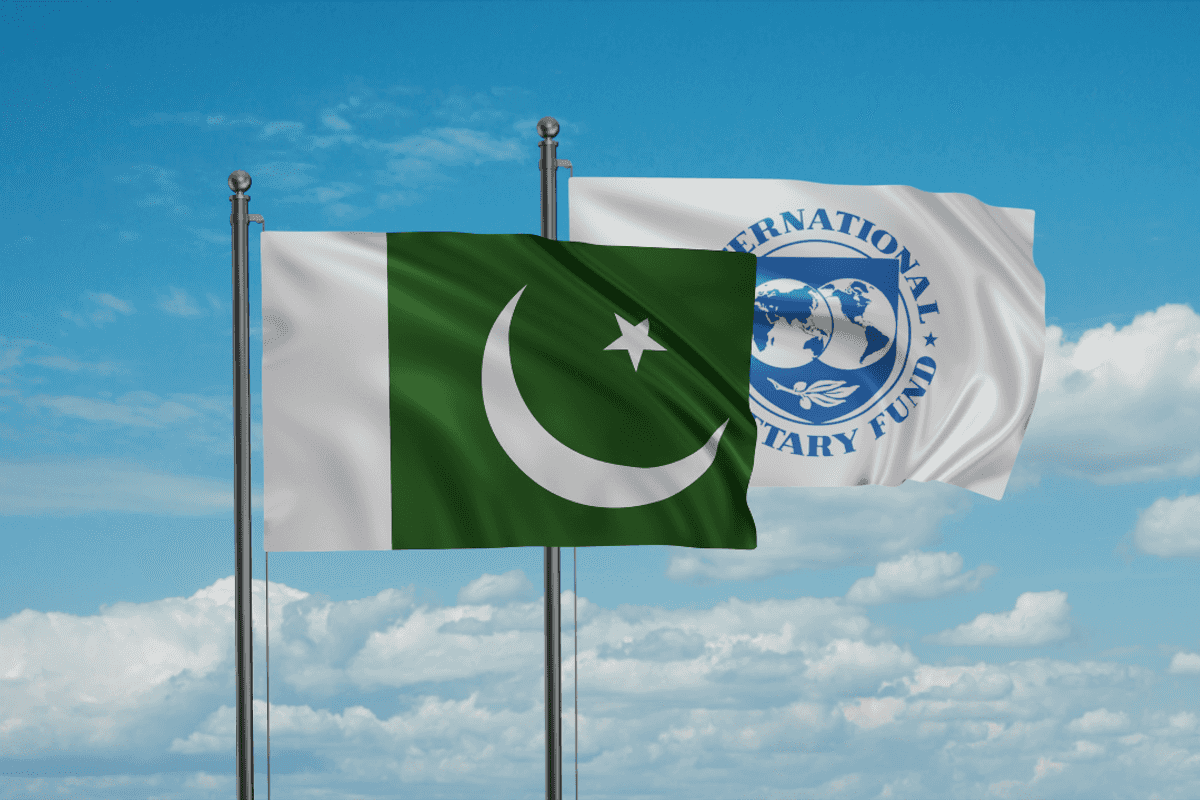
Pakistan’s gross domestic product is projected to reach PKR 193.63 trillion by 2030, while exports are expected to climb to $46 billion, well short of the government’s $60 billion target, according to the International Monetary Fund’s country report on Pakistan.
The IMF said exports are likely to total $36.46 billion in the next fiscal year, rising to about $40 billion in 2028 and $43 billion in 2029. By contrast, the government has pledged to raise exports to $60 billion, a goal that has already been extended from three to five years.
In revised projections for key economic indicators, the IMF said Pakistan’s GDP is expected to expand cumulatively by about PKR 68 trillion between fiscal years 2026 and 2030. However, the GDP target of PKR 129.52 trillion set for the current fiscal year is unlikely to be met, with output now projected at around PKR 126 trillion.
On public finances, the IMF warned that Pakistan is unlikely to achieve a tax-to-GDP ratio of 15% even by the end of the decade. The ratio is projected at 11.2% in the next fiscal year and is expected to hover around 11.1% between 2028 and 2030.
The Federal Board of Revenue is projected to collect PKR 13.98 trillion in taxes this fiscal year, rising to about PKR 21.5 trillion by 2030. Non-tax revenue is estimated at PKR 3.68 trillion this year and is expected to increase modestly to about PKR 3.86 trillion by 2030.
The IMF forecast shows the budget deficit narrowing gradually from 5.1% of GDP in the current fiscal year to 3.1% by 2030. To finance the deficit, Pakistan will need about PKR 28 trillion between 2026 and 2030, including roughly PKR 2.3 trillion from external sources.
Public debt is projected to climb to PKR 117.44 trillion by 2030, the report said, though the debt-to-GDP ratio is expected to decline steadily from 72% this year to about 60.7% by the end of the decade. Interest payments, however, are forecast to rise, reaching PKR 8.25 trillion in the next fiscal year, PKR 8.21 trillion in 2028, PKR 8.80 trillion in 2029 and PKR 9.38 trillion by 2030.
The IMF also cautioned that the government’s stated aim of lifting the tax-to-GDP ratio to 13% appears unlikely to be achieved under current policies.
On trade, the IMF’s outlook points to a widening gap between exports and imports. Imports are projected at $64 billion this fiscal year, rising to $66.86 billion in 2027, $72.90 billion in 2028, $77 billion in 2029 and $82.81 billion by 2030 — an increase of nearly $18.7 billion over the period.
The IMF said its export projections imply a shortfall of about $13.79 billion compared with official targets, underscoring what it described as persistent structural challenges facing Pakistan’s economy despite recent stabilization efforts.
Analysts said the IMF projections reflect cautious assumptions rather than a collapse in economic potential, but warned that Pakistan’s growth model remains constrained by weak export competitiveness and limited fiscal space.
They said the projected expansion in GDP appears largely nominal, driven by inflation and currency depreciation rather than a sharp rise in productivity. Without broadening the tax base, improving energy efficiency and boosting value-added exports, analysts cautioned that revenue performance is likely to lag behind spending needs.
Analysts also noted that while the declining debt-to-GDP ratio offers some relief, rising interest payments could continue to crowd out development spending. The growing gap between exports and imports, they said, points to renewed balance-of-payments risks unless export growth accelerates beyond current IMF assumptions.


Comments
See what people are discussing