

IMF reaches staff-level agreement with Pakistan, unlocking $1.2 billion
Deal covers key program reviews as Fund warns of risks from Middle East conflict
Haris Zamir
Business Editor
Experience of almost 33 years where started the journey of financial journalism from Business Recorder in 1992. From 2006 onwards attached with Television Media worked at Sun Tv, Dawn Tv, Geo Tv and Dunya Tv. During the period also worked as a stringer for Bloomberg for seven years and Dow Jones for five years. Also wrote articles for several highly acclaimed periodicals like the Newsline, Pakistan Gulf Economist and Money Matters (The News publications)
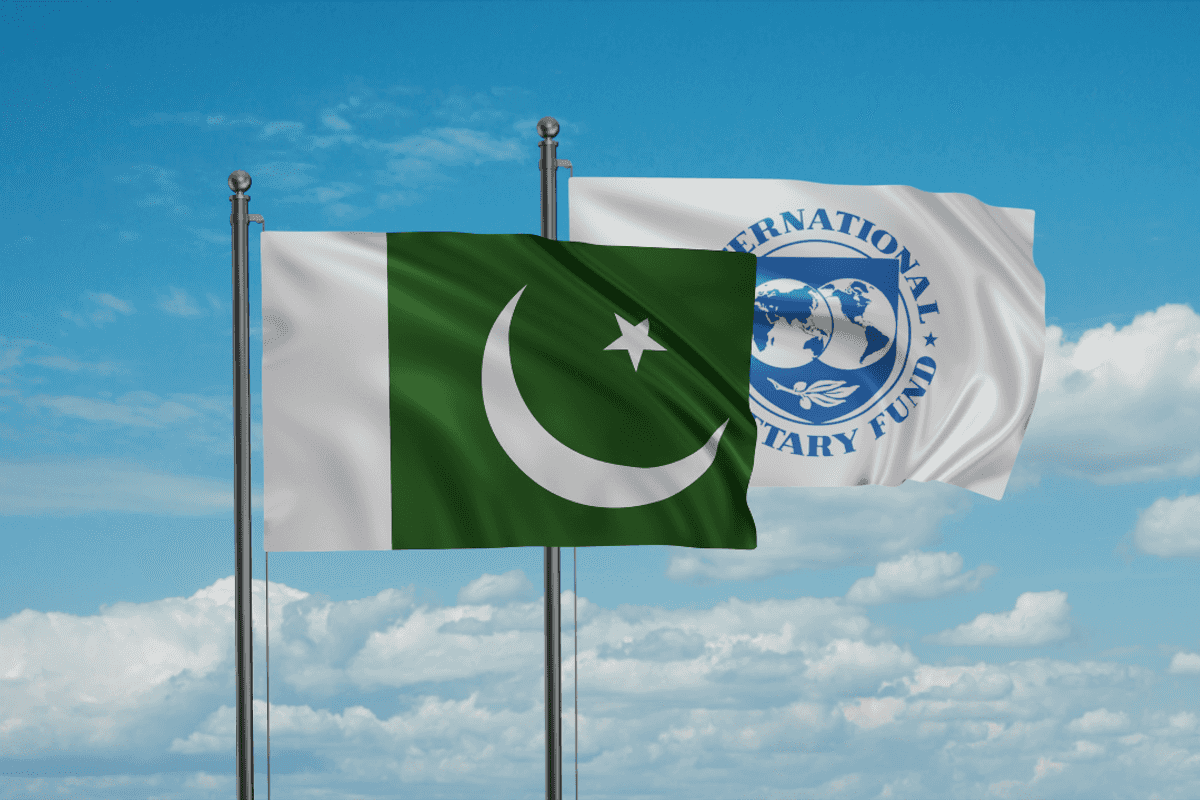
An International Monetary Fund (IMF) team led by Iva Petrova has reached a staff-level agreement with Pakistan on key program reviews that could unlock about $1.2 billion in financing, the IMF said Saturday.
The agreement covers the third review under Pakistan’s 37-month Extended Fund Facility and the second review under the 28-month Resilience and Sustainability Facility, following talks held in Karachi and Islamabad from Feb. 25 to March 2 and subsequent virtual discussions.
The IMF said the agreement is subject to approval by its Executive Board. Once approved, Pakistan would gain access to about $1.0 billion under the Extended Fund Facility and about $210 million under the sustainability facility, bringing total disbursements to roughly $4.5 billion.
Economy stabilizing, but risks persist
In a statement, Petrova said Pakistan’s economy “has continued to strengthen under the program”, citing a recovery in fiscal year 2025 and momentum in the current fiscal year.
She noted that inflation and the current account have remained contained, while external buffers have improved.
However, Petrova cautioned that risks remain, particularly from the Middle East conflict, which could lead to volatile energy prices and tighter global financial conditions, putting pressure on inflation, growth and the current account.
Fiscal discipline, reforms remain central
Pakistani authorities reaffirmed their commitment to prudent macroeconomic policies to sustain stabilization gains, while advancing structural reforms and strengthening social protections.
Key priorities include maintaining a disciplined fiscal stance, with a primary surplus target of 1.6% of GDP for fiscal year 2026 and 2% for fiscal year 2027, supported by tax base expansion, improved spending controls and higher investment in health, education and social protection.
The IMF highlighted progress in revenue reforms, including efforts by the Federal Board of Revenue to strengthen audits, expand digital invoicing and improve governance. A newly established Tax Policy Office is working on a medium-term strategy to ensure tax policy stability.
Monetary, energy and structural reforms
The State Bank of Pakistan is expected to maintain a tight, data-driven monetary policy to keep inflation within target, with flexibility to raise interest rates if needed. Exchange rate flexibility will continue to serve as a key shock absorber.
Energy sector reforms remain a priority, with the government aiming to ensure cost recovery through timely tariff adjustments and avoid subsidies that strain public finances. Plans also include privatization of inefficient power producers and a transition to a competitive electricity market.
The IMF emphasized broader structural reforms to boost productivity, reduce regulatory burdens and support private sector growth, alongside governance improvements and anti-corruption efforts.
Authorities also plan to expand social protection programs, particularly the Benazir Income Support Programme, through inflation-adjusted cash transfers, broader coverage and improved payment systems to protect vulnerable households.
Climate resilience measures advancing
Under the sustainability facility, reforms are underway to strengthen climate resilience, including promoting green transport, improving climate data systems and enhancing financial risk management related to climate change.
Further measures are planned to improve water system resilience and establish a coordinated disaster risk financing framework.
The IMF said discussions with Pakistani authorities will continue, with the agreement paving the way for Executive Board consideration in the coming weeks.





Comments
See what people are discussing