

Inside Jama Taqseem’s Mirror of Society
A closer look at the generational clashes, and relationship pressures that shape life inside Pakistani joint families.

Maha Owais
Producer
Maha is a content strategist and producer with a knack for digital storytelling.
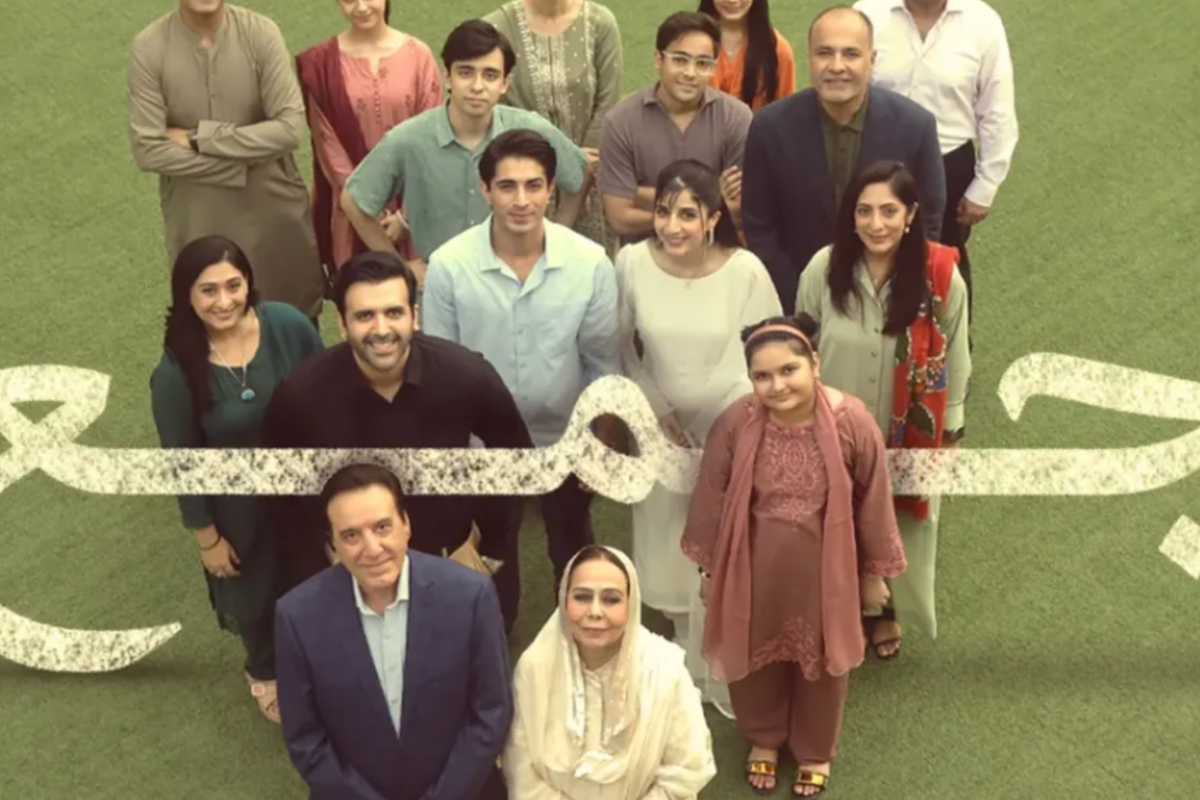
Jama Taqseem's Poster
Canva
Jama Taqseem has become the kind of drama that people don’t just watch — they feel it. It has triggered viewers, inspired debates, and pushed families to reflect on the unspoken tensions that exist inside so many Pakistani homes.
At its core, the drama is a mirror held up to our society, exposing the boundaries, control, emotional politics, and power struggles that often hide behind the label of a “joint family system.” Writer Sarwat Nazir portrays these themes with an honesty that feels uncomfortably real to many — and that is exactly why it has become a national conversation.
The Nukta team did a deep dive into the drama…
Fatima Zaidi, News Editor:
“What the drama really shows is that at the end of the day, it comes down to your intelligence — and how intelligently you navigate a situation.”
Sibte Hassan, Producer:
“It’s important to understand the people in front of you — the nature of the issues in a joint family, and whether they can be resolved within the family or if the only solution is ultimately to live separately.”
Fatima added:
“It’s not just about your partner. It’s also about the people you live with — how they engage with you, whether they can be reasoned with or molded through conversation. The biggest issue in our society, whether in joint families or not, is a lack of communication.”
- YouTube www.youtube.com
But there’s a split in public opinion. One group insists that Jama Taqseem shows the true, painful reality of joint families: the interference, the entitlement, the constant monitoring of a couple’s decisions. The other group believes the show amplifies the worst-case scenarios and fails to highlight the warmth, support, and belonging that joint families can offer. This duality is what makes the drama so compelling — and so divisive.
Scene by scene, Jama Taqseem exposes the small battles that accumulate into emotional wars.
In the car scene, where even a couple’s decision about having a child becomes a family-wide debate, the show raises an important question: Where do families end and the marriage begins? Privacy and boundaries — the simplest concepts — become luxuries.
Then comes the “doodh chori” moment. A trivial item like milk becomes a symbol of hierarchy, suspicion, and the policing of a new bride. It’s absurd, but also painfully familiar. Many viewers see this scene and say, “We’ve lived this.”
The tug-of-war over the TV and the question of “Yeh ghar kis ka hai?” digs deeper into ownership, entitlement, and generational ego. When two sets of parents live under one roof, the house becomes a battleground for control.
The salami money and honeymoon argument further shows how newly married couples often lose autonomy over their own lives. Why should they go to Malaysia when the older brothers settled for Murree? Why should their wedding gifts belong to the couple when the family “spent on the wedding”? These moments reveal an emotional debt that couples are expected to repay — sometimes forever.
On the salami issue, Fatima Zaidi noted:
“Our parents told us even before the wedding that the salami belongs to them.” (laughs)
“And honestly, it’s also a class thing. In middle-class families, salami usually goes toward recovering wedding expenses — catering, gifts, everything they’ve already paid for.”
Finally, the debate around Laila working and “biwi ki kamai” exposes how deeply patriarchal ideals still run. A woman earning is acceptable — but a man depending on her income? For many, that remains a threat.
In the end, Jama Taqseem forces viewers to confront a truth: whether you live in a joint family or not, the real issue isn’t the system — it’s the behaviour, the boundaries, and the respect (or lack of it) that determines whether a home becomes peaceful… or suffocating.




Comments
See what people are discussing