

Iran asserts sovereignty over Strait of Hormuz and rejects Trump territory claims
Iran asserts full sovereignty over the Strait of Hormuz, rejecting Donald Trump's threat to declare the strategic energy waterway a US territory

News Desk
The News Desk provides timely and factual coverage of national and international events, with an emphasis on accuracy and clarity.
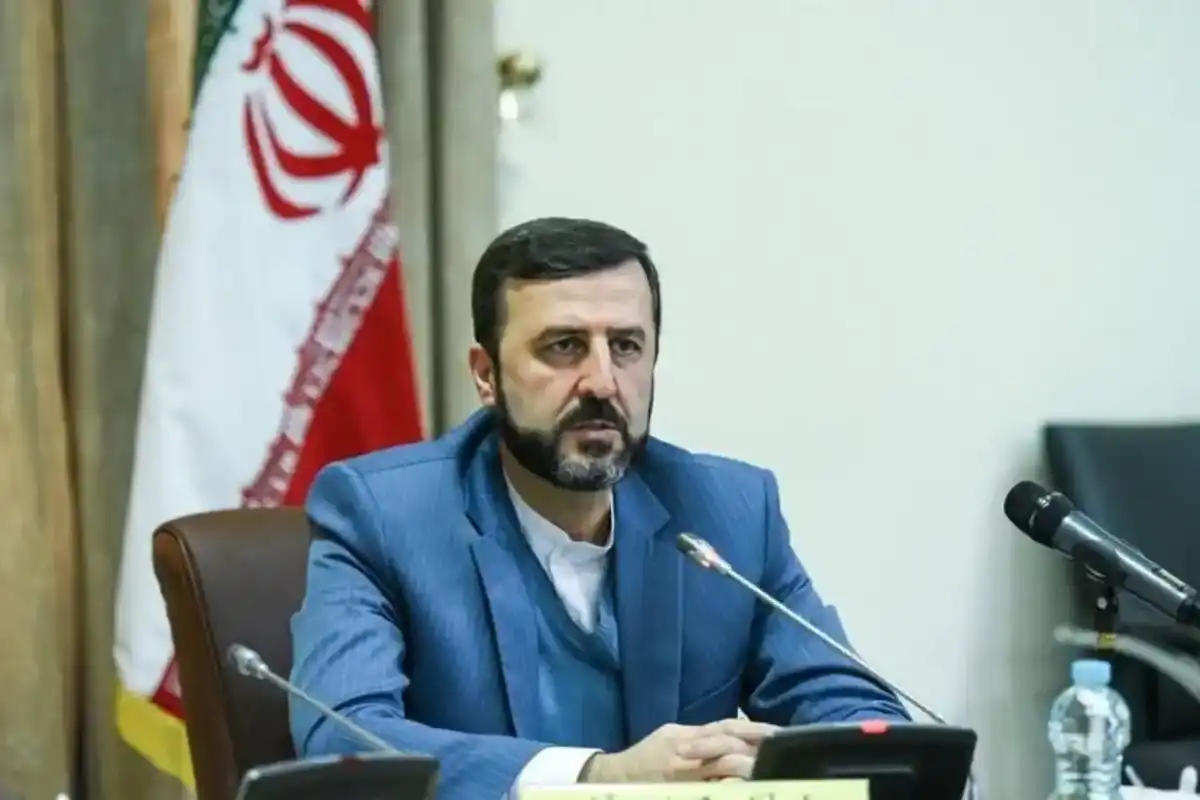
Deputy Foreign Minister Kazem Gharibabadi said that the Strait of Hormuz remains strictly under Iranian sovereignty on Saturday, rejecting President Donald Trump's assertion that Washington would declare the passage US territory.
Gharibabadi emphasized that Tehran controls opening and closing the waterway and will not bow to American threats or naval displays.
How did Iran respond to US claims over the Strait of Hormuz?
Iranian officials insisted that authority over the Strait of Hormuz rests exclusively under Iranian command and cannot be altered by tweets or aircraft carriers. Deputy Foreign Minister Kazem Gharibabadi stated that the waterway will remain Iranian. Tehran affirmed that the maritime blockade will continue until Washington lifts economic sanctions and compensates for wartime damages.
Writing on social media platform X, Gharibabadi stated that Iran does not fear threats nor cowers before military displays. Iranian diplomats maintained that political speeches will not alter territorial reality. Tehran emphasized that Washington suffered strategic defeats and must accept geopolitical realities in the Middle East.
The diplomatic exchange followed comments by President Donald Trump during a political rally in Garden City, New York. As reported by The Guardian, Trump informed supporters that American forces would declare the passage a US territory after defeating Iranian military forces. A White House representative subsequently clarified that the president remarked as a joke.
What terms has Iran established for reopening the Strait of Hormuz?
Iranian officials reaffirmed that reopening the shipping lane requires a complete end to military aggression against Tehran and its regional allies. In addition, Tehran demands the immediate removal of economic sanctions, the release of frozen national assets, and financial compensation for wartime damage. Until Washington meets these demands, Iranian forces will maintain their naval blockade across the passage.
The Iranian Persian Gulf Strait Authority confirmed that statements from American officials claiming the route is open do not alter physical realities. Iranian naval units continue to enforce strict transit restrictions against non-authorized commercial shipping. Iranian Foreign Minister Abbas Araghchi separately noted that administrative discussions with Omani officials regarding navigation rules remain separate from formal peace negotiations.
How is the Strait of Hormuz blockade impacting global crude prices?
The ongoing chokehold over the strategic passage continues to disrupt global energy markets, as the route typically handles twenty percent of global oil and liquefied natural gas flows. International benchmark Brent crude traded near $90 per barrel, pushing domestic gasoline prices in the United States toward $4 per gallon. American consumers are facing growing fuel costs amid persistent supply disruptions.
Naval standoffs remain severe as the United States Navy enforces a counter-blockade against Iranian commercial ports. Regional shipping risks remain elevated following recent military strikes against commercial oil tankers affiliated with Abu Dhabi National Oil Company. Both nations remain locked in a geopolitical stalemate while energy markets face ongoing price volatility.





Comments
See what people are discussing