

Iran gains diplomatic leverage as US talks advance
Kamran Khan says indirect US-Iran talks in Doha are progressing, with frozen assets and Hormuz at the center of negotiations.

News Desk
The News Desk provides timely and factual coverage of national and international events, with an emphasis on accuracy and clarity.
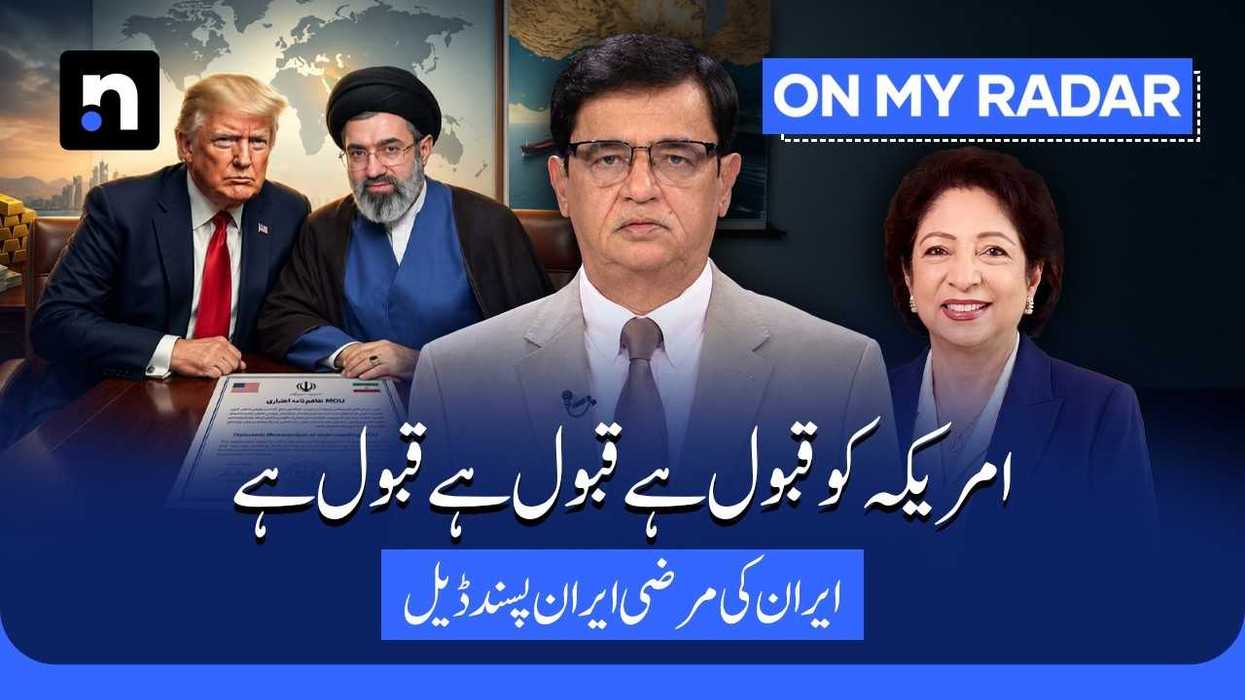
After months of conflict that shook the Middle East, Iran now appears to be gaining the upper hand at the negotiating table following its military gains in the war with the United States, journalist Kamran Khan said in the latest episode of On My Radar.
Indirect technical talks between U.S. and Iranian officials, mediated by Pakistan and Qatar, resumed in Doha on Tuesday. The negotiations are focused on the release of Iran's frozen assets, the future of the Strait of Hormuz and implementation of a memorandum of understanding (MOU).
According to Kamran Khan, the emerging framework of the U.S.-Iran deal appears to be moving largely in line with Tehran's demands. He said Iran is expected to retain its influence over the Strait of Hormuz, while payments linked to maritime traffic through the strategic waterway could resume in some form.
He also said there is growing evidence that Iran's frozen assets are beginning to be released. However, he questioned whether the negotiations could lead to lasting peace or merely provide a temporary pause in tensions.
The U.S. delegation, including Steve Witkoff and Jared Kushner, met Qatar's prime minister in the presence of Pakistani mediators. The Iranian delegation, led by Deputy Foreign Minister Kazem Gharibabadi, separately held talks with Qatari and Pakistani officials.
Saudi broadcaster Al Arabiya reported Wednesday that negotiators had reached preliminary consensus on releasing $3 billion in Iranian assets. Iran has linked the phased release of the funds to continued progress in the negotiations.
Talks are also continuing on a new Omani proposal concerning the Strait of Hormuz. Negotiating teams are expected to return to their capitals for consultations before discussions resume.
President Donald Trump described the negotiations as moving "in the right direction" while speaking to reporters.
Earlier this week, Trump claimed Iran had requested a meeting with the United States. However, Tehran denied the claim a day later, with Foreign Ministry spokesperson Esmaeil Baghaei saying no meeting with the United States had been scheduled "at any level."
Iranian Parliament Speaker and chief negotiator Mohammad Bagher Ghalibaf said progress with Washington would not be possible until five key provisions of the MOU are implemented. Those include ending the war in Lebanon, restoring Iranian oil exports and releasing Iran's frozen assets.
While Trump is seeking a quick agreement, Kamran Khan said Iran appears to be in no rush. He noted that U.S. officials have expressed frustration with Tehran's negotiating style, citing Vice President JD Vance's remark that the Iranian "Persian style" of negotiations is difficult for Washington to understand.
Kamran Khan said Israel remains the biggest threat to the peace process.
Iran has announced state funeral ceremonies for Supreme Leader Ayatollah Ali Khamenei on July 9, while Israel has threatened to target the current leader, Ayatollah Mojtaba Khamenei. Iranian Foreign Minister Abbas Araghchi said Trump had assured Tehran that Washington would keep Israel under control, but Iran warned it would respond forcefully to any attack.
The Strait of Hormuz remains a central issue despite maritime traffic gradually recovering after months of disruptions. Shipping volumes have yet to return to prewar levels, insurance costs remain elevated and global shipping companies continue to classify the route as high risk.
Iran maintains it has sovereign rights over the Strait of Hormuz, while the United States rejects any Iranian restrictions or transit fees. Ghalibaf described the waterway as Iran's "greatest source of power" and said the 60-day concession under the MOU is temporary, adding that the prewar status "will never return."
Kamran Khan said the conflict has reshaped global energy security by demonstrating that Iran retains the ability to disrupt international energy supplies despite U.S. military superiority.
Former U.S. National Security Adviser Jake Sullivan said Iran is now using the Strait of Hormuz as its strongest diplomatic tool, while Gulf states are increasingly considering closer ties with China and other powers rather than relying solely on the United States.
Former U.S. Treasury Secretary Jack Lew also said Iran's influence and control over the Strait of Hormuz appears stronger than before the war.
Optimism surrounding the negotiations has lifted global oil markets. Brent crude fell to $71.89 per barrel, while U.S. benchmark WTI dropped to $68.75 per barrel, returning to levels seen before the conflict.


Comments
See what people are discussing