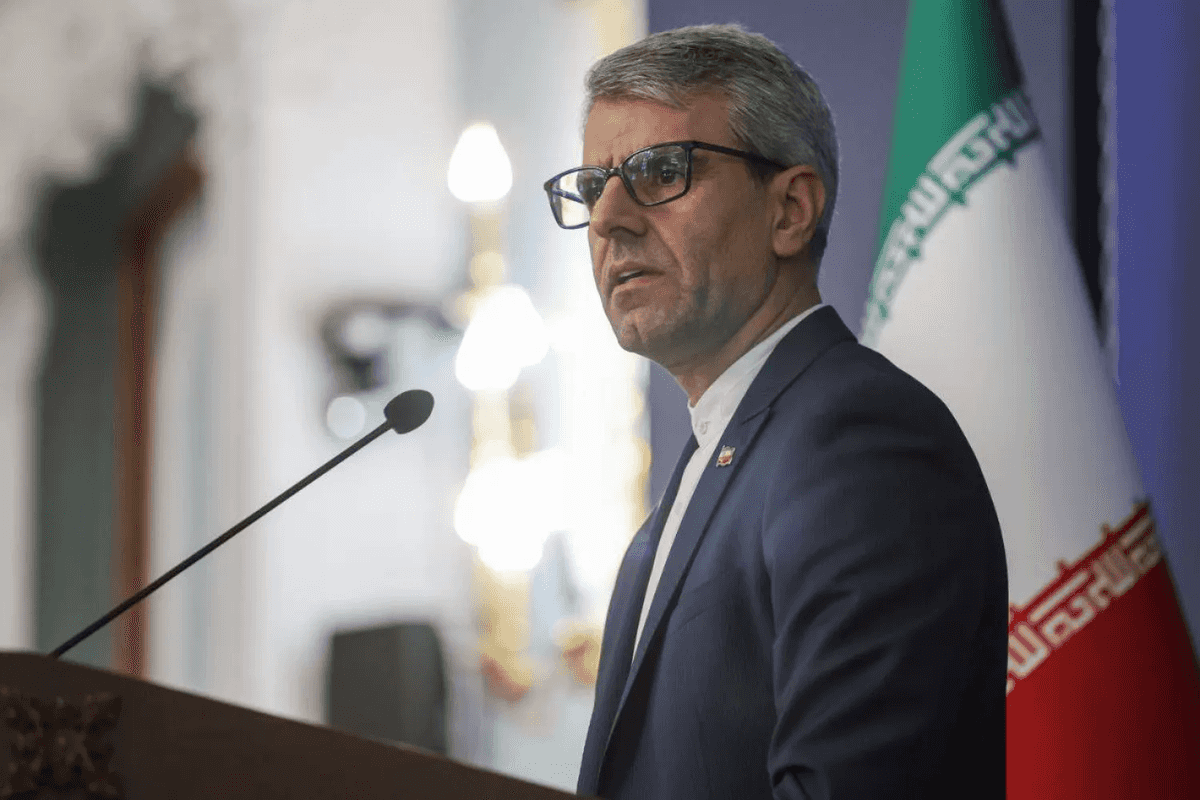
Iran sees no reason to fear a new security pact between Pakistan, Turkey and Saudi Arabia, Foreign Ministry spokesman Esmaeil Baghaei said Monday, according to Reuters.
Baghaei said the agreement reflects a regional shift toward self-reliance in security, with countries relying more on their own capabilities than on outside powers.
Why does Iran see no threat in the security pact?
Iran's government has said the pact is not aimed at Tehran because it reflects the historical and geopolitical realities of the region rather than hostility toward Iran. Officials called it inclusive and comprehensive, saying it could help prevent instability caused by outside powers, particularly Israel, which Baghaei referred to as the region's real threat.
At the same time, Tehran and Islamabad have continued diplomatic engagement, with Pakistan inviting Iranian Foreign Minister Abbas Araghchi and Parliament Speaker Mohammad Bagher Ghalibaf to visit Islamabad for talks, Foreign Ministry spokesman Baghaei said.
Araghchi and Ghalibaf will make the visit "at an appropriate time", he said in remarks carried by state media, without providing further details on when it would take place.
"Reciprocal visits and exchanges are a natural part of the growing ties between the two neighbouring countries," Baghaei said.
Pakistan played a mediatory role between Washington and Tehran in an effort to de-escalate tensions, including helping broker a ceasefire in April and a framework agreement in June. The agreement collapsed last month, however, with the two sides exchanging attacks for nearly two weeks before US President Donald Trump abruptly halted the bombardment amid reports of talks to resolve the conflict.
What did Iran's Foreign Ministry say about the pact?
Iran's Foreign Ministry described the agreement as a sign of a changing perception among regional countries toward the United States. Baghaei said countries in the region have realized that security cannot be bought from unreliable brokers, a reference to the United States, which is an ally of all three pact signatories. He made the remarks at a weekly news conference.
What is the Pakistan-Turkey-Saudi security pact?
Saudi Arabia, Turkey and Pakistan signed the defense agreement on Friday, against the backdrop of a five-month war between the United States and Iran. The conflict has drawn in surrounding countries and disrupted regional shipping routes. Pakistan's Foreign Ministry said an attack on any member of the pact would be regarded as an attack on all members, adding that the agreement was intended to strengthen collective deterrence.
Why was the security pact signed?
Analysts have said the pact seeks to deter an emboldened Iran and offset what they describe as an unreliable United States.






Comments
See what people are discussing