

Iran rules out Omani proposal to manage Strait of Hormuz
Iran has rejected Oman's Strait of Hormuz proposal for joint regional control, calling it unworkable as Gulf tensions and oil prices surge

News Desk
The News Desk provides timely and factual coverage of national and international events, with an emphasis on accuracy and clarity.
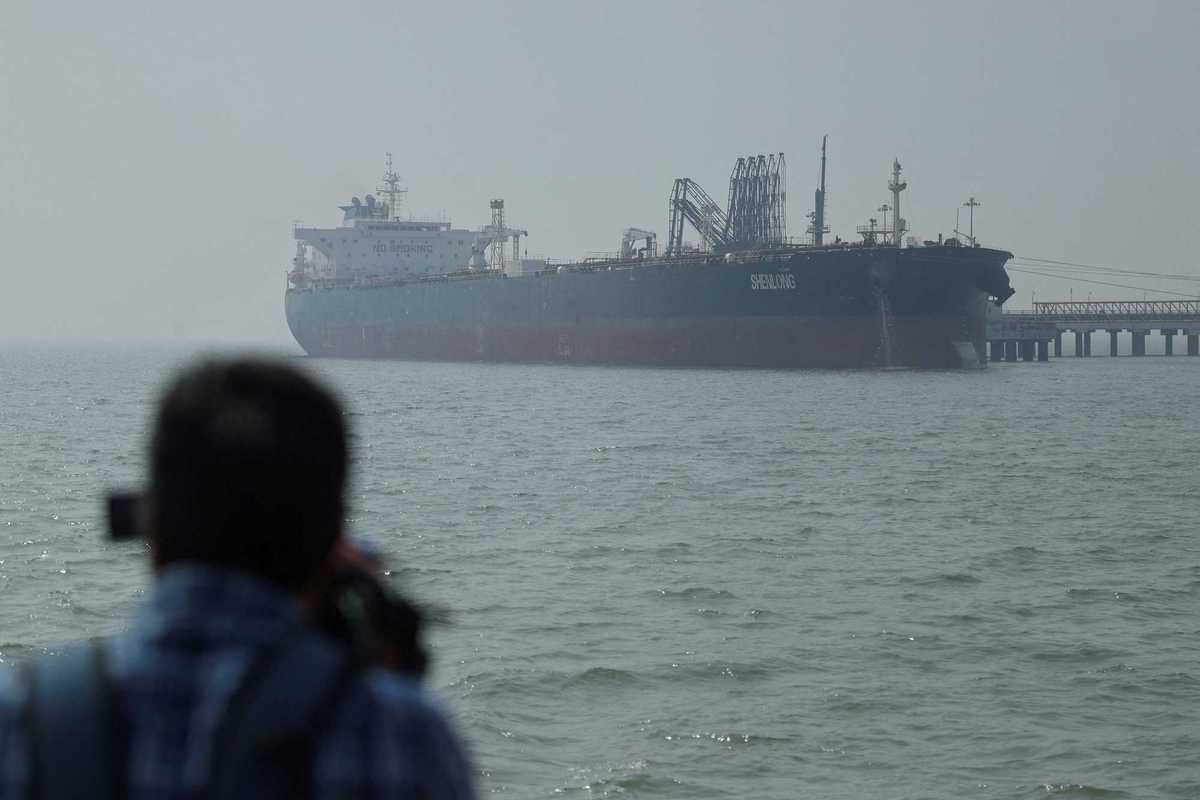
Tehran has ruled out Oman's proposal for regional joint management of the Strait of Hormuz, a senior Iranian official told Reuters on Wednesday.
The rejection ends hopes for a resolution to an impasse that has choked off Gulf trade for months.
What did Oman propose for the Strait of Hormuz?
Oman had presented Iran with a Gulf-backed plan to manage the strait through voluntary fees collected from passing ships, rather than sole Iranian control.
The system was modelled on the Strait of Malacca, where Indonesia, Malaysia and Singapore collect voluntary contributions from vessels to fund navigation and environmental protection.
Why did Iran reject the Hormuz proposal?
Iran insisted the entire inbound route through the strait, and part of the outbound route, must remain under Iranian control. A 50-50 joint arrangement with Oman would not serve Iran's interests, the official said, even though Tehran considers Oman a valuable neighbor. The official also accused the United States and Saudi Arabia of pressuring Oman to advance what he called their "unrealistic plans" for the waterway.
Iran's Revolutionary Guards (IRGC) said separately on Wednesday that its forces struck three oil tankers in the strait and forced them to stop after they ignored warnings over an "unsafe and illegal route." The IRGC Navy said it maintained full control of the strategic waterway and warned that "unlawful U.S. military interference" would not go unanswered. Reuters could not immediately verify the Guards' account.
How are oil prices reacting to the Hormuz standoff?
Oil prices rose more than $3 a barrel on Wednesday as attacks intensified once again.
The strait carried about a fifth of global oil and liquefied natural gas shipments before the U.S. and Israel attacked Iran on February 28.
What other attacks have escalated the conflict?
The U.S. and Saudi Arabia struck Iran-backed groups in eastern Iraq on Wednesday, blaming them for drone attacks on Saudi oil facilities. Iran warned that pinning the attacks on Tehran was a "major miscalculation." The strikes came hours after the U.S. military said its air defenses had intercepted a surprise Iranian ballistic missile attack on American troops in the region, which the IRGC said targeted U.S. installations in Jordan. Jordan's military said it shot down five Iranian missiles aimed at the kingdom on Wednesday.
Saudi Arabia said on Tuesday its air defenses destroyed several drones targeting oil facilities in the kingdom's Eastern Province, which it said were launched from Iraqi territory by Iran-backed militias. Iraq's Popular Mobilization Forces said several of its headquarters across the country were hit on Wednesday by U.S. and Saudi forces, with preliminary reports of casualties and building damage. An Iranian defense official denied any Iranian link to projectiles fired toward Saudi targets, again calling the accusation a miscalculation.
The renewed exchanges have ended a brief pause in fighting that followed President Donald Trump's abrupt halt of a two-week U.S. bombing campaign, after which Iran appeared to follow suit. A U.S.-Iran deal last month had partially reopened the strait, with further talks planned on Iran's nuclear program, but the agreement collapsed in early July after Iran fired on vessels using a shipping channel it does not recognize.




Comments
See what people are discussing