


News Desk
The News Desk provides timely and factual coverage of national and international events, with an emphasis on accuracy and clarity.
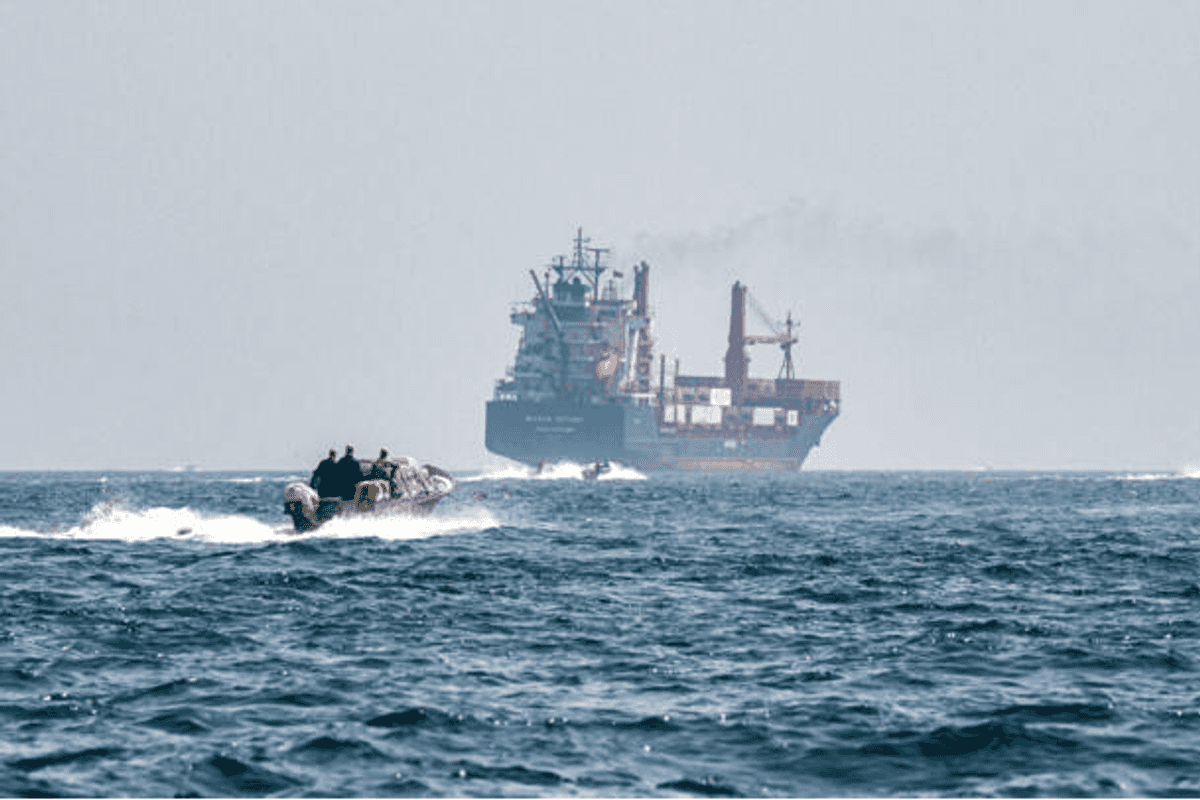
The Strait of Hormuz has again become the central flashpoint in the conflict.
Reuters/File
Iran said on Wednesday that more than 30 civilians have been killed in renewed US attacks over the past week.
Washington carried out another wave of strikes targeting military sites in southern Iran, further eroding a month-old ceasefire agreement.
What does Iran say about the US strikes?
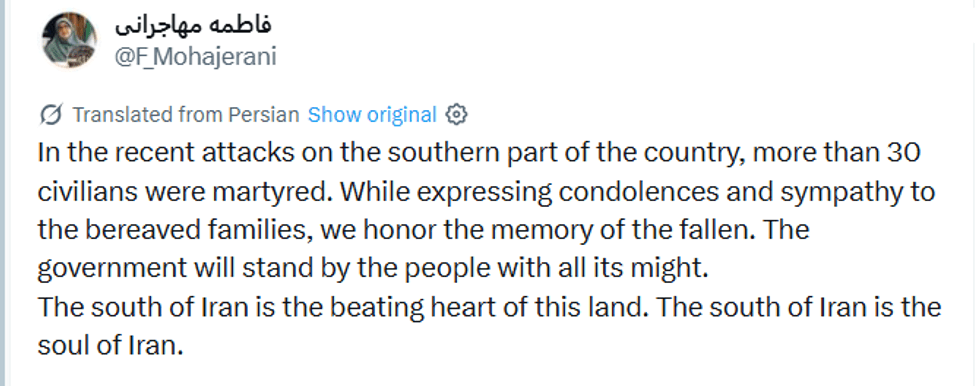
Government spokesperson Fatemeh Mohajerani said the latest attacks had killed more than 30 civilians, offering condolences to victims' families and pledging continued government support.
She wrote on X that southern Iran remained "the beating heart" of the country. Iran's military separately said seven service members were killed in Wednesday's strikes in the country's southeast.
Did the US strike Iran today?
The latest US operation began around eight hours after the previous round of strikes ended. US Central Command (CENTCOM) said it concluded the 90 minute operation at 7:30 a.m. Washington time (1130 GMT).
CENTCOM said it used precision guided munitions to strike coastal defense systems and cruise missile storage and launch facilities on Greater Tunb Island, intended to reduce Iran's ability to threaten commercial shipping in the Strait of Hormuz.
Why is the US attacking Iran?
The renewed strikes came nearly a month after Tehran and Washington signed an interim memorandum aimed at halting hostilities and paving the way for negotiations, but fighting has since resumed across the region.
Deputy Foreign Minister Kazem Gharibabadi said the renewed US blockade had effectively "dismantled" the Islamabad memorandum, referring to that agreement. Iran's Revolutionary Guards said they had targeted the US Fifth Fleet in Bahrain, while Bahrain said it intercepted attacks directed at civilian sites and Jordan's military said it shot down three Iranian missiles.
What has Trump said about further strikes?
President Donald Trump warned that Washington could intensify its military campaign if Tehran refuses to return to negotiations, saying power plants and bridges could be targeted next week.
"Next week it gets really bad for them," Trump told Fox News. Despite the renewed hostilities, mediated talks between the two sides have not been formally suspended.
Why is the Strait of Hormuz central to the conflict?
The Strait of Hormuz has again become the central flashpoint in the conflict. The strategic waterway, through which roughly a fifth of the world's oil supplies pass, has remained at the center of escalating tensions between Tehran and Washington. Iran initially blockaded the Strait after US and Israeli strikes on Feb. 28, briefly eased restrictions following the ceasefire, and later declared the route would remain closed until what it described as US aggression ended.
The United States has since reinstated restrictions on Iranian ports, though Trump has abandoned a proposed 20% levy on ships transiting the Strait, opting instead to pursue trade and investment agreements with Gulf states. Iran's Revolutionary Guards said military operations would continue and the waterway would remain closed until US attacks stopped.
What else has happened in the region?
Iranian state media reported explosions near Bandar Abbas, Qeshm Island and Bandar Imam Khomeini, followed by additional US strikes on the southern port city of Bushehr, home to Iran's only civilian nuclear power plant. Maritime security firm MTI Network said a Norwegian tanker was damaged by an unidentified explosive device off the coast of Oman early on Tuesday. Kuwait said one of its naval vessels was hit during an Iranian missile and drone barrage, injuring four crew members.
Israeli Prime Minister Benjamin Netanyahu, whose country has not rejoined the conflict, warned Tehran against attacking Israel, saying any such move would trigger a forceful response. Speaking in Dimona, widely believed to be the site of Israel's undeclared nuclear program, Netanyahu said: "Do not count on things remaining quiet if you attack us."
How is the region reacting to the escalation?
Tehran appeared calm, with residents gathering in cafes to watch the France-Spain World Cup semi-final, but anxiety remained high elsewhere in the Gulf.
"Every day, I wake up wondering whether the situation will de-escalate or worsen," said Mustafa Mohamed, a Sudanese accountant living in Kuwait, adding that uncertainty had made it difficult to plan anything. George Atef, an Egyptian civil servant in Kuwait, said not knowing when the situation would end had become exhausting and draining.





Comments
See what people are discussing