

Italy to ban burqa in schools and cap foreign students per class, PM Meloni says
Italy plans to ban the burqa in schools and cap foreign students per class, PM Meloni says

News Desk
The News Desk provides timely and factual coverage of national and international events, with an emphasis on accuracy and clarity.
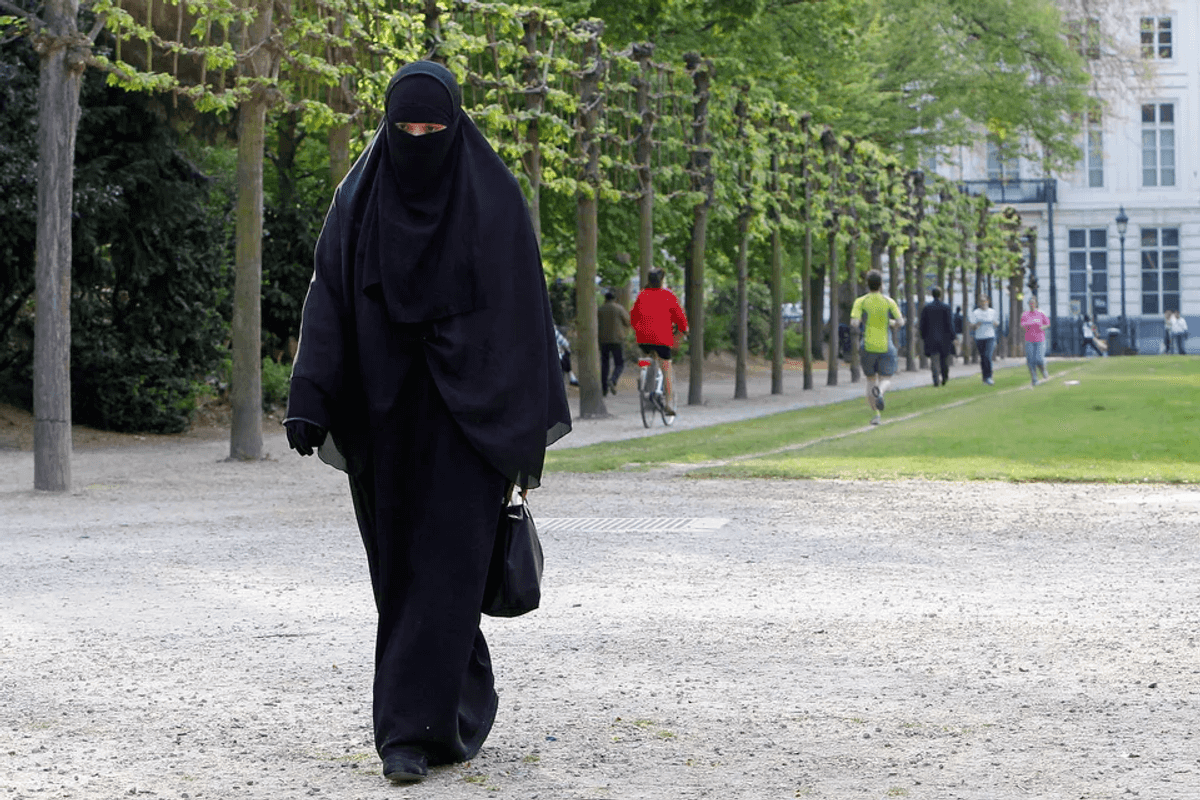
Meloni says women must attend school with faces uncovered in Italy.
Reuters/File
Italy is preparing to ban the burqa and niqab in schools and to cap the number of foreign students per class, Prime Minister Giorgia Meloni said on Sunday.
She made the announcement at a youth event organized by her Brothers of Italy party, as she played up her right-wing credentials.
What will Italy's burqa ban in schools involve?
Meloni said a measure will soon go before a Cabinet meeting. It would legally set a maximum number of foreign students per class and require parents of foreign students facing serious integration difficulties to learn Italian. It would also ban burqas and niqabs in schools. She did not specify what the maximum would be.
Meloni told an annual gathering of the youth wing of her Brothers of Italy party: "A measure will soon be presented to a Cabinet meeting to legally establish a maximum number of foreign students per class. It also requires parents of foreign students facing serious difficulties integrating into the school system to learn Italian and bans burqas and niqabs in schools."
"You must go to school with your face uncovered, and in Italy no one, in the name of a real or supposed tradition, can decide that a young woman must hide herself," Meloni said.
Why does Meloni want to limit foreign students per class?
Meloni argued that the number of children who do not understand Italian determines whether integration works. "If there is only one child in a class who doesn't understand Italian, that child will likely be able to learn the language and integrate quickly with the help of classmates and teachers. However, if the number of children who don't understand the language becomes large - or even the majority - that is no longer integration; it is neglect," she added.
Students who are not Italian citizens account for 11.6% of those enrolled in Italian schools, nearly 12 in every 100 students, according to Fondazione ISMU, a research institution.
Why is migration a divisive issue in Italy?
Italy is among the European countries most exposed to migrant arrivals because of its central Mediterranean location, making migration a hot-button issue and a major challenge for successive governments. The integration of migrants, particularly those from Muslim-majority countries, remains contentious in Italian politics and society.
Debates over religious symbols, cultural integration, citizenship rules and immigration policy frequently polarize public opinion.



Comments
See what people are discussing