

KCCI backs minerals exporters against 5% withholding tax
Karachi Chamber of Commerce has pledged support for minerals exporters opposing a new 5% withholding tax, warning it threatens supply chains.

Business Desk
The Business Desk tracks economic trends, market movements, and business developments, offering analysis of both local and global financial news.
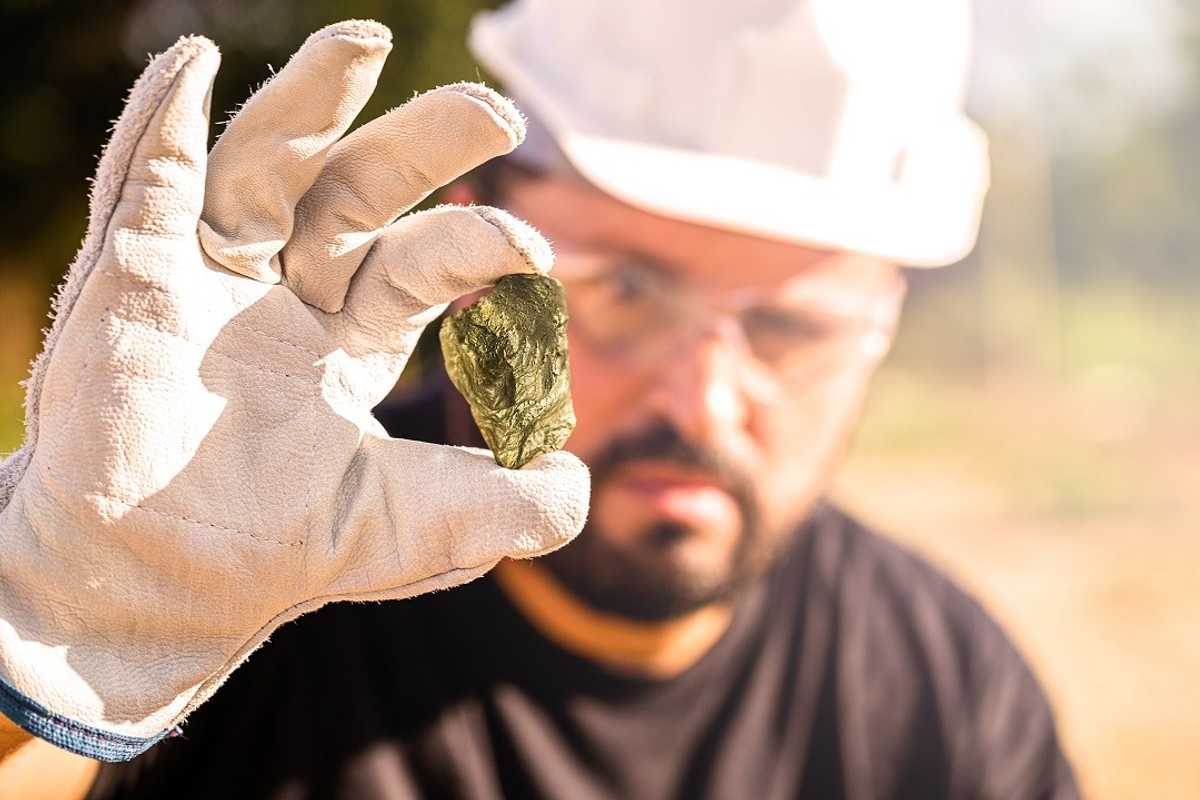
Miner holding gold nugget.
The Karachi Chamber of Commerce and Industry (KCCI) has pledged full support to Pakistan's mines and minerals exporters in opposing a new 5% withholding sales tax, warning it is disrupting supply chains and could undermine the export sector. The commitment came during a meeting between KCCI President Rehan Hanif and the Mines & Minerals Association this month.
What is the 5% withholding tax on minerals?
The 5% withholding tax requires minerals exporters to deduct payments to suppliers, mine owners and brokers on locally procured minerals, under the Finance Act 2026. Since it took effect on July 1, small-scale suppliers have resisted the requirement, causing what industry leaders describe as a near breakdown of the supply chain.
Why does the minerals industry oppose the tax?
Syed Muhammad Akram, who led the delegation from the Mines & Minerals Association, said the minerals sector is almost entirely export-oriented, with little domestic industrial consumption. He said exporters have been designated as withholding agents despite relying on hundreds of small-scale, undocumented suppliers who often sell only 10 to 50 metric tons at a time.
"The exporters are no longer receiving raw materials needed to fulfill export orders, letters of credit and contractual commitments with international buyers," Akram said. He warned the disruption could damage Pakistan's credibility in global markets.
Can exporters afford the new tax?
Akram said exporters typically earn profit margins of only 2% to 3%, making it commercially impossible to absorb a 5% withholding sales tax. He warned the measure could make mineral exports financially unviable and force many companies to halt operations.
He pointed to chromite exports as evidence of the sector's potential, noting they rose from about $94 million in fiscal year 2024-25 to nearly $130 million in fiscal year 2025-26, a roughly 35% increase achieved through private investment without government subsidies or incentives. Akram called for the tax's immediate withdrawal.
How has KCCI responded?
KCCI President Rehan Hanif said the chamber would support all legitimate concerns raised by the business community, regardless of membership status. He said KCCI invited the delegation to better understand the industry's challenges and would raise the matter with policymakers.
Hanif noted that KCCI had played an active role in shaping the federal budget for 2026-27 through detailed, evidence-based proposals, several of which were accepted after being backed by economic analysis. He assured the delegation that KCCI would prepare a comprehensive case on the tax's impact on Pakistan's export-oriented minerals industry.




Comments
See what people are discussing