

Pakistani ex-PM Khan’s eyesight improves after medical treatment, doctors say
Doctors report Khan’s right eye vision nearly normal with glasses, while left eye vision fully clear

Ali Hamza
Correspondent
Ali; a journalist with 3 years of experience, working in Newspaper. Worked in Field, covered Big Legal Constitutional and Political Events in Pakistan since 2022. Graduate of DePaul University, Chicago.
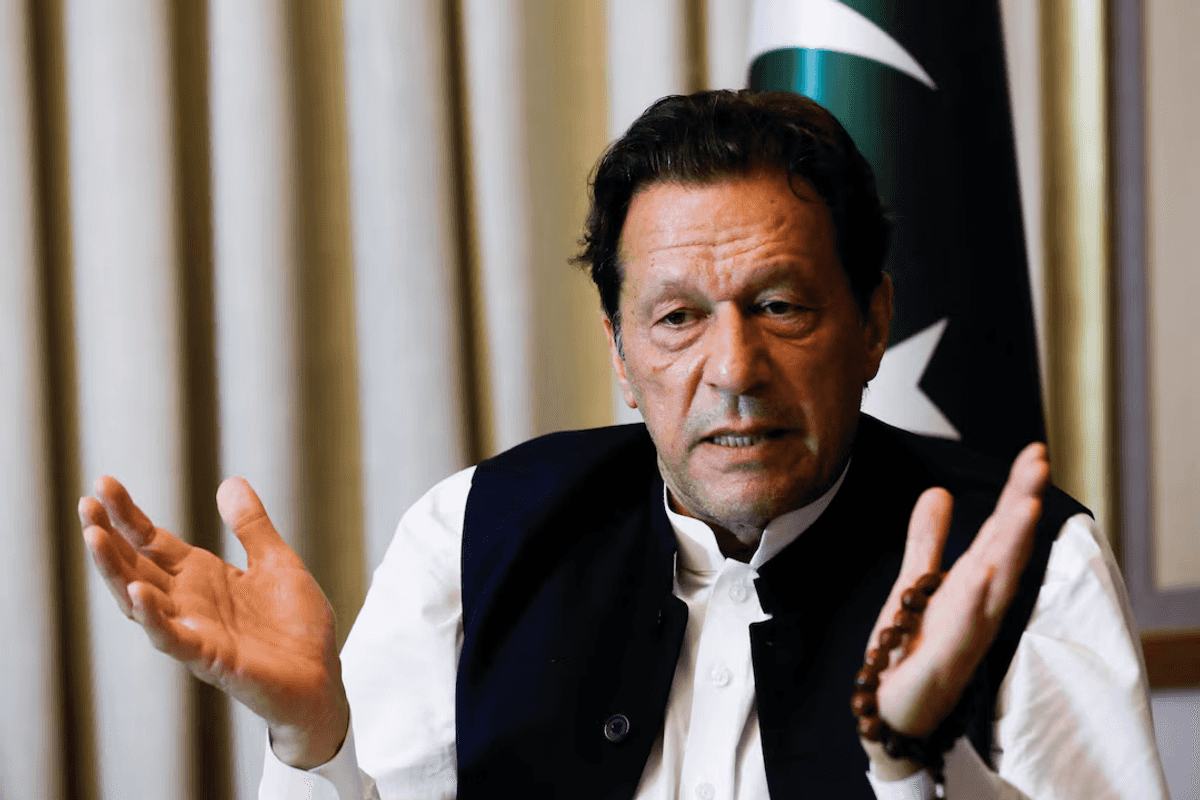
The eyesight of jailed former Pakistani prime minister Imran Khan has shown significant improvement following specialist treatment for a condition affecting his right eye, according to a medical report released on Monday.
A board of two senior ophthalmologists examined the 73-year-old opposition figure on Feb. 15 at Adiala Jail.
According to the medical report, Khan’s vision has improved considerably.
Khan has been imprisoned there since August 2023 on a series of charges that he and his supporters maintain are politically motivated to keep him out of power.
What does the report say?
In medical terms, his unaided vision in the right eye improved from 6/36 to 6/9. In simplified terms, this means that while he could previously only see details from 6 meters away that a person with normal vision could see from 36 meters, he can now see those same details from 9 meters - a major improvement in clarity.
With corrective glasses, Khan’s right-eye vision is now 6/9, meaning he can see almost normally with the aid of glasses. His left eye remains healthy, with natural (unaided) vision at 6/9 and improving to a perfect 6/6 when wearing glasses, which is considered standard normal vision.
The doctors reported that Khan’s macular oedema - a swelling in the central part of the retina that affects sharp, central vision - is improving. The thickness of the macula has decreased from 550 to 350 microns, showing that the swelling is reducing.
The report also noted the presence of moderate retinal hemorrhages (small bleeds) and "cotton-wool spots" (areas of nerve fiber damage) in the right eye, but stated that these were improving. The left eye was described as being within normal limits.
The medical board, consisting of Prof. Dr. Nadeem Qureshi, head of the vitreoretinal (specialist retina) department at Al-Shifa Trust Eye Hospital in Rawalpindi, and Prof. Dr. Muhammad Arif Khan, head of ophthalmology at the Pakistan Institute of Medical Sciences (PIMS) in Islamabad, recommended continuing Khan's current treatment.
This includes prescribed eye drops and a scheduled second dose of anti-VEGF medication - a treatment injected into the eye to stop abnormal blood vessel growth and leakage that causes swelling.
The doctors have also advised further advanced imaging, known as OCT Angiography and Fluorescein Angiography, once the course of injections is complete, to get a more detailed view of the blood flow in his retina.
Later that evening, between 9 p.m. and 10:20 p.m., the two specialists briefed senior leaders from Khan's party, Barrister Gohar Khan and Allama Raja Nasir Abbas, at PIMS hospital. Khan's personal physicians, Dr. Asim Yousaf and Dr. Khurram Mirza, were also briefed via a phone call lasting more than 25 minutes.
Following the detailed briefing, both the political leaders and Khan’s personal doctors expressed their full satisfaction and confidence in the treatment provided so far and the follow-up plan recommended by the specialist team, the report added.
Khan, who served as prime minister from 2018 to 2022, has been in custody for over two years, facing multiple legal cases. His supporters and human rights organizations have repeatedly raised concerns about his health and living conditions while in detention.



Comments
See what people are discussing