Pakistan’s parliament on Tuesday turned a deadly fire in Karachi into a wider debate over local governance failures, as lawmakers from across the political spectrum called for reforms while trading accusations over decades of administrative neglect in the country’s largest city.
The blaze at the Gul Plaza shopping mall, which broke out late Saturday night and burned for more than 24 hours, has killed at least 23 people and left dozens missing, officials said.
As rescue teams continued their search amid fears of further collapse, lawmakers used the tragedy to spotlight what they described as chronic mismanagement of Karachi’s municipal systems.
Opposition slams Sindh government
Members of the Muttahida Qaumi Movement-Pakistan (MQM-P) sharply criticized the provincial government of Sindh, arguing that weak local government structures and a delayed emergency response worsened the disaster.
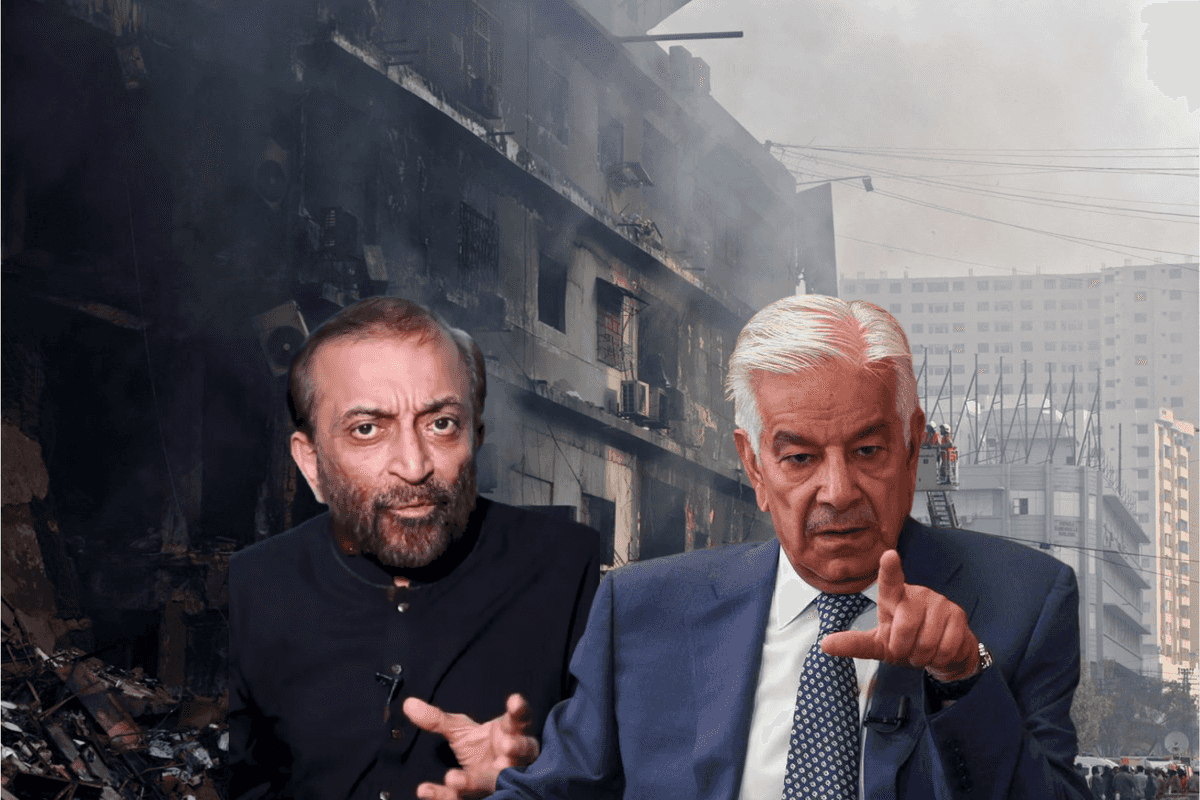
MQM-P leader Dr Farooq Sattar said governing a megacity like Karachi through a centralized provincial system was “unrealistic” and called for the creation of additional administrative units with authority devolved to mayors, town chairmen and union council representatives.
“A chief minister cannot run a city of this size alone,” Sattar said, adding that his party had previously proposed constitutional safeguards to strengthen local governments during discussions on a possible 28th Amendment.
He blamed decades of negligence, corruption and poor planning for disasters such as the Gul Plaza fire, urging lawmakers not to reduce the issue to political point-scoring. Sattar alleged that senior provincial and city officials arrived at the scene many hours after the fire began, calling the response “deeply disappointing.” He also said Karachi remained undercounted, underrepresented and underfunded, with firefighting resources far below what was required for a city of its size.
In a rare moment of unity, Sattar paid tribute to firefighter Furqan Ali, who died while battling the blaze.
Asif backs grassroots representation
Defense Minister Khawaja Asif echoed calls for structural reform, saying Karachi’s governance model had failed its residents. He said the shift of administrative authority to provinces after the 18th Amendment had left local governments powerless, and warned that without effective local governance, institutions such as the armed forces were often forced to step in during emergencies.
“If we truly want to empower the people, power must be transferred to the neighborhood level,” Asif said, adding that a proposal to strengthen local governments discussed during deliberations on the 27th Constitutional Amendment was later withdrawn.
“The collapse of the fire response system is a clear signal that the country needs a strong, accountable local government framework,” he said.
PPP rejects blame, cites past governance
Responding to the criticism, Pakistan Peoples Party (PPP) lawmaker Abdul Qadir Patel said assigning responsibility without historical context was misleading. He argued that Karachi’s administrative decline could not be attributed solely to the Sindh government, noting that over the past three and a half decades the city had largely been governed by mayors from Jamaat-e-Islami and MQM in various political forms.
Patel also pointed to past major fire incidents in Karachi, some with higher casualties, which he said were being overlooked in the current debate. He said the Sindh government had previously provided compensation to victims of disasters such as the Timber Market fire, setting a precedent rarely seen elsewhere in Pakistan.
Rejecting claims of provincial neglect, Patel said Sindh contributed a significant share of revenue to the federation and warned that the politics of ethnic division and violence in past decades had damaged Karachi’s social and administrative fabric.
Another PPP legislator, Shehla Raza, defended the provincial government by saying Sindh was the only province with an operational local government system.
She acknowledged that traffic congestion delayed emergency response, but said services were dispatched soon after the fire was reported. She also cautioned that large-scale fires occur even in developed regions, and argued that the focus should remain on improving emergency preparedness rather than political blame games.








Comments
See what people are discussing