

Lebanon president says Israeli blasts near castle 'direct threat' to recent deal
Lebanon's Aoun calls Israeli blasts near Beaufort castle a 'direct threat' to the framework deal, as Israel says it razed Hezbollah tunnels there

News Desk
The News Desk provides timely and factual coverage of national and international events, with an emphasis on accuracy and clarity.
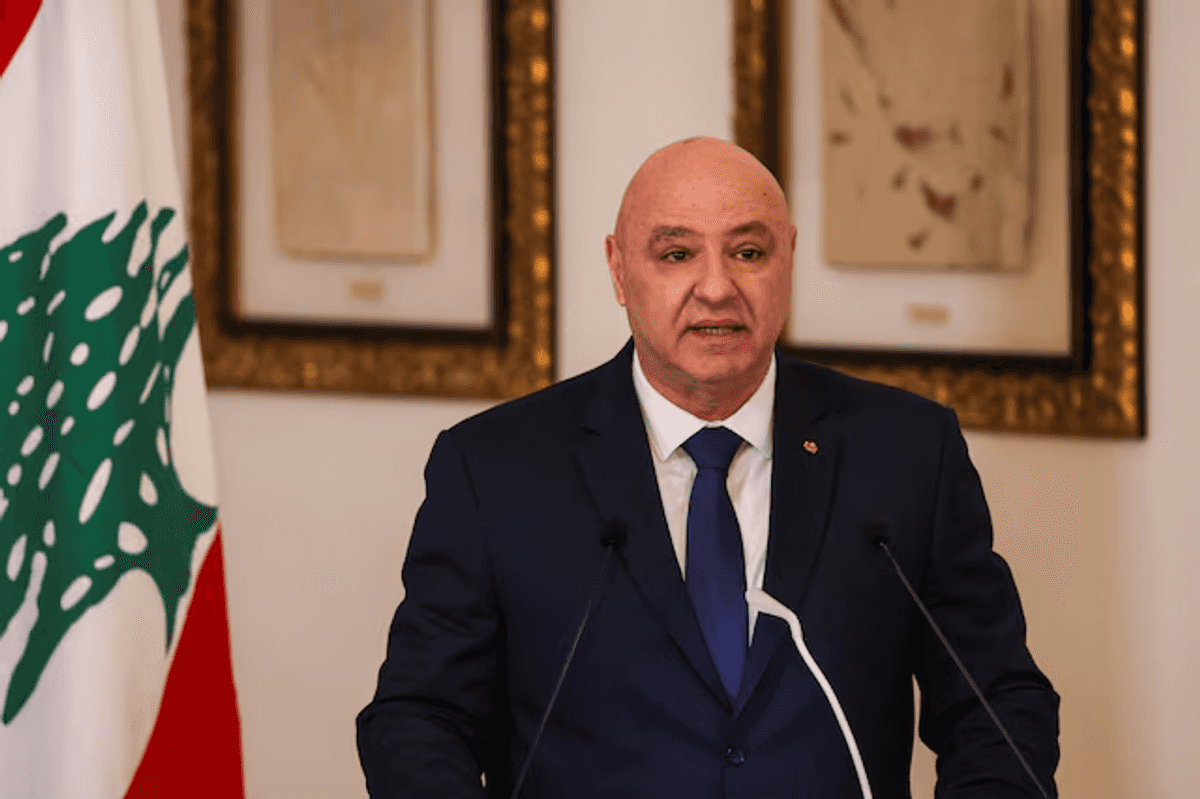
Lebanese President Joseph Aoun warned Friday that Israeli detonations near the UNESCO-listed Beaufort castle threatened a recent framework deal with Israel.
Israel said its forces had razed Hezbollah tunnels at the site using approximately 700 tons of explosives.
What happened at Beaufort castle in Lebanon?
Israeli forces triggered very powerful explosions overnight in the area of the Beaufort fortress, a Crusader-era castle near Lebanon's Israeli-occupied southern border, Lebanon's National News Agency reported. Israeli Prime Minister Benjamin Netanyahu and Defence Minister Israel Katz said the army destroyed "terror tunnels in the Beaufort area" using roughly 700 tonnes of explosives.
Aoun called the strikes "an extremely dangerous escalation" and "a direct threat to the process" launched under the framework agreement reached with Israel during US-sponsored talks last month, his office said. Under that deal, Lebanon's army is to disarm Hezbollah while the Israeli military withdraws from designated "pilot zones" for Lebanese forces to occupy.
Aoun added that the timing, ahead of another round of talks with Israel in Rome next week, "sends negative messages and undermines international efforts aimed at consolidating stability." The blasts resounded over a large area and shattered glass in nearby villages, NNA said, while an AFP correspondent heard large explosions and saw dust covering a swathe of forest.
Did the explosions damage the Beaufort castle site?
Citing Lebanon's National Centre for Geophysics, Aoun's statement said the detonations created ground waves equivalent to a 3.8 magnitude earthquake. Lebanese Prime Minister Nawaf Salam condemned the ongoing Israeli actions in the south, including damage to archaeological sites he called a precious part of Lebanon's history.
Beaufort castle was added to UNESCO's List of World Heritage in Danger just last week. Lebanon's culture ministry said the explosions struck the area opposite the fortress and warned that vibrations may have caused damage nearby, though technical teams could not conduct an on-the-ground assessment because the site remains under occupation.
Why did Israel target the tunnels near Beaufort?
The Israeli army said the tunnel network served as a central command centre for Hezbollah, consisting of several underground levels built over two decades. Netanyahu and Katz said the strikes followed a blatant violation of the ceasefire agreement by Hezbollah, which Israel's army accused on Wednesday of launching an explosive drone at a military vehicle.
Lebanese parliament speaker Nabih Berri, a Hezbollah ally, condemned the detonations. Hezbollah urged Lebanese authorities to act at all political and diplomatic levels to stop what it called destructive crimes by Israel, though the group has not claimed any attacks since the ceasefire took effect on June 20.
What is the state of the Lebanon-Israel ceasefire now?
Violence has declined since the June 20 ceasefire, which followed a US-Iran memorandum of understanding ending the broader Middle East war. Lebanon continues to report Israeli strikes, artillery shelling in the south, and detonations of buildings in southern villages. NNA reported three violent explosions on Friday evening on the outskirts of Taybeh.
Hezbollah drew Lebanon into the Middle East war on March 2 with attacks on Israel, prompting a massive Israeli bombing campaign and ground offensive that Lebanese authorities say killed more than 4,300 people. Israel's army continues to occupy parts of southern Lebanon extending roughly 10 kilometres into Lebanese territory along the border.


Comments
See what people are discussing