

Makkah defense pact could reshape ties among Pakistan, Saudi Arabia and Turkey
Kamran Khan says the pact marks a new phase in Pakistan-Saudi-Turkey defense cooperation

News Desk
The News Desk provides timely and factual coverage of national and international events, with an emphasis on accuracy and clarity.
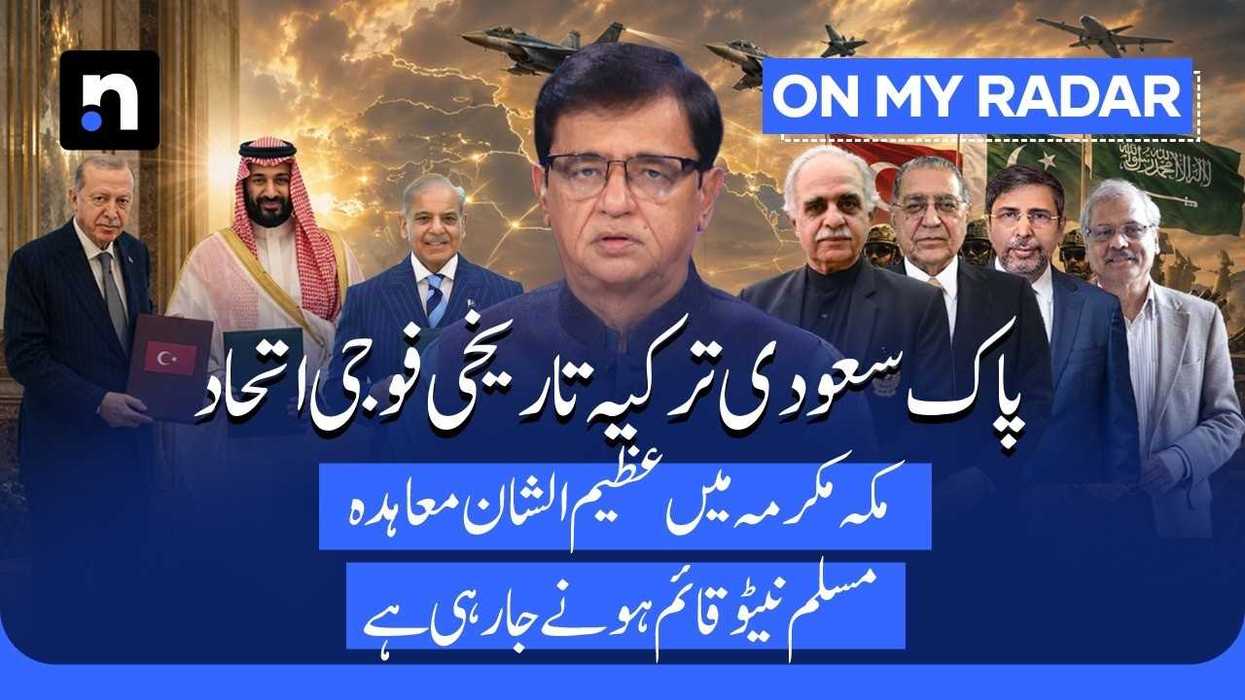
Makkah has witnessed the signing of a landmark defence agreement between Pakistan, Saudi Arabia and Turkey, creating a trilateral security framework that could significantly deepen military cooperation among three of the Muslim world's most influential states. The agreement comes at a time of heightened regional tensions and growing concerns over security across the Middle East.
Saudi Crown Prince Mohammed bin Salman, Pakistani Prime Minister Shehbaz Sharif and Turkish President Recep Tayyip Erdoğan signed the Makkah Joint Defense Agreement, under which an armed attack against any one of the three countries will be regarded as an attack against all three. The pact has been described by some diplomatic analysts as a potential first step towards a broader collective security arrangement in the Muslim world.
In the latest episode of On My Radar, Kamran Khan said the agreement could mark the beginning of a new phase in defense cooperation among Pakistan, Saudi Arabia and Turkey, with its significance extending beyond the immediate commitments outlined in the pact.
The agreement builds on the strategic relationship established between Pakistan and Saudi Arabia through their Strategic Mutual Defense Agreement, signed in September 2025, while bringing Turkeyinto a trilateral framework. Its most significant provision is the commitment to treat an armed attack on any one of the three countries as an attack on all, although the publicly available details do not specify what military response would be required from the other two members.
According to the joint communiqué issued after the defense summit in Makkah, the agreement is rooted in the three countries' longstanding ties, Islamic solidarity, shared strategic interests and decades of defense cooperation.
The pact also calls for greater cooperation across the defense sector and aims to strengthen collective deterrence against potential aggression. However, its long-term significance will depend largely on how the three countries translate the agreement into practical military coordination.
Each member brings distinct strategic capabilities to the partnership. Saudi Arabia has considerable economic and energy resources as well as significant influence across the Arab world. Turkey has developed a globally recognized defencnse industry, particularly in drones, naval systems and air defense, while Pakistan has a large and experienced military and is the only nuclear-armed state in the Muslim world.
That combination gives the partnership a potentially significant strategic dimension, although it remains too early to determine whether the pact will evolve into a more integrated military alliance.
There is also speculation over whether the framework could eventually expand beyond the three signatories. While the current agreement is limited to Pakistan, Saudi Arabia and Turkey, countries such as Qatar, Kuwait and Bahrain could potentially deepen defense cooperation with the group in the future. There is, however, no indication that they are currently party to the agreement.
Ultimately, the significance of the Makkah pact will depend not only on what was signed but on how it is implemented. The coming years will show whether the agreement remains a framework for closer cooperation or develops into a broader regional security arrangement.




Comments
See what people are discussing