

Mecca pact in spotlight as Shehbaz, Munir share top spot among most influential Muslims
PM Shehbaz Sharif and Field Marshal Asim Munir share the top spot in the 2027 list of most influential Muslims, recognizing the Mecca defense pact.

News Desk
The News Desk provides timely and factual coverage of national and international events, with an emphasis on accuracy and clarity.
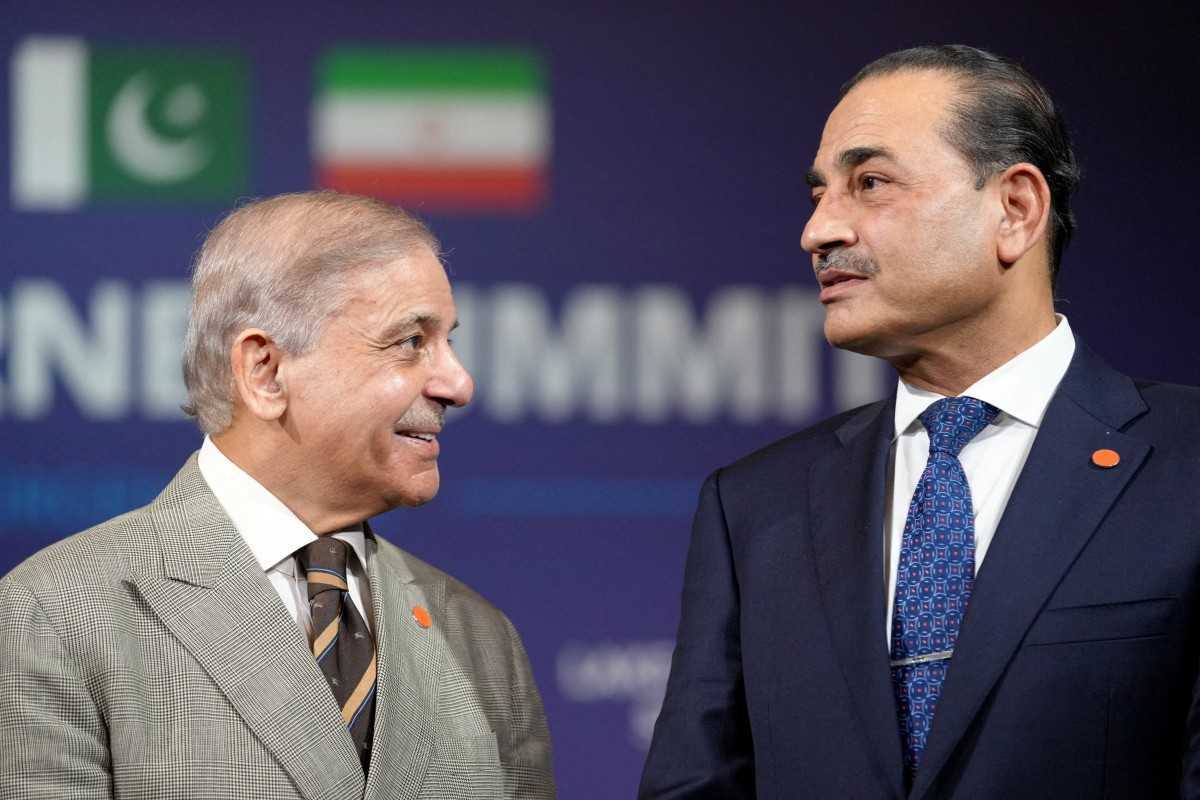
Prime Minister Shehbaz Sharif and Field Marshal Asim Munir, Pakistan's Chief of Defense Forces, share the top spot among the world's most influential Muslims in the 2027 list. The Royal Islamic Strategic Studies Centre in Amman, Jordan, recognized the Mecca Joint Defense Agreement.
Why were Shehbaz Sharif and Asim Munir ranked first among influential Muslims?
The list features several leaders at the top for the first time, recognizing the Mecca Joint Defense Agreement between Pakistan, Saudi Arabia and Turkey. The report said the pact combines Saudi financial resources, Turkish technology and manufacturing capabilities, and Pakistani military strength, and has reshaped regional politics.
The report said the unified top position comprises five individuals divided into three shared entries. Pakistan's leaders share it with Saudi Arabia's king and crown prince and Turkish President Recep Tayyip Erdogan. The report said this reflects a major shift in cooperation among Muslim countries on collective security.
"The main reason for this historic decision is the Mecca Joint Defense Agreement," the report said. It added that the pact follows a "one for all, all for one" approach to security.
What is the 500 Most Influential Muslims list?
The 2027 edition of The 500 Most Influential Muslims was compiled by the Royal Islamic Strategic Studies Centre (RISSC), a research institute based in Amman. The center has published the annual rankings since 2009. The list recognizes individuals who have made significant contributions to Muslim communities.
The report also highlighted Pakistan's challenges over the past year. It said the country had navigated economic stabilization efforts, regional security pressures and diplomatic balancing between major powers. It noted that Islamabad pursued regional shuttle diplomacy in the Middle East to advocate de-escalation, while facing pressure on domestic energy markets from high import costs and emergency fuel conservation measures.
Who else ranked among the most influential Muslims in 2027?
Iranian Supreme Leader Ayatollah Mojtaba Khamenei was ranked fourth, while Jordan's King Abdullah II took fifth place. Qatar's Emir Sheikh Tamim bin Hamad Al-Thani was ranked sixth, followed by Pakistani religious scholar Sheikh Muhammad Taqi Usmani at seventh.
United Arab Emirates President Sheikh Mohamed bin Zayed Al-Nahyan was ranked 12th, Egyptian President Abdel Fattah Saeed El-Sisi 22nd and Pakistani religious scholar Maulana Tariq Jamil 32nd. Liverpool footballer Mohamed Salah was ranked 39th, followed by Palestinian President Mahmoud Abbas at 45th and Syrian interim President Ahmed Al-Sharaa at 46th. New York City Mayor Zohran Mamdani was ranked 49th.
Honorable mentions in the politics category included Hamas chief Khalil Al-Hayya, former Pakistani Prime Minister Imran Khan, London Mayor Sadiq Khan and American senator-elect Abdul El-Sayed. Other honorable mentions, across social issues, science, arts and culture, media and sports, included Jordan's Queen Rania Al-Abdullah, British composer Sami Yusuf and Palestinian journalist Bisan Owda. British-American broadcaster and journalist Mehdi Hasan and Egyptian comedian Bassem Youssef were also named.
Who were named Man and Woman of the Year?
The RISSC named Palestinian pediatrician Dr. Hussam Abu Safiya its Man of the Year, recognizing his work treating patients in Gaza during Israel's military offensive. The report described him as "a doctor who refused to abandon his patients, buried his son and returned to the wards." It said he has now spent more than 600 days in Israeli custody without charge or trial.
Abu Safiya documented attacks on medical facilities during Israel's invasion of Gaza and appealed to the international community to protect the territory's health infrastructure. "A man with no army, no office and no freedom has done more than most governments to remind the world what courage and integrity look like," the report said.
Fatemeh Zahra Sheikhabadi, a survivor of the attack on a girls' elementary school in Iran's Minab, was named Woman of the Year. A U.S. missile struck the school on Feb. 28, killing more than 150 people, including over 100 children.
After surviving the attack, Sheikhabadi traveled to Geneva and addressed the U.N. Human Rights Council. She urged world leaders to "hear the voices of the children of Minab," according to the report. The report said she is honored "as herself: a girl who lost her friends and her teachers on an ordinary morning."




Comments
See what people are discussing