

Pakistan minister renews 'system reset' call, says public must decide on new administrative units
Interior Minister Mohsin Naqvi renews his call for a system reset, saying new administrative units must reflect public will

News Desk
The News Desk provides timely and factual coverage of national and international events, with an emphasis on accuracy and clarity.
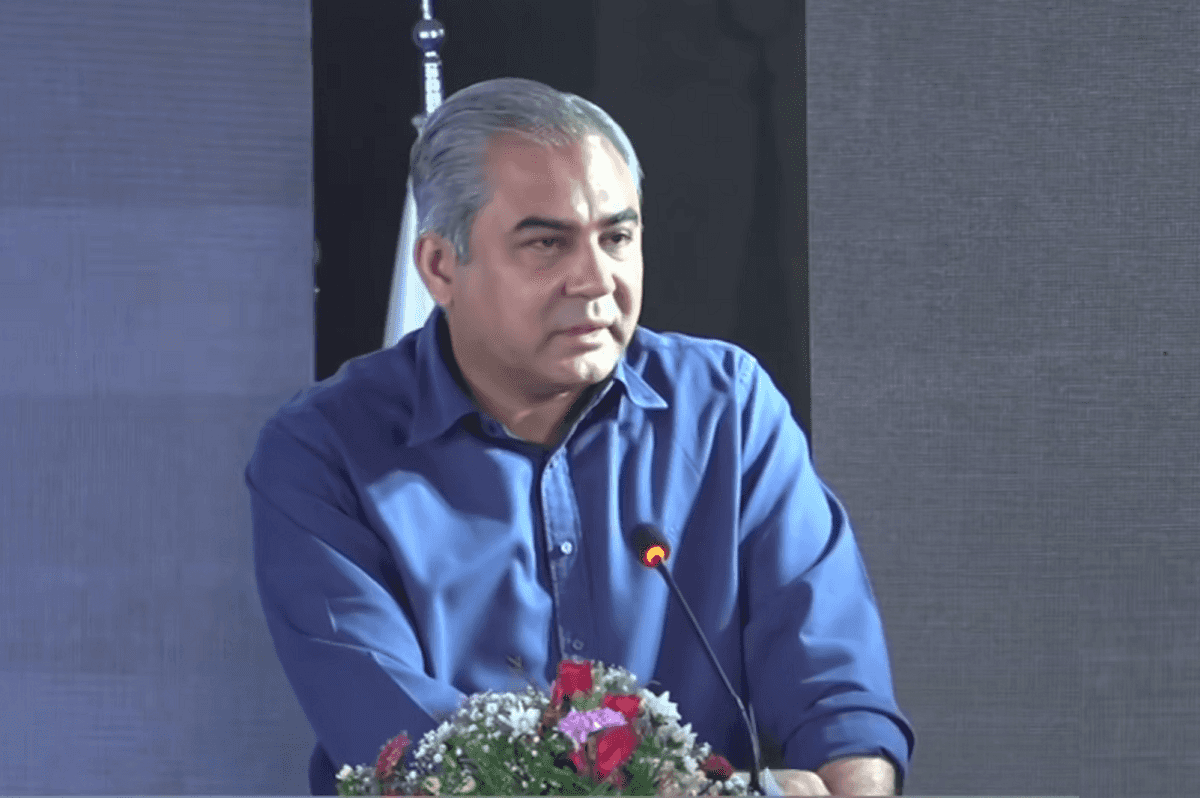
Interior Minister Mohsin Naqvi addresses a gathering in Lahore on Saturday.
Screengrab
Pakistan's Interior Minister Mohsin Naqvi renewed his call for a governance "system reset" and new administrative units on Saturday, speaking at a National Policy Dialogue at the University of Management and Technology in Lahore.
He said the current system was failing to deliver results, but stressed any change must go through political consensus and the Constitution.
What did Naqvi mean by a 'system reset'?
Naqvi said a system reset does not mean breaking the country's governance framework, but changing whatever is not working. He argued Pakistan's current system has failed to translate the country's potential into better outcomes for citizens, saying its impact is "not reaching the public at all." He added that his earlier remarks were not aimed at any political party or arrangement.
"My statement was neither a reference to any political party nor to any political arrangement," he said. "Reset does not mean breaking the system. Under no circumstances does it mean breaking the system. It means that whatever is wrong should be changed."
Will new administrative units be created in Pakistan?
Naqvi said the question of creating new administrative units should ultimately be decided through parliament and public consultation, not by an individual government or political party. He called on parliament to examine how many units are required, along with their potential costs and benefits, before the matter goes to the public. "This matter should be settled once and for all, whether provinces should be created or not. You have the platform: parliament," he said.
He stressed that any restructuring would require political consensus and would have to reflect "the will of our people." If the public does not support new units, he said, they will not be established. Naqvi also said restructuring should bring decision-making closer to citizens without undermining regional or cultural identities, adding that "a Sindhi would remain Sindhi and a Punjabi would remain Punjabi."
What problems is Naqvi trying to fix?
Naqvi cited shortcomings in public services to support his argument. "Even today, four out of every 10 children are not receiving the education they need. Today, only 55 per cent of the population has access to clean drinking water, and there are still two million cases pending in our courts," he said.
He also linked administrative restructuring to access to justice, arguing that bringing high courts closer to citizens could improve judicial services. "The judiciary is the most important thing for us. If the high court moves closer to the ground, people will get relief," he said. He added that governments, policies and budgets change constantly, but the real issue is how much gets delivered.
What did Naqvi say about Islamabad's provincial status?
Naqvi renewed his advocacy for granting Islamabad provincial status, describing himself as the "biggest supporter of Islamabad province." He argued the federal capital should receive a share of the National Finance Commission Award, saying "Islamabad is the only city that does not get a single rupee from the budget of Pakistan."
He criticised the Capital Development Authority's reliance on land sales to finance the city's affairs. "The CDA runs Islamabad's system by selling land. Are the citizens of Islamabad not citizens of Pakistan?" he said, urging support for provincial status for the capital.
What sparked the debate over new provinces?
Naqvi's comments revive a debate that intensified in July, when he first proposed dialogue among political parties on reforming Pakistan's governance system and called for new provinces and urgent administrative changes. He also made clear he would continue backing new administrative units even if it threatened his position in government. "Whether I remain in this job or not, I will not back down from this, whatever the end result may be," he said.
The proposal drew criticism from political and legal circles, including opposition from the Sindh government and lawyers in Lahore, while Sindhi nationalist groups called for Naqvi's resignation.



Comments
See what people are discussing