

NBP profit soars as bank dismisses pension risk concerns
Earnings surge 220% while dividend awaits cabinet approval

Business Desk
The Business Desk tracks economic trends, market movements, and business developments, offering analysis of both local and global financial news.
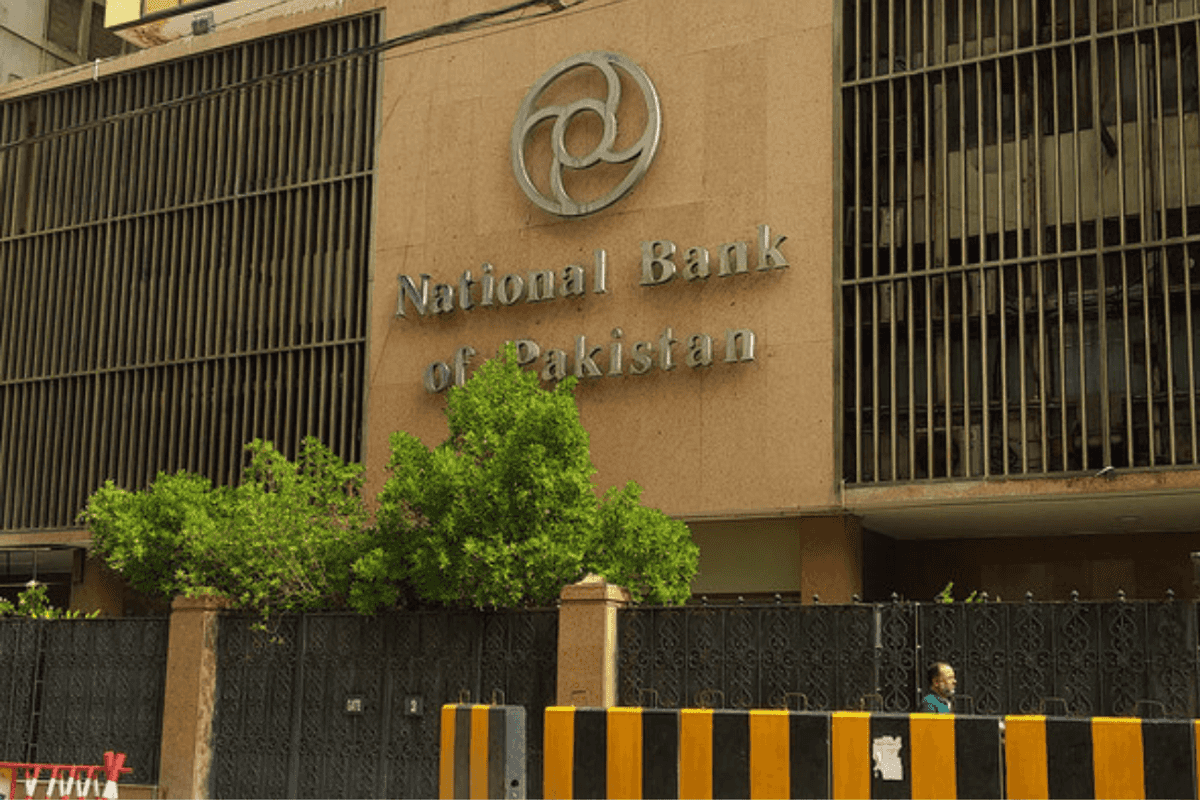
This file photo shows a general view of the National Bank of Pakistan (NBP) head office in Karachi
Shutterstock
The National Bank of Pakistan said its pension liabilities are fully accounted for and will not have any financial impact, as the lender reported a sharp surge in profitability and outlined a steady growth outlook despite operational and regulatory delays.
Speaking at a corporate briefing on its 2025 financial results, its management said the central bank’s clearance for its dividend payout reflects that “all potential impacts on the bank’s capital have already been accounted for” by the State Bank of Pakistan.
The bank added that disbursement of its final dividend — PKR 35 per share amounting to PKR 74 billion — remains pending cabinet approval. “As soon as the bank gets that nod, the dividend will be disbursed,” management said, noting delays due to the current geopolitical situation and administrative disruptions in Islamabad.
Profitability surges, balance sheet expands
NBP posted a profit of PKR 85.9 billion for 2025, up 219.8% year-on-year, compared with PKR 26.9 billion in 2024. Earnings per share rose to PKR 40.38 from PKR 12.63 a year earlier.
Total assets grew to PKR 7.1 trillion, securing the bank’s position as Pakistan’s second-largest lender with a 12% market share.
Deposits increased 14.6% year-on-year to PKR 4.4 trillion, supported by a strong current and savings account (CASA) ratio of 81.3%. However, gross advances declined 3.5% to PKR 1.6 trillion, reflecting subdued corporate credit demand.
The loan book remains diversified, with 35% exposure to corporates, followed by consumer financing (14%), Islamic lending (16%), and agriculture (8%). The bank maintained a cautious stance, holding provisions of PKR 212.5 billion against non-performing (Stage-3) loans.
Investment strategy and capital strength
NBP’s total investment portfolio rose 7% to PKR 4.9 trillion, dominated by Pakistan Investment Bonds (63%) and treasury bills (27%), with smaller allocations to equities, foreign bonds and other instruments.
The portfolio duration remained short at around 0.75 years, indicating a defensive positioning amid interest rate uncertainty. Within PIBs, 70% are floating-rate instruments with an average spread of 100 basis points over T-bills.
The bank’s capital adequacy ratio stood at 26.21%, well above the 13% regulatory requirement, while its leverage ratio of 4.37% also exceeded minimum thresholds.
Digital push and efficiency challenges
NBP significantly increased its investment in technology, with IT spending rising to PKR 13.5 billion in 2025 from PKR 10.2 billion a year earlier. The spending focused on upgrading its core banking system and expanding digital services.
The bank’s Islamic banking segment also showed strong growth, with assets nearly doubling to PKR 652 billion. NBP now operates more than 300 dedicated Islamic branches alongside a broader nationwide network.
Despite these gains, the cost-to-income ratio remained elevated at 40%, though management expects gradual improvement through controlled branch expansion and cost optimization.
Analysts remain broadly constructive on the bank’s outlook, citing its strong capital buffers and systemic importance.
Topline Securities said the bank’s balance sheet reflects “a conservative and defensive stance, with ample liquidity and strong provisioning”, while noting that lower advances highlight weak private-sector credit demand.
Meanwhile, JS Global said NBP’s continued investment in technology and its dominant position in government-related business “should support sustainable earnings growth over the medium term,” even as near-term efficiency metrics remain under pressure.
Going forward, the management expects to leverage its systemic importance (D-SIB status) to drive growth through technology and diversified income streams. With a successful Core Banking Application upgrade and a focus on non-funded income, the bank is well-positioned for sustainable long-term value creation.





Comments
See what people are discussing