

Oil spike from Iran conflict triggers economic domino effect in Pakistan
Kamran Khan says war-driven oil prices trigger fuel shocks in Pakistan, raising fears of inflation, higher rates and job losses

News Desk
The News Desk provides timely and factual coverage of national and international events, with an emphasis on accuracy and clarity.
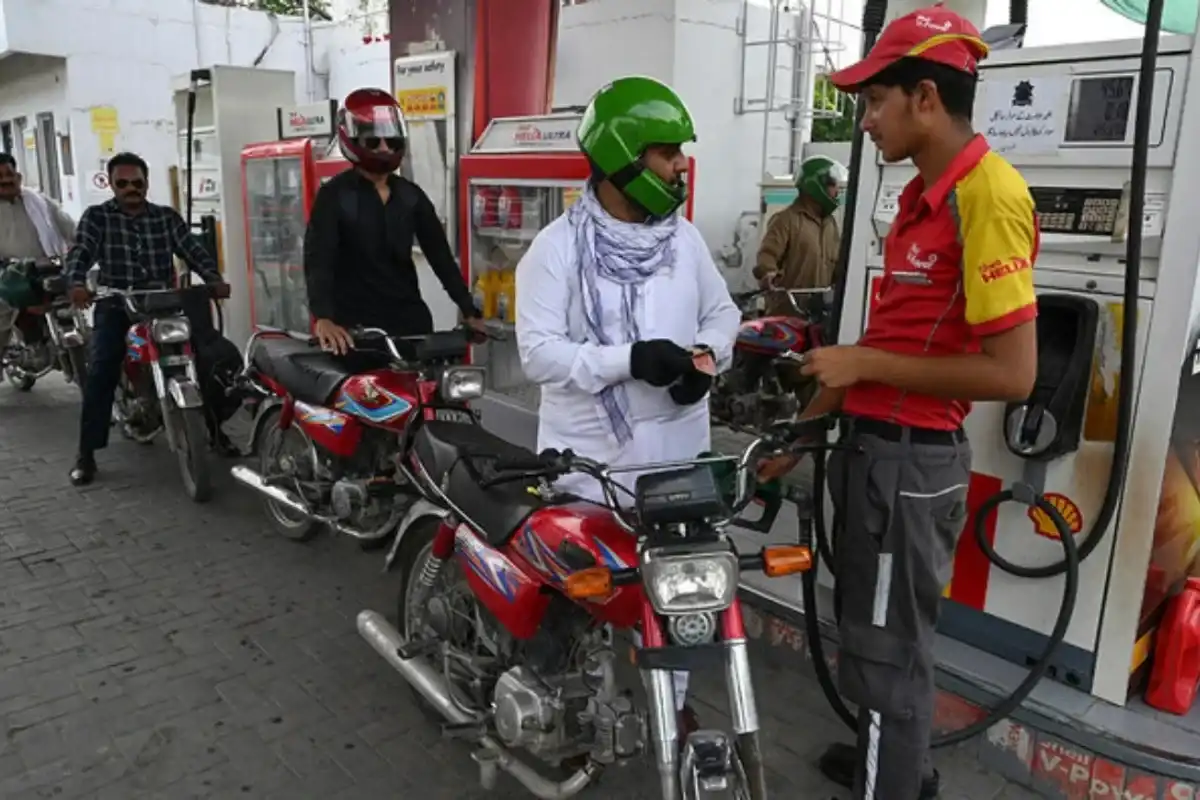
Pakistan is facing mounting economic pressure as the regional war centered on Iran drives global oil prices sharply higher, triggering steep fuel hikes and raising fears of a new inflation wave, senior journalist Kamran Khan said during the latest episode of his program “On My Radar.”
“The heat of the fire burning around Iran has now reached our homes,” Khan said, warning that Pakistan stands “on the front line” of the economic fallout from the conflict.
Fuel prices have swung dramatically in recent weeks as authorities struggled to respond to global market volatility. On March 6, petrol and diesel prices were raised by PKR 55 per liter each, pushing petrol from PKR 266 to PKR 321 and diesel from PKR 280 to PKR 335 per liter.
Another increase last Thursday marked what Khan described as a historic jump, with petrol rising by PKR 137 and diesel by PKR 184 per liter. Prices surged to PKR 458 for petrol and PKR 520 for diesel before the government reversed course within 24 hours, cutting petrol by PKR 80 per liter. Petrol now stands at PKR 378 per liter, while diesel remains unchanged at PKR 520.
Khan said the government’s confusion reflected forces largely beyond its control, citing global supply disruptions and surging crude prices linked to the war.
Before the conflict began on Feb. 28, Brent crude traded at about $72 per barrel. By last Friday, it had climbed to $109 – a roughly 51% increase in a month. During the same period, petrol prices in Pakistan rose 46%, while diesel jumped 87%.
“This is not just about fuel becoming expensive,” Khan said. “This is the beginning of a new inflation wave.”
Diesel costs are particularly critical for Pakistan’s economy, where about 96% of freight moves by road. Trucks, trailers and buses rely almost entirely on diesel, meaning higher transport costs quickly translate into more expensive food and goods nationwide.
“When diesel reaches PKR 520, wheat, flour, vegetables and fruit inevitably become costlier,” he said.
Khan warned that rising inflation could force the State Bank of Pakistan to raise interest rates, currently around 10.5%. A potential increase of 1 to 2 percentage points at the next monetary policy meeting would make borrowing more expensive for businesses and add pressure to government debt servicing.
He noted that even a one-percentage-point increase could add roughly PKR 55 billion annually to government interest payments.
Higher fuel and financing costs could push industries to raise prices, reduce production or shut down operations, he said, increasing unemployment, which already stands at about 7.1%.
“This is not a temporary shock – it’s a domino effect,” Khan said, describing a chain reaction from fuel prices to transport costs, inflation, interest rates and ultimately job losses.
He argued the crisis also exposes structural weaknesses, including reliance on imported oil, road-based transport and reactive economic policymaking.
“Even if you don’t own a car, you will still buy inflation,” Khan said, questioning whether the crisis should serve as a warning to rethink Pakistan’s energy and economic model.
Former finance minister Miftah Ismail also joined the discussion as a guest analyst.

Comments
See what people are discussing