

Oil surge threatens Pakistan economy amid Iran talks deadlock
Kamran Khan warns oil surge may trigger inflation spike, higher import bill and pressure on Pakistan’s currency

News Desk
The News Desk provides timely and factual coverage of national and international events, with an emphasis on accuracy and clarity.
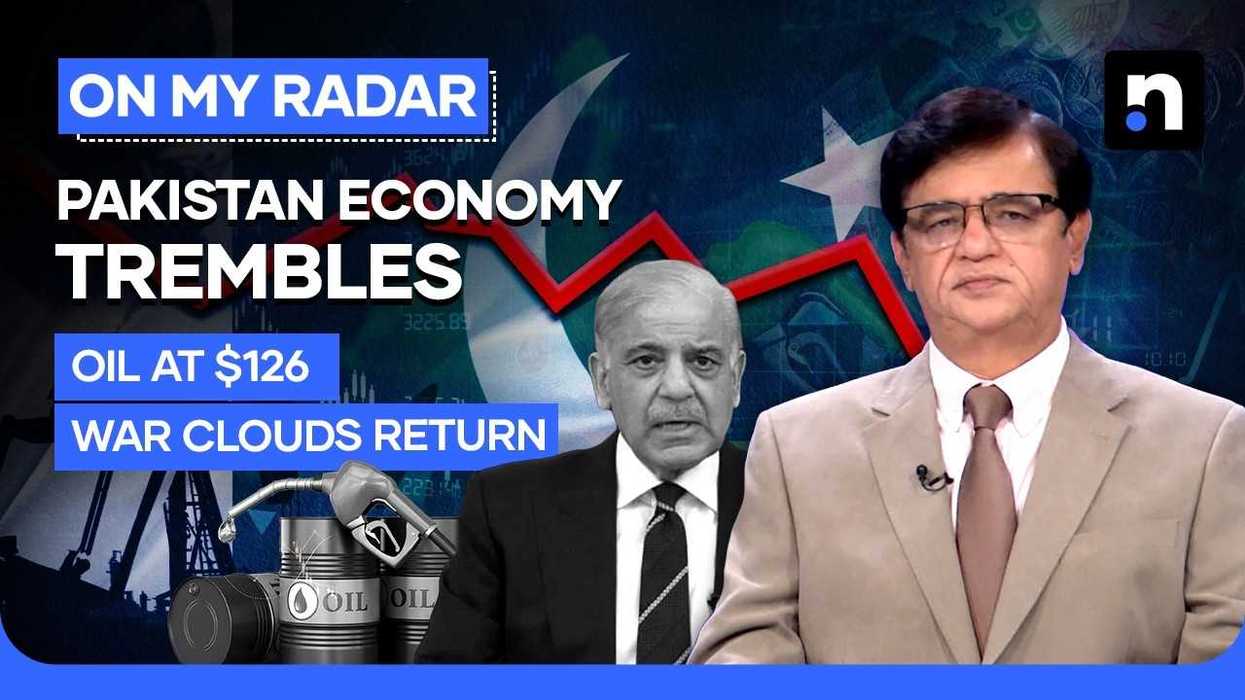
Kamran Khan says Pakistan and dozens of countries are preparing for a major economic shock as global oil prices surge following a deadlock in Iran-related negotiations.
On his program “On My Radar”, he says Brent crude has climbed to $126 per barrel, the highest level since June 2022 after the Russia-Ukraine war, signaling renewed volatility in global energy markets.
Kamran Khan says the sharp increase poses a serious risk for Pakistan, which imports more than 80% of its oil needs. He adds that any spike in global prices quickly feeds into the domestic economy.
He says experts are calling this the highest oil price level since the 2008 financial crisis, warning that its effects will emerge in phases. Pakistan has already absorbed an initial shock, with domestic fuel prices reaching historic highs.
Kamran Khan says a second wave could worsen the situation. He cites Prime Minister Shehbaz Sharif, who indicated a likely increase in petroleum prices, noting that Pakistan’s weekly oil import bill has surged from $300 million to $800 million.
He says petroleum prices could rise by PKR 25 to PKR 50 per liter in the coming weeks.
Kamran Khan says every $10 increase in global oil prices may raise inflation in Pakistan by 0.5 to 0.6 percentage points. He adds that the import bill could rise sharply, with each $10 increase adding about $1.5 billion in costs.
He says under current conditions, the annual pressure could reach $6 billion to $7 billion.
Kamran Khan says higher fuel costs are also expected to increase electricity prices due to fuel price adjustments, as much of Pakistan’s power generation still depends on oil and RLNG.
He says the impact will extend beyond households to industry, raising production costs and weakening competitiveness.
Kamran Khan says transport and logistics costs are also expected to rise, putting additional strain on supply chains. He warns inflation could return to double digits for the first time in nearly two years.
He says the energy crisis may reduce GDP growth by 1 to 1.5 percentage points. Growth initially projected at 3.2% for the fiscal year could fall to around 1.8%.
Kamran Khan says the Pakistani rupee will also come under pressure as demand for dollars rises to pay for expensive oil imports. He warns of a new cycle of imported inflation.
He adds that the current account deficit could widen to $7 billion, while the fiscal deficit may force the government to take measures such as increasing the petroleum development levy.
Kamran Khan says if global oil prices do not ease soon, Pakistan may have to consider difficult decisions, including fuel rationing or shifting freight transport from roads to rail to ease pressure on foreign exchange reserves.
He says the oil crisis, triggered by global conflict, is rapidly turning into a major economic challenge for Pakistan, with rising inflation posing a serious threat to millions of people.



Comments
See what people are discussing