

Operation Ghazab Lil Haq: Pakistan strikes Taliban targets in Afghanistan
Kamran Khan says regional tensions could rise as Pakistan uses full-scale military force

News Desk
The News Desk provides timely and factual coverage of national and international events, with an emphasis on accuracy and clarity.
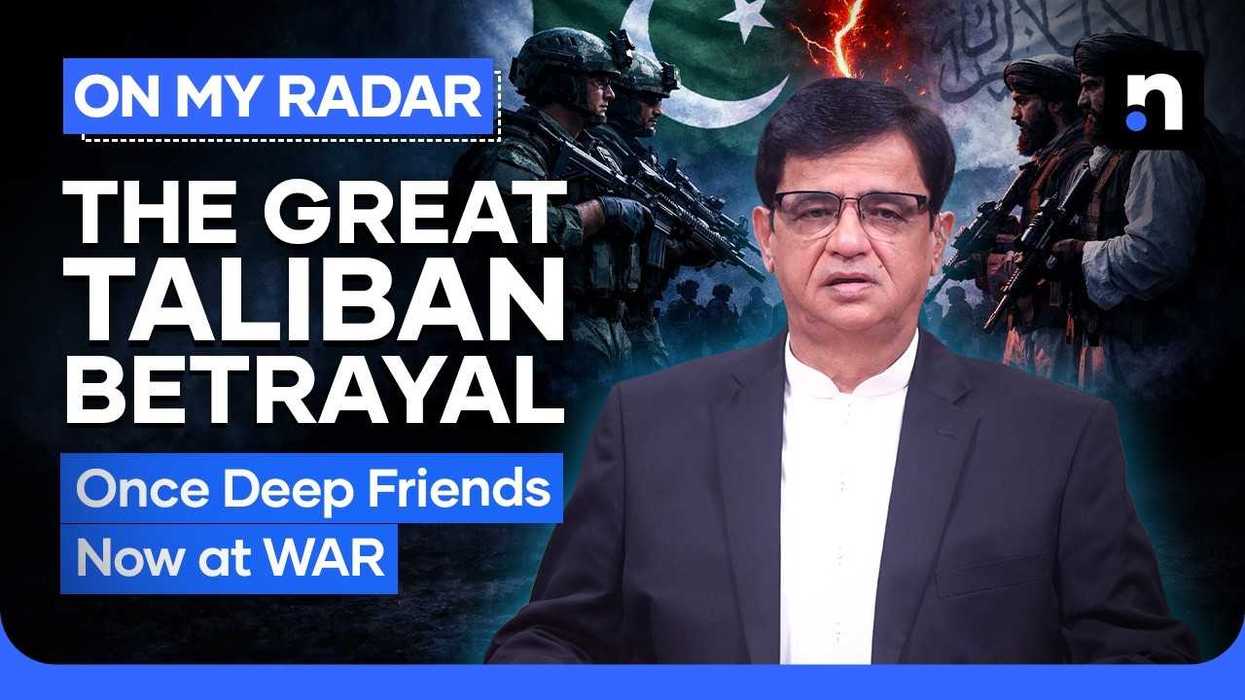
Pakistan officially launched airstrikes on Afghan Taliban targets, marking the start of what officials describe as a limited but decisive military response.
The operation, dubbed “Ghazab- Lil-Haq,” comes after repeated reports of unprovoked firing from Afghan border sectors, Pakistani authorities said.
In the latest episode of “On My Radar,” Kamran Khan detailed the operation and its implications, describing it as the most significant cross-border strike in years. He said Pakistani fighter jets targeted Taliban installations in Kabul, Kandahar, and Paktia, including brigade and corps headquarters, as well as ammunition depots.
According to Pakistan, more than 130 Taliban fighters were killed, hundreds were injured, and dozens of checkpoints were either destroyed or captured. Pakistani jets remained in Kandahar airspace even today, suggesting ongoing operations.
The Afghan Taliban confirmed the airstrikes but offered few details on casualties or damage. In turn, the Taliban Ministry of Defense claimed that several Pakistani soldiers were killed or captured during counterattacks and said that under orders from the deputy emir, their operations were halted at midnight.
In an extraordinary press briefing, Pakistan’s Director General of Inter-Services Public Relations (DG ISPR) provided a detailed account of the cross-border operation. He also highlighted how the Tehrik-i-Taliban Pakistan (TTP) continues to operate from Afghan soil with alleged support from India.
During a discussion with Air Vice Marshal (R) Ijaz Malik, Defense & Security Expert, Kamran Khan said Pakistan’s response reflects a shift from a conventional defensive posture to a more assertive military strategy. He added that the operation sends a strong message to the Taliban and their external backers.
Pakistan’s Defense Minister Khawaja Asif also spoke publicly, declaring that the nation’s patience had reached its limit. Asif accused the Taliban of transforming Afghanistan into a base for Indian proxy operations and claimed that India is using the Taliban to carry out terrorism in Pakistan.
Kamran Khan said that political unity in Pakistan is now evident despite a history of domestic divisions. He pointed out that President Asif Ali Zardari, Prime Minister Shehbaz Sharif, and opposition leaders from the PTI and other parties have all expressed support for the military action and rejected any compromise on territorial integrity.
Efforts to reduce tension are already underway. The United Nations, China, and other Muslim nations have called for restraint. UN Secretary-General Antonio Guterres urged both Pakistan and Afghanistan to adhere to international law, including human rights obligations. China’s Foreign Ministry spokesperson Mao Ning called for an immediate ceasefire. Iran offered to mediate between the two countries.
He emphasized that diplomatic efforts are critical to avoid a wider regional crisis. He noted that Saudi Foreign Minister Faisal bin Farhan Al Saud and Turkey’s Foreign Minister Hakan Fidan recently spoke with Pakistan’s Foreign Minister Ishaq Dar to discuss ways to reduce tension. Reports indicate that Saudi officials are also in contact with the Afghan Taliban government.
Despite these diplomatic interventions, Kamran Khan said that the situation could escalate further. Pakistani Air Force operations, ground skirmishes, and aggressive rhetoric suggest that this is no longer a border incident. He said the scale of Pakistan’s military response indicates a willingness to use full-force capabilities rather than limited defensive measures.
The implications of this confrontation extend beyond Pakistan and Afghanistan. Kamran Khan noted that regional security, trade, and diplomatic relationships could all be affected if tensions spiral. He warned that prolonged conflict could invite further international attention and possibly draw neighboring powers into a wider geopolitical dispute.
Observers say that Pakistan’s clear message is intended to deter future attacks from Afghan soil while signaling to the international community that it will protect its borders decisively. Kamran Khan said, “This operation shows Pakistan is prepared to act if provoked and is willing to shift from defensive to offensive measures when national security is at stake.”
The coming days will be critical in determining whether Operation Ghazab-Lil-Haq remains a limited tactical strike or evolves into a prolonged confrontation. Both governments face pressure from international and regional players to avoid escalation while maintaining their strategic positions.




Comments
See what people are discussing