

Over 32M birth records remain unlinked to Pakistan’s national identity database
Registration gaps expose governance risks as govt pushes reforms to integrate civil records nationwide

Ali Hamza
Correspondent
Ali; a journalist with 3 years of experience, working in Newspaper. Worked in Field, covered Big Legal Constitutional and Political Events in Pakistan since 2022. Graduate of DePaul University, Chicago.
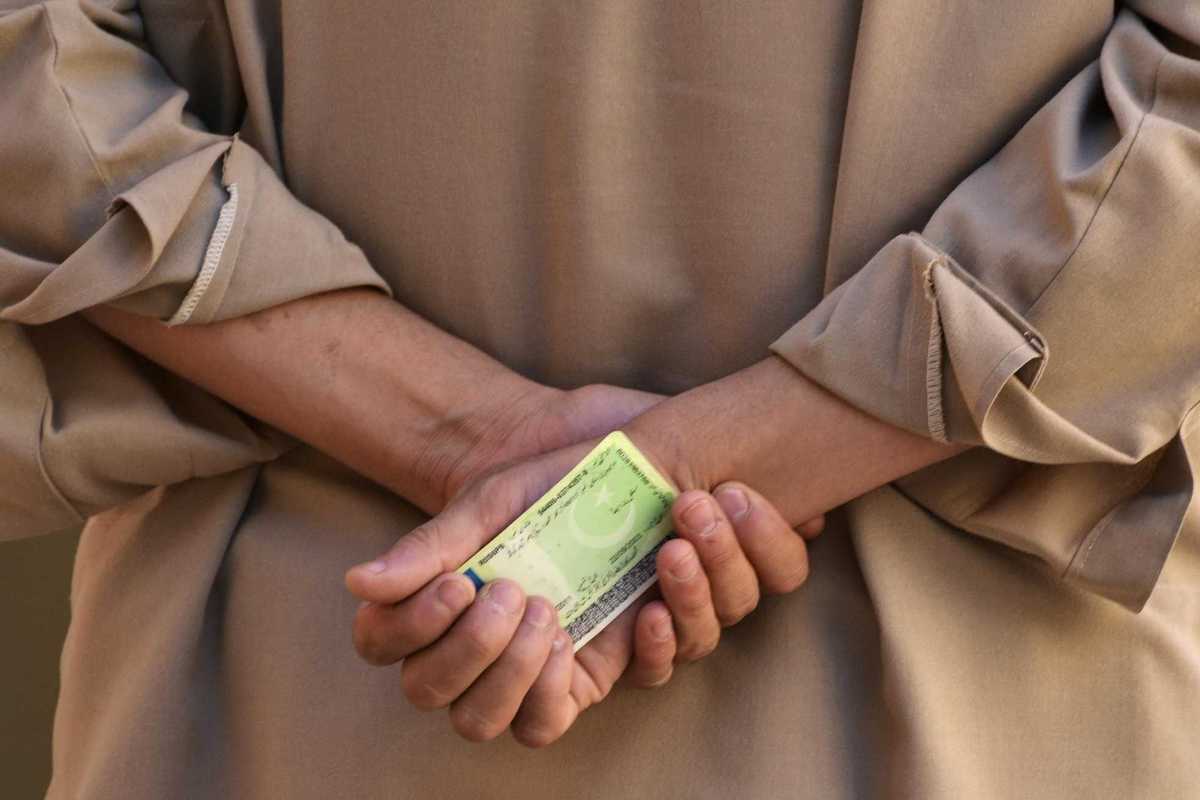
According to the official response, about 31.9 million birth records registered at local Union Councils have not been integrated into NADRA’s database.
Reuters/File
More than 32 million birth records in Pakistan remain disconnected from the national identity system, exposing structural weaknesses in civil registration and raising concerns about governance, public services and citizens’ legal identity.
The disclosure came in a written reply to a parliamentary question by lawmaker Sharmila Faruqi, addressed to the Interior Ministry, which oversees the National Database and Registration Authority (NADRA), the agency responsible for maintaining the country’s digital identity database.
A system under strain
According to the official response, about 31.9 million birth records registered at local Union Councils have not been integrated into NADRA’s database. Updated figures place the backlog at more than 32.7 million records.
The gap highlights a disconnect between local civil registration systems and Pakistan’s centralized identity infrastructure, a critical issue in a country where legal identity is required to access education, healthcare, voting rights and financial services.
Officials attributed the backlog to a combination of administrative, legal and societal factors. Until 2018, birth registrations did not require parents’ Computerized National Identity Card details, making later digital linkage difficult. Even now, registration with NADRA remains largely demand-driven, meaning many citizens enter the system only when they need specific services.
Stark provincial disparities
Data shows the problem is concentrated in Pakistan’s most populous regions. Punjab accounts for more than 16.8 million unintegrated records, followed by Sindh with 6.87 million and Khyber Pakhtunkhwa with 7.75 million.
Smaller but still significant gaps exist in Balochistan and the federal capital, Islamabad.
Year-wise figures show a sharp rise in unintegrated records after 2014, with millions of new cases accumulating annually, suggesting digitization efforts have struggled to keep pace with population growth and registration practices.
Structural bottlenecks
The Interior Ministry identified several systemic challenges behind the backlog, including access imbalances – with more than 12,000 Union Councils nationwide compared to roughly 1,000 NADRA registration centers – and legal fragmentation caused by differing provincial laws.
Authorities also cited weak enforcement mechanisms, noting there is no universal legal requirement obliging hospitals to report births, along with cultural practices that often delay registration.
Despite the introduction of a web-based Civil Registration Management System in 2018 and real-time verification tools, integration remains incomplete.
Limited oversight and data risks
While NADRA said it conducted an internal analysis of the backlog, details regarding duplication, errors or administrative inefficiencies were not publicly disclosed. Analysts say the absence of transparent audit findings raises concerns about data accuracy and potential overlaps.
Experts warn that incomplete integration increases the risk of identity exclusion, particularly for marginalized populations, and could create vulnerabilities in governance systems that depend on accurate demographic data.
Government response and reform plans
Authorities say corrective measures are underway. More than 99% of Union Councils are now digitally connected to NADRA, and real-time data-sharing dashboards are operational.
A new policy framework approved in January 2025 aims to establish two-way integration between local and national systems, while draft Unified Civil Registration Rules 2026 seek to standardize procedures nationwide.
Additional measures include integration of more than 4,800 health facilities for real-time birth and death reporting, expansion of biometric verification systems, rollout of digital services through the Pak-ID mobile application, and training of nearly 12,000 civil registration staff.
A long road ahead
Despite ongoing reforms, officials acknowledge the scale of the backlog underscores the magnitude of the challenge. Without faster integration and stronger enforcement mechanisms, millions of Pakistanis risk remaining outside the country’s most critical administrative system.
For a nation increasingly reliant on digital governance, closing the gap may prove decisive in ensuring both social inclusion and effective state capacity in the years ahead.





Comments
See what people are discussing