

Pakistan central bank raises June foreign exchange reserve projection above $18 billion
Governor says external obligations largely covered

Business Desk
The Business Desk tracks economic trends, market movements, and business developments, offering analysis of both local and global financial news.
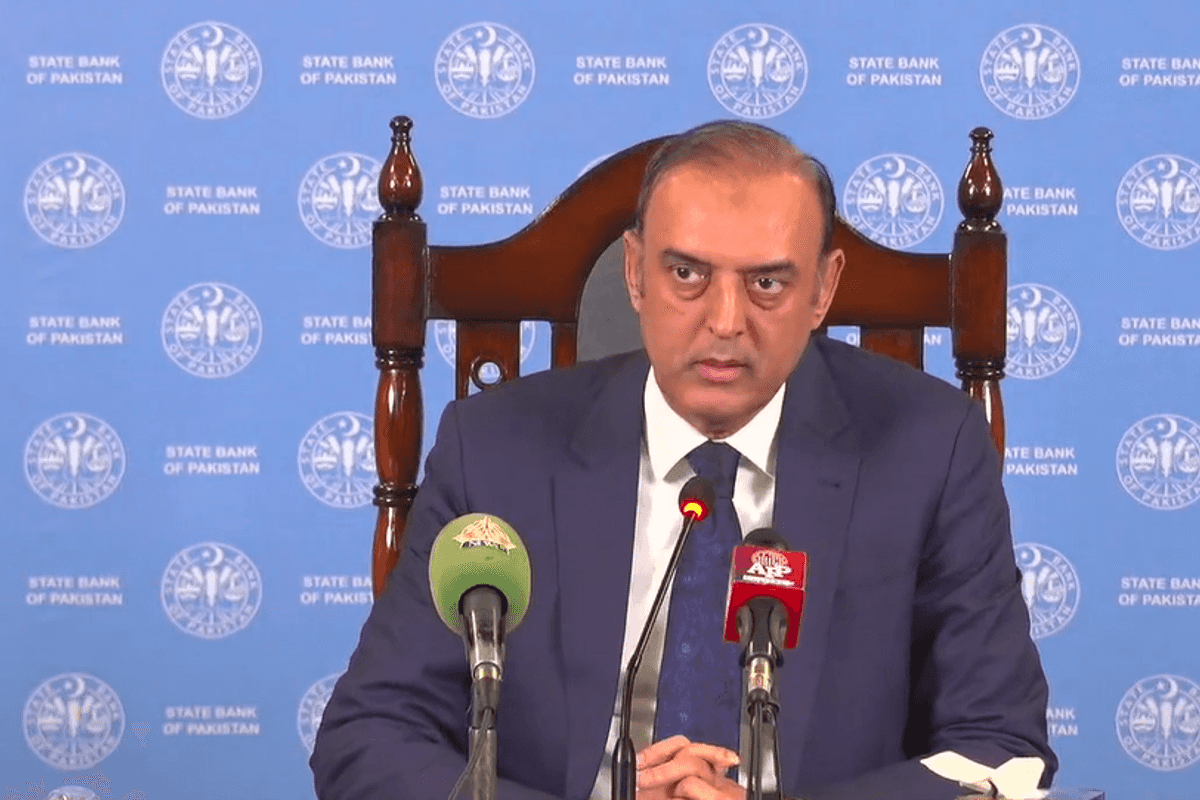
Pakistan’s foreign exchange reserves are expected to exceed $18 billion by the end of June, with about $5.4 billion in external payment obligations remaining in the final six months of the fiscal year, the country’s central bank governor said during an analyst briefing.
State Bank of Pakistan (SBP) Governor Jameel Ahmed said reserves are now projected to rise above $18 billion by end-June of fiscal year 2026, higher than an earlier target of $17.8 billion.
The central bank reiterated its medium-term goal of lifting reserves to $20.2 billion by the end of calendar year 2026, equivalent to more than three months of import cover.
The projections do not include potential inflows from a proposed Panda bond or other international debt issuances, which could provide additional upside to reserve levels, the SBP said.
To support liquidity and private-sector credit growth, the central bank has reduced banks’ cash reserve requirement (CRR), lowering the average fortnightly CRR from 6% to 5% and the minimum daily CRR from 4% to 3%.
The move is expected to release additional liquidity into the banking system, enhancing lending capacity and supporting exports and broader economic activity.
On the UAE debt-to-equity swap, the governor said discussions are progressing well but emphasized the transaction remains a one-off arrangement.
It has not yet been incorporated into reserve or external account projections and will be reflected in debt servicing and external outlook assessments once finalized.
Debt repayments
Pakistan’s total external debt repayments for FY26 stand at $25.7 billion, slightly lower than earlier estimates due to easing international interest rates.
Of this amount, $12.5 billion in bilateral debt is being rolled over, while $2.2 billion in Chinese commercial loans is expected to be refinanced.
After accounting for rollovers and refinancing, the remaining repayable amount is about $11 billion.
Of that, $5.7 billion has already been paid, leaving roughly $5.3 billion due in the remainder of the fiscal year. With current reserves around $16 billion, the governor said Pakistan’s capacity to meet its external obligations has improved significantly.
The governor cautioned that geopolitical tensions, particularly between the United States and Iran, could affect Pakistan mainly through higher oil prices.
Oil accounts for roughly one-quarter of Pakistan’s total imports, while other trade items carry a smaller share.
The SBP also cited a favorable outlook for agriculture. The cultivated area for the Rabi crop, particularly wheat, has exceeded targeted acreage, and satellite imagery indicates improved yields.
The preceding Kharif crop performed better than initially expected, strengthening the overall agricultural base. While wheat prices remain elevated, the central bank expects them to ease as the new harvest enters the market and supplies improve.
Improved external outlook
The central bank said Pakistan’s external outlook has improved not only in terms of reserve levels but also debt composition. There has been virtually no net addition to external debt since 2022.
At that time, around two-thirds of the debt was bilateral and multilateral, with a significant share in short-term Paris Club debt and Eurobonds. Currently, about 75% of external debt is bilateral and multilateral, with the remaining 25% in other categories, while pure commercial debt remains relatively low.
The improved maturity profile has increased flexibility in managing external obligations.
Meanwhile, the current account posted a $244 million deficit in December, taking the cumulative deficit for the first half of FY26 to $1.2 billion. According to the SBP, the deterioration mainly reflects a wider trade deficit driven by higher imports and weaker exports.
The decline in food exports, particularly rice, was the main drag, though high value-added textile exports remained relatively resilient.
Looking ahead, the central bank expects the current account balance to stay within 0% to 1% of GDP in FY26, supported by continued growth in workers’ remittances and rising exports of information and communications technology services.




Comments
See what people are discussing