

Pakistan condemns attack on Iran, steps up diplomacy to protect nationals
Ishaq Dar says Pakistan expresses condolences over Khamenei’s death, stresses leaders must not be targeted

Ali Hamza
Correspondent
Ali; a journalist with 3 years of experience, working in Newspaper. Worked in Field, covered Big Legal Constitutional and Political Events in Pakistan since 2022. Graduate of DePaul University, Chicago.
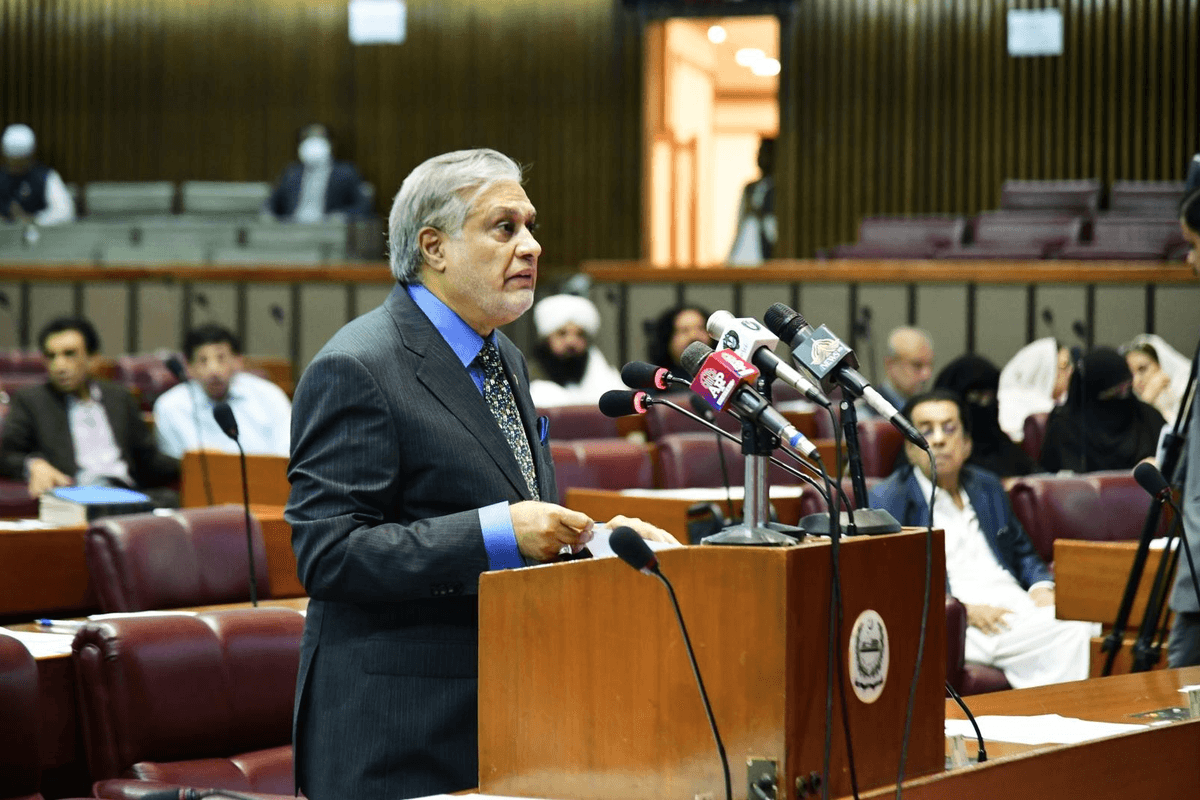
Pakistan has strongly condemned a recent attack on Iran and is intensifying diplomatic efforts to reduce tensions in the Middle East while ensuring the safety of around 35,000 Pakistani nationals currently in the neighboring country, Deputy Prime Minister and Foreign Minister Ishaq Dar said on Tuesday.
Dar told the Senate that Islamabad issued an “immediate and open” condemnation of the Feb. 28 attack and expressed condolences over the death of Iran’s Supreme Leader Ali Khamenei, emphasizing that even in war, top leaders should not be targeted under international norms.
The minister, who was in Jeddah attending an Organisation of Islamic Cooperation ministerial meeting when the attack occurred, said he had been in contact with Iranian Foreign Minister Abbas Araghchi and counterparts from the European Union and at least 13 other countries, including Turkey, Bangladesh, the Maldives, Palestine, Uzbekistan, Saudi Arabia, the United Arab Emirates, Qatar, Oman, Iraq, Bahrain, and Azerbaijan.
Dar said Oman had been hosting U.S.-Iran talks that were making positive progress when the attack took place. Pakistan has pursued both public and backchannel diplomacy to seek a peaceful resolution and offered to host mediation talks in Islamabad. Prime Minister Shehbaz Sharif and Army Chief General Asim Munir played active roles in these diplomatic initiatives.
On nuclear issues, Dar reiterated Pakistan’s support for Iran’s right to a peaceful nuclear program, while the United States seeks the complete dismantling of Iran’s nuclear capabilities. Pakistan has consistently raised its position at the United Nations Security Council, including during its presidency, advocating for easing sanctions and preventing the activation of a “snapback” mechanism despite pressure from European nations. He described the unanimous adoption of a Security Council resolution under Pakistan’s presidency as a significant diplomatic achievement.
On the ground, Dar said around 35,000 Pakistanis were in Iran. Border crossings at Taftan and other points remain open, and 792 nationals have so far been evacuated. Commercial flights have been suspended, and the Foreign Office’s crisis management unit is operating around the clock. Azerbaijan has also assisted in facilitating evacuations.
Dar added that Pakistan had mobilized several regional countries to send aid to Gaza and coordinated with eight nations to prevent further escalation in the Middle East, offering alternative proposals for regional security that were accepted.
He announced that Prime Minister Sharif would chair an in-camera briefing for parliamentary leaders of all political parties in the National Assembly and Senate to discuss the situation.
Senator Sherry Rehman later noted that Pakistan was the first country to condemn the reported killing of Khamenei, stressing that official condemnations carry international weight. She highlighted Pakistan’s longstanding ties with Muslim nations and emphasized that the country’s national interest, security, and regional sovereignty remain paramount.
Rehman added that Pakistan’s ambassador in Iran remains in close contact with citizens there and reiterated that injustices should be addressed through state-level engagement. She also said the country’s armed forces had delivered a significant message to India and vowed to continue operations against militants and their facilitators.



Comments
See what people are discussing