

Is Pakistan on the cusp of a defense export boom?
Kamran Khan asks whether Pakistan’s next export boom could come from defense, driving a new Pakistan-Saudi-Turkey defense partnership

News Desk
The News Desk provides timely and factual coverage of national and international events, with an emphasis on accuracy and clarity.
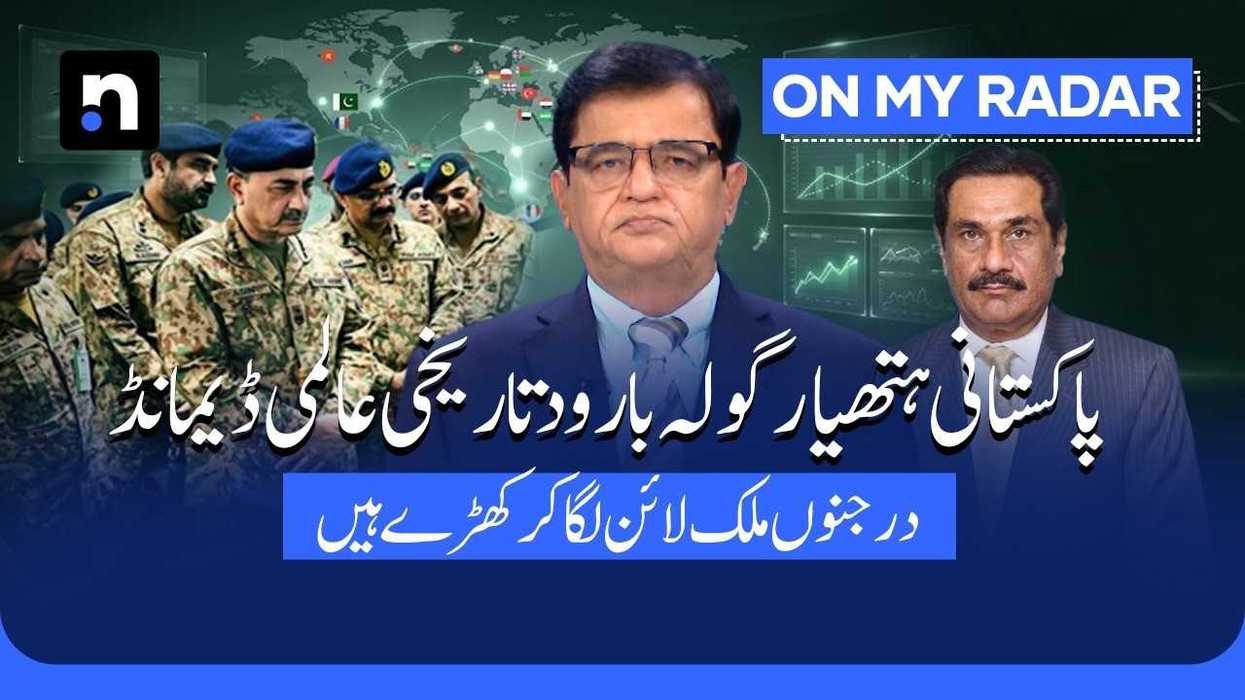
Pakistan’s defense industry could be entering a new phase, shifting from a sector primarily focused on meeting the country’s military needs to a potential multibillion-dollar export industry, as demand for weapons and military equipment grows across the Middle East and beyond.
The opportunity comes as Gulf states reassess their security requirements following the six-month war involving the United States, Israel and Iran, with Saudi Arabia, the United Arab Emirates and other regional powers seeking to strengthen their own defense capabilities. Demand for missiles, drones, ammunition, fighter aircraft, air-defense systems and locally produced military equipment is rising - potentially opening a larger market for Pakistan’s defense industry.
In the latest episode of On My Radar, Kamran Khan said Pakistan was already in talks with at least 13 countries over defense deals, with negotiations with six to eight of them at an advanced stage. He also said Pakistan had secured defense export agreements worth about $10 billion last year with Libya, Azerbaijan, Iraq, Saudi Arabia and Zimbabwe.
The reported deals include JF-17 Thunder fighter jets, Mushshak trainer aircraft, drones, ammunition, air-defense systems, armored vehicles and other Pakistani-made weapons systems, suggesting that demand for the country’s defense products is already expanding beyond its traditional markets.
The timing of Pakistan’s efforts to increase production capacity is therefore significant.
Over the weekend, Chief of Defense Forces Field Marshal Asim Munir made a detailed visit to Pakistan Ordnance Factories (POF) in Wah, the country’s largest defense industrial complex. The visit focused on production capacity, technological upgrades, indigenization and, in particular, the potential to increase defense exports.
The field marshal was briefed on two major new industrial plants being installed at POF, which could begin production by the end of this year. The expansion points to an effort to increase the country’s ability to manufacture defense equipment at a time when international demand is growing.
The question is why Pakistan is moving to expand that capacity now.
The answer may also lie in the country’s changing defense partnerships. Shortly after the POF visit, senior political and military leaders from Pakistan, Turkey and Saudi Arabia gathered in Istanbul for the first major meeting under the Makkah Joint Defense Agreement.
The meeting goes beyond cooperation between three governments and military establishments. It brings together three different sets of capabilities: Saudi Arabia’s financial resources, Turkey’s advanced defense technology and Pakistan’s military experience, missile and fighter-aircraft capabilities, ammunition production and broader defense-industrial infrastructure.
If those capabilities are integrated, cooperation could extend beyond joint military exercises to research and development, technology transfers, joint production and potentially large-scale defense export projects.
That could give particular significance to Pakistan’s expansion of its defense manufacturing capacity. In June, Pakistan also established the DIPRA framework as part of efforts to bring state-owned and private defense manufacturers into a more integrated system.
Taken together, the developments point to a potentially important shift. Security concerns are rising across the Middle East, Gulf defense spending is expected to increase, Pakistan is expanding its production capacity, negotiations over defense exports are accelerating, and Islamabad, Riyadh and Ankara are developing a new framework for defense cooperation.
The emerging question is whether Pakistan’s next major export boom could come not from textiles or information technology, but from its defense industry and whether Pakistan, Saudi Arabia and Turkey could lay the foundations for a powerful new defense-industrial partnership spanning the Muslim world.



Comments
See what people are discussing